Scientists discover how rogue communications between cells lead to Leukaemia
Posted on Thursday 6 February 2020
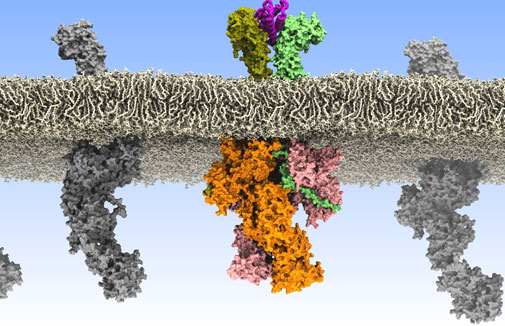
The discovery could pave the way for new, targeted medical treatments that block this process.
Blood cancers like leukaemia occur when mutations in stem cells cause them to produce too many blood cells.
International
An international team of scientists, including researchers at the University of York, have discovered how these mutations allow cells to deviate from their normal method of communicating with each other, prompting the development of blood cells to spiral out of control.
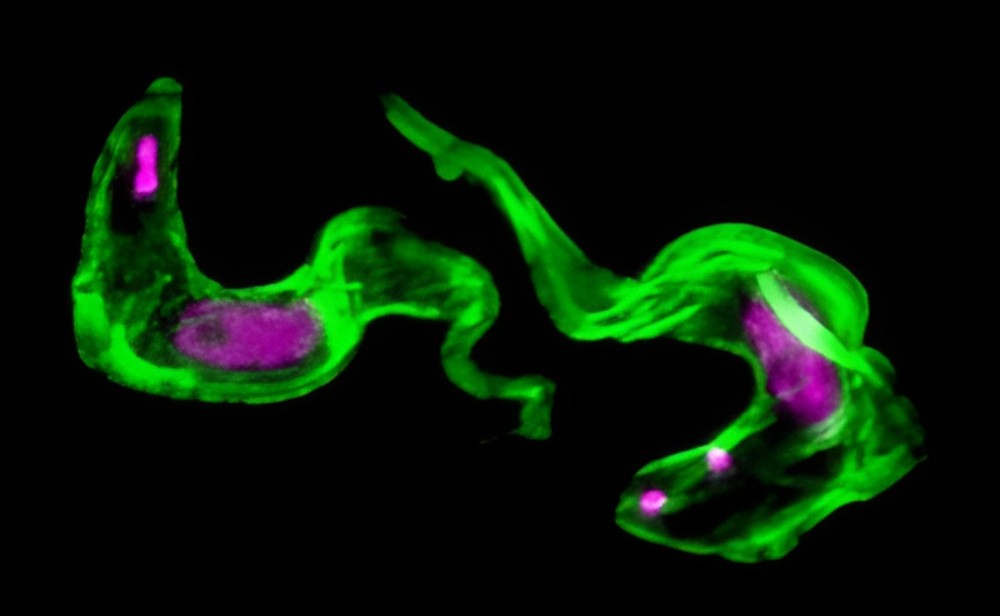
The scientists used super-resolution fluorescent microscopy to study the way blood stem cells talk to each other in real time.
They observed how cells receive instructions from ‘signalling proteins’, which bind to a receptor on the surface of another cell before transmitting a signal telling the cell how to behave.
Blood stem cells communicate via cytokines, which are one of the largest and most diverse families of signalling proteins and are critical for the development of blood cells and the immune system.
Understanding this process led researchers to the discovery that mutations associated with certain types of blood cancers can cause blood stem cells to ‘go rogue’ and communicate without cytokines.
Overrun
The stem cells begin to transmit uncontrolled signals causing the normal system of blood cell development to become overrun, producing an imbalance of healthy white and red blood cells and platelets.
Professor Ian Hitchcock from the York Biomedical Research Institute and the Department of Biology at the University of York, said: “Our bodies produce billions of blood cells every day via a process of cells signalling between each other. Cytokines act like a factory supervisor, tightly regulating this process and controlling the development and proliferation of the different blood cell types.
“Our observations led us to a previously unknown mechanism for how individual mutations trigger blood stem cells to start signalling independently of cytokines, causing the normal system to become out of control and leading to diseases like leukaemia.
“Understanding this mechanism may enable the identification of targets for the development of new drugs.”
Modelling
This research team used a combination of molecular modelling, structural biology, biophysics, super-resolution microscopy and cell biology to demonstrate for the first time that these specific receptors on the surface of blood stem cells are linked by cytokines to form pairs.
Co-author of the study, Professor Jacob Piehler from Osnabrück University, said: “By directly visualising individual receptors at physiological conditions under the microscope, we were able to resolve a controversy that has preoccupied the field for more than 20 years."
Professor Ilpo Vattulainen from the University of Helsinki, added: “Our biomolecular simulations unveiled surprising features concerning the orientation of active receptor pairs at the plasma membrane, explaining how mutations render activation possible without a ligand (such as a cytokine). These predictions were subsequently confirmed experimentally."
Inspiring
First author Dr. Stephan Wilmes, who started the project as a Postdoc at Osnabrück University before moving to the University of Dundee: “It was truly inspiring to tackle this highly relevant biomedical question by applying cutting-edge biophysical techniques. Here in Dundee, I had the chance to perform complementary activity assays, which corroborated our mechanistic model.”