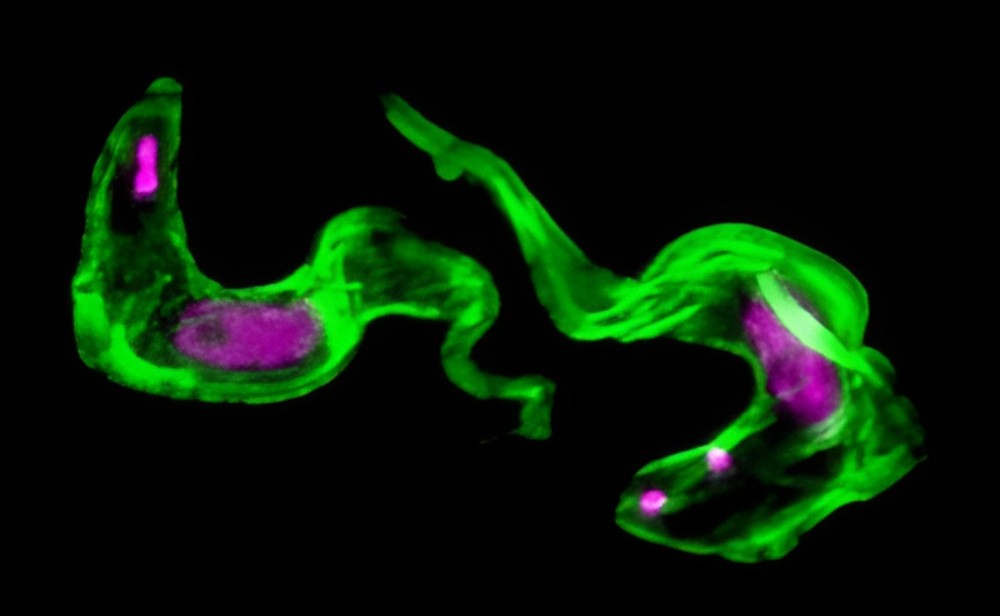
Bacteria ‘trap’ could help slow down antibiotic resistance
Posted on Thursday 14 March 2019

Knowing how drugs impact single bacteria can help clinicians target the right antibiotics more quickly, reducing the need for prolonged treatment that in the long-term contributes to antibiotic resistance.
For the first time scientists at the University of York were able to look at both the shape and swimming ability of hundreds of single bacteria at the same time. The research showed that the most effective drugs interfered with the bacteria’s motion and shape.
Current methods test how bacteria grows and its reaction to drugs in samples that contain billions of organisms. As bacterial growth is a slow process, however, tests can take time and can be less accurate due to analysis of batches of bacteria, rather than individual organisms.
Drug susceptibility
Using the new test, the signature of the bacteria and its susceptibility to drugs could be detected in one-hour, compared to 24-48 hours in current test conditions.
Giampaolo Pitruzzello, a PhD student from the Department of Physics and lead author of the study, said: “Individual bacteria behave differently from one another and so looking at them as one large group can mean that inaccurate assumptions are made. This can lead to delayed or prolonged treatment regimes.
“We wanted a method that allowed clinical decisions to be made faster and more accurately. This meant finding a way of trapping individual bacteria and testing multiple features at once, rather than growing large cultures in a dish.”
Speed and accuracy
The new test, trialled at the University of York, can analyse hundreds of bacteria at once, but at the individual scale, improving the accuracy and speed of the test. It also examines multiple bacteria properties, in particular how the bacteria moves and the shapes it can take.
Professor Thomas Krauss, from the University of York’s Department of Physics, who led the research team, said: “This method would allow clinicians to prescribe effective, targeted antibiotics early on in an infection which would lead to improved clinical outcomes whilst reducing overall levels of antibiotic use.
“The aim is to get the right drug, to the right patient, at the right time.”
Sepsis burden
The team manipulated fluids inside micro channels on a glass slide for the bacteria to swim along. The channels directed them into tiny traps, where scientists could then inject drugs and monitor how the individual bacteria reacted under the microscope.
Dr Adrian Evans, co-author and specialist in Urogynaecology at York Hospital, said: “This new technique offers a quick result so we can target more precisely which antibiotic to use to get patients better quicker. This may well help reduce the burden of sepsis in our communities, which is an ever-increasing problem.”
The next stage of the work is to test the method with clinical samples taken from patients, before the technique can be implemented in medical settings.