
Kalila wa Dimna and Female Patrons and Readers at the Courts of Castile and Württemberg-Urach in the Late Fifteenth Century
This event has now finished.
H/G17, Heslington Hall, Campus West, University of York (Map)
Event details
Medieval Literatures Research Seminar
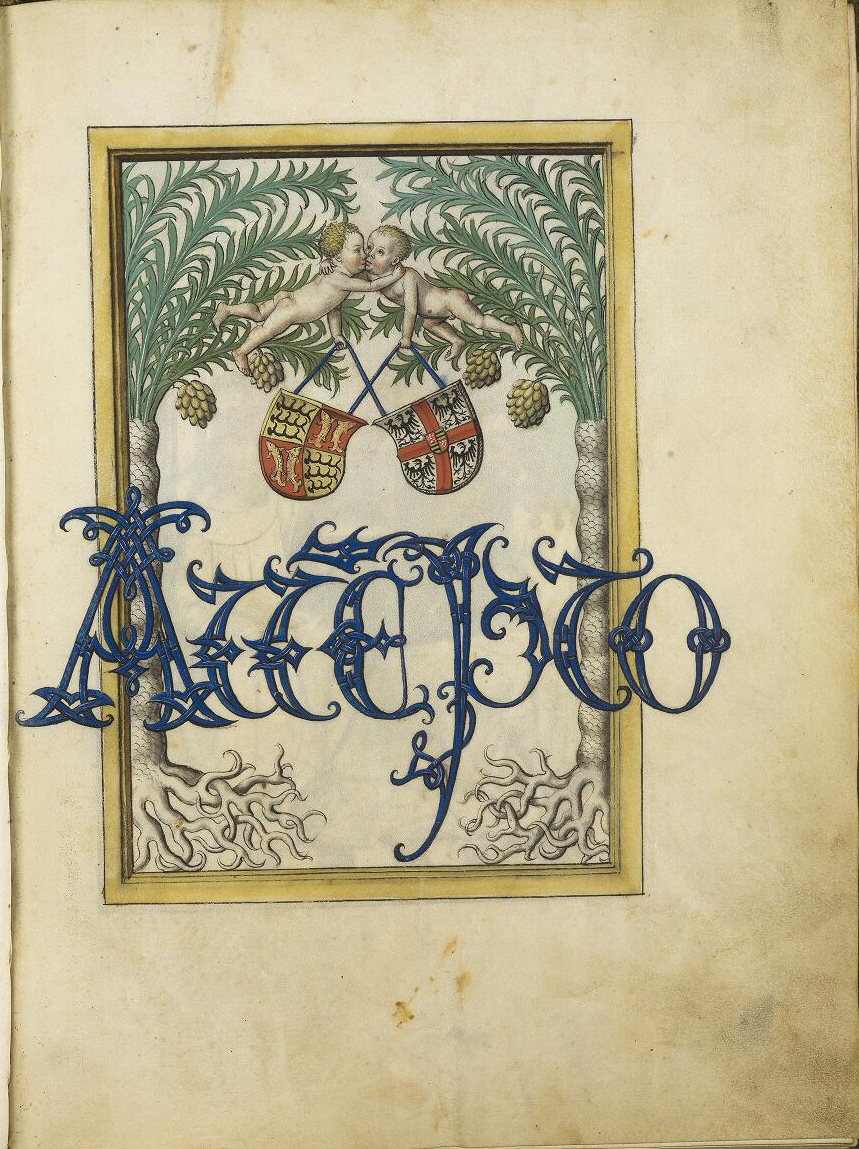
In the last half of the fifteenth century, the collection of exemplary fables known in Arabic as Kalila wa Dimna began a new stage in its hitherto already dynamic and multifaceted transmission, travelling widely throughout Europe via new translations, new copies of existing translations and, later, via incunables. Throughout a textual history dominated by male rulers, patrons, and translators, it is striking that the fables’ transmission in two European courts during this period – the royal court of Castile and the comital court of Württemberg-Urach – were instigated by women. A German translation of Giovanni di Capua’s thirteenth-century Latin Liber Kelile et Dimne was commissioned by Mechthild of the Palatinate, dowager countess of the Swabian county of Württemberg-Urach, between 1470-1474 to celebrate the marriage of her son Eberhard to Barbara Gonzaga of Mantua – an occasion depicted in an elaborate frontispiece to the earliest surviving witness featuring the coats of arms of the two families. The second of two fifteenth-century copies of the Old Spanish Calila e Dimna was completed in 1467 under the patronage of queen Isabel I of Castile; the manuscript contains many annotations – comments and manicules – in a hand attributed to the monarch herself but belonging more likely to a member of her retinue, possibly a daughter, lady-in-waiting, or personal tutor. The ruler depicted in Kalila wa Dimna’s fables may be male, but in late medieval Castile and Württemberg-Urach, political and cultural power was also wielded by women. Highly educated and politically savvy, Isabel I, Mechthild of the Palatinate, and Barbara Gonzaga played important roles as intermediaries of knowledge and culture across European vernaculars as well as between ‘East’ and ‘West’. With reference to select fables and the surviving manuscripts’ themselves, this paper will shed light on the ways in which these women negotiated political and dynastic power by commissioning new translations or new copies of this ancient eastern wisdom literature, on what their use of Kalila wa Dimna reveals about questions of political legitimacy and political alliances in Castile and Württemberg-Urach and about their gendered roles within these institutional structures, and on how the book’s knowledge was shaped and reshaped as it moved into new socio-political, cultural and intellectual contexts.
Venue details
Wheelchair accessible