
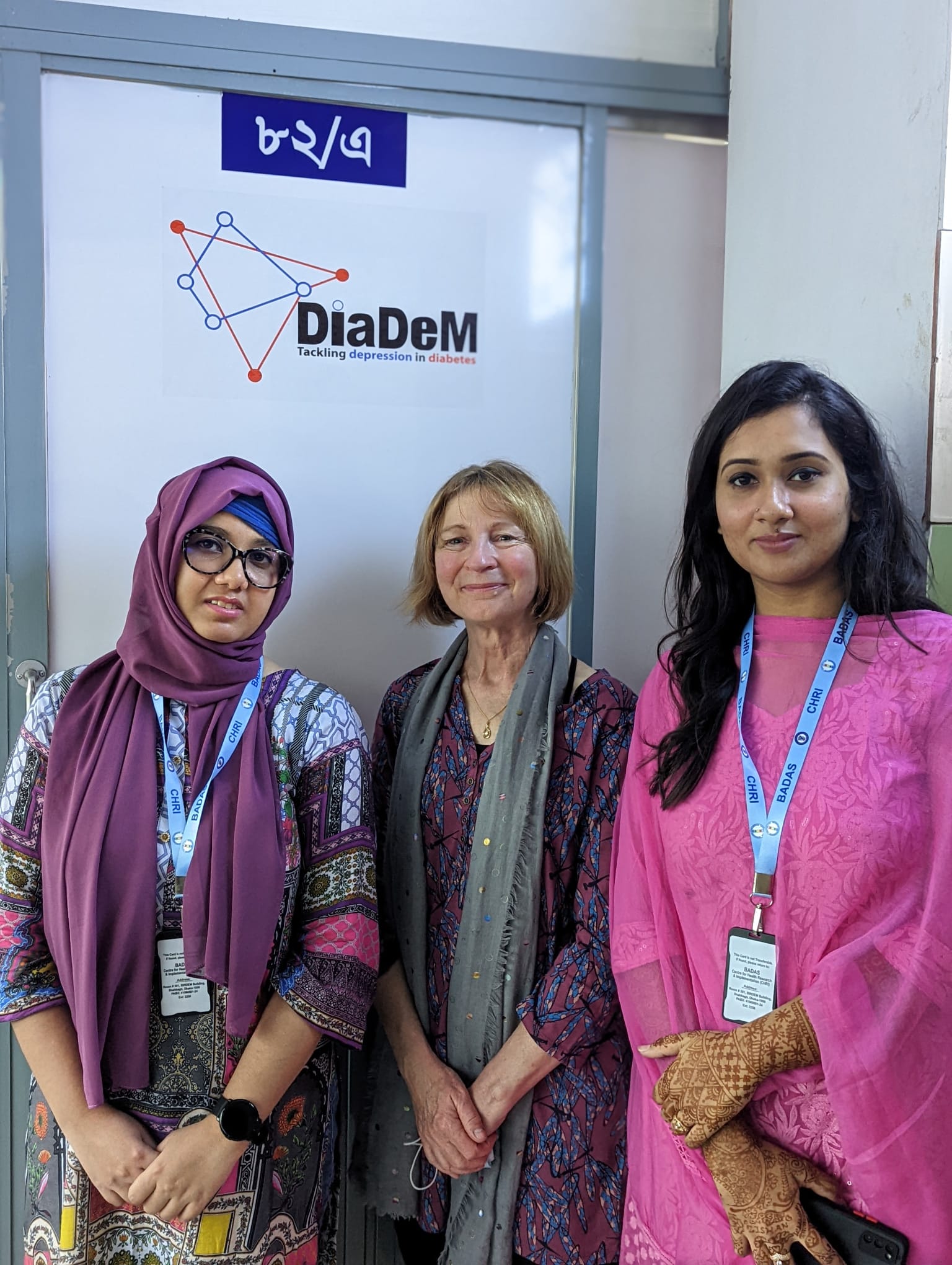
PhD by Karen Coales: The Journey of Non-Mental health Specialist Health workers to BA counsellors through the DiaDeM Trial
Karen’s study sheds light on the experiences of non-mental health specialist health workers (NSHWs) in Bangladesh and Pakistan who took on mental health roles in the DiaDeM trial, which explored task-sharing in Behavioural activation (BA) therapy for people with comorbid depression and diabetes. Although NSHW came from similar professional backgrounds in publicly funded diabetes services, their journeys into mental health work revealed important differences—particularly between younger, emerging health workers and older, more established ones.
NSHWs volunteered to become BA counsellors for a variety of reasons: some were personally or career motivated, while others were driven by faith or a desire to help their communities. Younger workers often saw the role as a chance for career growth, whereas older workers emphasised broader benefits, including supporting their families and patients in managing mental wellbeing.
Interestingly, country, religion, and even gender played little role in shaping these experiences. Instead, age and professional maturity significantly influenced how NSHWs adapted to their new roles. Emerging health workers were often anxious and uncertain at first, relying heavily on supervisory support provided by clinical psychologists working in local mental health services. In contrast, established workers felt more confident but sometimes struggled to shift from a physical health mindset to delivering BA, especially when explaining depression through behavioural models rather than faith-based or traditional beliefs.
While both groups faced challenges, many ultimately thrived. Emerging workers overcame early self-doubt to become competent BA counsellors, while established workers, despite initial resistance to the BA model and being supervised, gradually adapted and contributed effectively. Success depended not just on clinical skill but also on the ability to form strong relationships and align expectations with DiaDeM participants, supervisors, colleagues and family.
In the end, those who transitioned successfully described the experience as deeply fulfilling—reigniting the values and motivations that led them into healthcare in the first place. The study underscores that, regardless of background, with the right support and environment, NSHWs can become capable, confident mental health providers.