Skip to content Accessibility statement
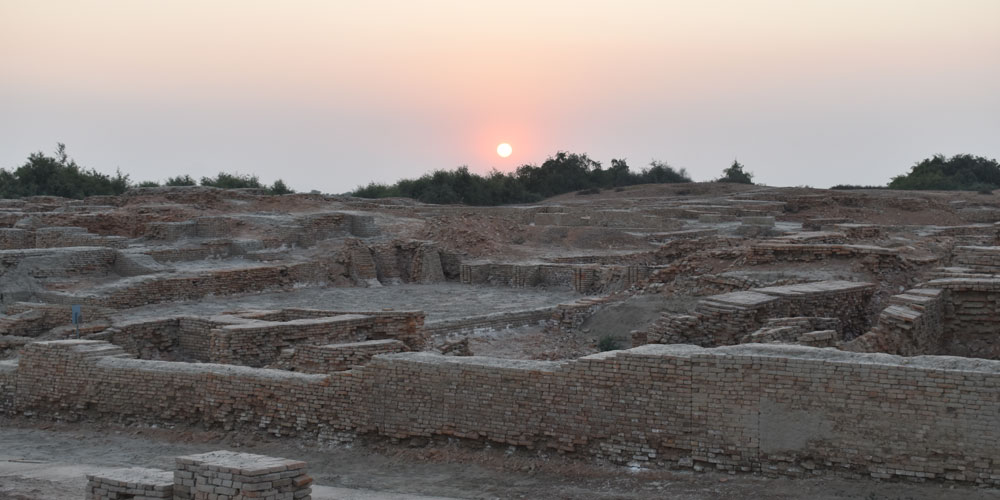
Sunset over residence ruins from the VS area of the Bronze Age city of Mohenjo-daro, Pakistan.

PERSIST

Envisioning sustainable futures is difficult for researchers and policymakers because we rely overwhelmingly on the experience of modern societies, overlooking the vast diversity of social and economic systems in the past. 

The PERSIST project will address this gap by systematically comparing how eight well-documented societies, some going back nearly ten-thousand years, extracted and used resources from their environments — their “social metabolisms.” 

PERSIST will compare social metabolisms to assess the degree to which each society sustained resources, limited inequality, and endured over time. Rather than identifying single successes, it will trace variation across cases to reveal how sustainability was achieved in the past, offering new perspectives on how it can be achieved in the future.

The project is funded by a Research Project Grant from the Leverhulme Trust.

Research team

PERSIST will build a team of researchers with expertise in quantitative methods, archaeological synthesis and key regional datasets, bringing together the University of York, a hub of interdisciplinary sustainability research, and Durham University, which has a long track-record of research in Southwest Asian and computational archaeology.

 Postdoctoral opportunities

PERSIST will also include three Postdoctoral Associates. These include one archaeologist at York and one archaeologist at Durham. The York-based PDRA will assemble well-documented archaeological data from South Asia and China, and the Durham based PDRA will do the same for Southwest Asia. A PDRA in ecological economics will also join the team in York, and compare these premodern economies and develop broader insights into sustainability.