
RESEARCHERS USE ROBOTICS TO FIND POTENTIAL NEW ANTIBIOTIC AMONG HUNDREDS OF METAL COMPLEXES
Posted on Tuesday 23 December 2025
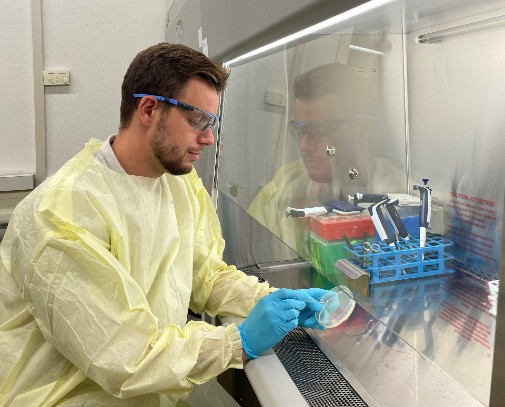
In a study published in Nature Communications, the researchers in the Department of Chemistry synthesised over 700 new metal compounds in just one week. This rapid screening process identified a promising new iridium-based antibiotic candidate that kills bacteria while remaining non-toxic to human cells.
As bacteria become increasingly resistant to existing treatments, the world faces a silent pandemic. Over one million people die annually from preventable drug-resistant infections. Without new drugs, routine procedures such as hip replacements, chemotherapy and organ transplants could soon become life-threateningly dangerous due to the risk of untreatable infection.
In response to this crisis, a team led by Dr Angelo Frei turned to an often-overlooked area of medicine: metal-based compounds.
While most modern antibiotics are carbon-based flat molecules, metal complexes are three-dimensional. This unique geometry allows them to interact with bacteria in completely different ways, potentially overcoming the resistance mechanisms that defeat current drugs.
Traditionally, discovering a new drug is a slow process. However, the Frei Lab utilised robotics and "click" chemistry – a method where two molecular components are "bolted" together efficiently – to supercharge the process.
Postdoctoral researcher Dr David Husbands used this automated platform to combine almost 200 different ligands with five different metals. The result was the synthesis of over 700 new metal complexes in just under a week. The team them screened these compounds for antibacterial activity and toxicity against healthy human cells. The study identified six potential new lead compounds.
One compound in particular – a complex based on the metal iridium – stood out. It demonstrated high effectiveness against bacteria, including strains similar to the deadly MRSA (Methicillin-resistant Staphylococcus aureus), while displaying low toxicity to human cells. This suggests it has a high “therapeutic index” and is a strong candidate for further drug development.
Lead author of the study, Dr Angelo Frei, said: “The pipeline for new antibiotics has been running dry for decades. Traditional screening methods are slow and the pharmaceutical industry has largely withdrawn from this space due to low returns on investment. We have to think differently.“
“By combining smart 'click' chemistry with automation, we have demonstrated that we can explore vast, untapped areas of chemical space at unprecedented speed. We aren't just looking for one drug; we are proving a methodology that can help us find the 'needle in the haystack' much faster. The iridium compound we discovered is exciting, but the real breakthrough is the speed at which we found it. This approach could be the key to avoiding a future where routine infections become fatal again.”
Notes to editors:
This work has been published in Nature Communications.