
Thanzi Programme shortlisted for major award
Posted on Monday 24 November 2025
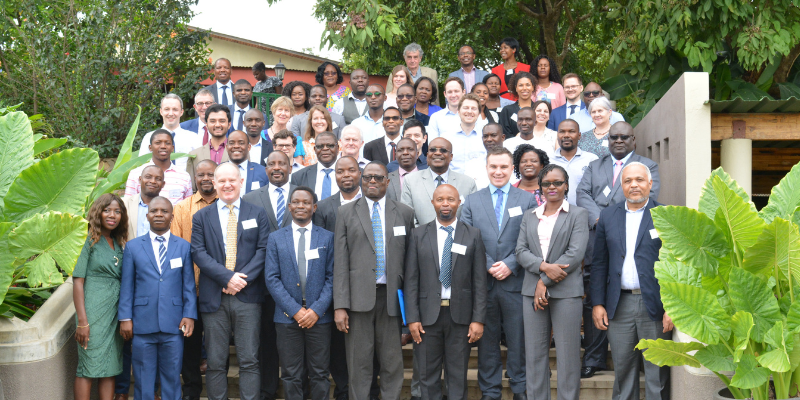
CHE is delighted to announce that the Thanzi Programme has been shortlisted as a finalist for the Weaver Award at the 2025 Inclusive Impact Awards.
The Weaver Award celebrates projects that successfully build partnerships across boundaries: between disciplines, departments, countries, and communities.
With over a hundred nominations received this year, the panel highlighted Thanzi’s “genuine commitment to meaningful, measurable impact” as a defining strength.
Connecting across boundaries
The Thanzi Programme brings together researchers, policy-makers, students and research support professionals working to strengthen health economics and health system modelling evidence and capacity across East, Central, Southern and West Africa.
Founded in 2017 as the Thanzi la Onse project, it has grown into a network of more than 21 partner organisations across 13 countries. Its work rests on three pillars: producing locally led health economics evidence; fostering engagement between academic and policy communities; and building long-term capability in health systems modelling.
At the heart of this nomination is the creation of the Health Economics & Policy Unit (HEPU) in Malawi, a flagship example of co-created, cross-boundary collaboration. HEPU was jointly developed by Kamuzu University of Health Sciences (KUHeS), Malawi’s Ministry of Health, and the Centre for Health Economics at the University of York, with contributions from Professor Joseph Mfutso-Bengo, Dr Dominic Nkhoma, Dr Gerald Manthalu, and Professor Paul Revill.
The Unit was designed to bridge the gap between evidence generation and policy decision-making, responding to long-standing demand for domestic health economics expertise.
Collaboration driving real-world change
From its establishment in 2018, HEPU has brought together academic and policy partners to deliver analysis that directly informs national health priorities. With support from the Thanzi Programme, KUHeS and CHE staff provided training to lead locally driven research; Ministry of Health economists were seconded into the Unit; and a dedicated base was created at KUHeS’ Lilongwe campus.
HEPU now serves as a national hub for health economics in Malawi, convening researchers, decision-makers and practitioners. Its Think Tank platform has played a critical role in moments of national urgency, including an exceptional session during the COVID-19 pandemic that brought together epidemiologists, clinicians, economists and policymakers to guide the government’s response.
The Unit has also co-led major revisions to Malawi’s national health benefit package, shaping the evidence base for the country’s latest Health Sector Strategic Plan.
Benefits and impact
Now fully embedded within KUHeS and the Ministry of Health, HEPU has grown to around 18 full-time staff and receives core funding from the Foreign, Commonwealth & Development Office via the Ministry.
Furthermore, HEPU and CHE collaborate with other Thanzi partners on research across the Programme, including the Wellcome Trust–funded Thanzi la Mawa led by Imperial College London. The HEPU model has also inspired similar efforts in Uganda, Eswatini, Gambia, Ghana, Senegal and Zimbabwe, supported by CHE and regional partners.
The recognition of the Thanzi Programme and HEPU at the Inclusive Impact Awards reflects the value of long-term, research-to-policy collaborations and the tangible improvements such partnerships can make to health systems at a global level.
Representatives from the programme will be attending the award celebration this week.