
Publications
Journal of Human Rights Practice
The Centre for Applied Human Rights hosts the Journal of Human Rights Practice, published by Oxford University Press.
"The JHRP has not only filled a very big gap in the human rights literature, but has succeeded in bringing a whole range of new perspectives to bear on the field. In a short period, it has established itself as a must-read journal for everyone interested in how human rights advocacy actually works, or doesn’t work, in practice."
Philip Alston, John Norton Pomeroy Professor of Law, New York University
Selected publications
Staff at the Centre for Applied Human Rights publish monographs and edited volumes, articles in peer-reviewed journals, working papers, policy briefs, reports, blogs and other outputs under the auspices of the signature programmes of knowledge exchange - the UNESCO Human Rights Defenders Hub, the Generating Respect Hub, and the Human Rights City Hub - and other research projects. Some recent publications are listed below.
The complete list of publications and outputs by CAHR members is listed in the University of York Research Database.
Recent works (2023)


Read online


Read online

Publications that marked their field of study & practice
From Transitional to Transformative Justice
Edited by Paul Gready and Simon Robins
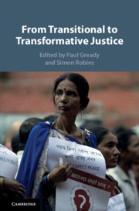
Transitional justice has become the principle lens used by countries emerging from conflict and authoritarian rule to address the legacies of violence and serious human rights abuses. However, as transitional justice practice becomes more institutionalized with support from NGOs and funding from Western donors, questions have been raised about the long-term effectiveness of transitional justice mechanisms. Core elements of the paradigm have been subjected to sustained critique, yet there is much less commentary that goes beyond critique to set out, in a comprehensive fashion, what an alternative approach might look like.
This volume discusses one such alternative, transformative justice, and positions this quest in the wider context of ongoing fall-out from the 2008 global economic and political crisis, as well as the failure of social justice advocates to respond with imagination and ambition. Drawing on diverse perspectives, contributors illustrate the wide-ranging purchase of transformative justice at both conceptual and empirical levels.
Reviews
'Transitional justice arrived in the 1990s with great promise, but the results achieved to date have generally been modest at best. This excellent and cutting-edge volume convincingly argues for a more deeply transformative approach, and the various contributions are consistently critical, constructive, and thought-provoking. It is the rare volume that combines deep critique with serious engagement with practice.'
Philip Alston - John Norton Pomeroy Professor of Law, New York University, UN Special Rapporteur on Extreme Poverty and Human Rights
'This exciting and important volume explores the potential of transformative justice to radically reform transitional justice in ways that are at once imaginative, ambitious and emancipatory. It deserves to be widely read.'
Andrea Cornwall - Head of the School of Global Studies, University of Sussex
'An important shift is underway in the theory and normative practices associated with post-conflict justice, partly in response to the global expansion of neoliberalism and its impact on conflict-affected societies. This very interesting collection is probably the first volume to explore the tensions and dilemmas that are both driving and impeding the expansion of thinking about justice and associated practices into more transformative frameworks in everyday, rather than solely national or global, contexts.'
Oliver Richmond - Associate Dean for Internationalisation, University of Manchester
'This is a courageous and forward thinking book. In this collection of essays, Gready and Robins with their well-respected colleagues, have tackled the question of the definition of transitional justice; its limitations, goals, and future. By its focus on transitional justice as transformational justice with attention to local agency, process, pluralism, power, and structures of exclusion, the authors challenge the status quo and raise important questions about the understandings of justice and how meaningful change can occur. This book is an important step forward in the development of what is still a nascent field.'
Harvey M. Weinstein - University of California, Berkeley; Co-Editor-in-Chief Emeritus of the International Journal of Transitional Justice
Religious Actors and International Law
By Ioana Cismus
This book assesses whether a new category of religious actors has been constructed within international law. Religious actors, through their interpretations of the religion(s) they are associated with, uphold and promote, or indeed may transform, potentially oppressive structures or discriminatory patterns. This study moves beyond the concern that religious texts and practices may be incompatible with international law, to provide an innovative analysis of how religious actors themselves are accountable under international law for the interpretations they choose to put forward.
The book defines religious actors as comprising religious states, international organizations, and non-state entities that assume the role of interpreting religion and so claim a 'special' legitimacy anchored in tradition or charisma. Cutting across the state / non-state divide, this definition allows the full remit of religious bodies to be investigated. It analyses the crucial question of whether religious actors do in fact operate under different international legal norms to non-religious states, international organizations, or companies. To that end, the Holy See-Vatican, the Organization of Islamic Cooperation, and churches and religious organizations under the European Convention on Human Rights regime are examined in detail as case studies.
The study ultimately establishes that religious actors cannot be seen to form an autonomous legal category under international law: they do not enjoy special or exclusive rights, nor incur lesser obligations, when compared to their respective non-religious peers. Going forward, it concludes that a process of two-sided legitimation may be at stake: religious actors will need to provide evidence for the legality of their religious interpretations to strengthen their legitimacy, and international law itself may benefit from religious actors fostering its legitimacy in different cultural contexts.
Reviews
"A fascinating book"
Christina Cerna, American Journal of International Law
"Ioana Cismas tests the relationship between religious actors and their rights and obligations under international law in a most novel and compelling way. [A]n insightfully researched and very well written book represents a stimulating addition to the literature on non-state actors and human rights. In the end, it is another strong recognition that the present rules of international law not only regulate the behaviour of states, but also many other entities participating in the international sphere."
Ezequiel Heffes, Human Rights Law Review
"[T]his book is a welcome and refreshing addition to the growing literature on religion and human rights. Human rights activists, diplomats, and scholars would benefit from paying more attention to religious actors and the ways to hold them accountable to international human rights law, rather than engaging in exegetical debates with them on the right way to interpret religious texts."
Turan Kayaoglu, Global Policy
"This book makes an invaluable contribution to the growing scholarship in this field. It takes us beyond debate about whether religious doctrines-practices are compatible with international law, the classification of religious actors as essentially private entities, and the classical focus on the special rights associated with religion. In a set of meticulous case studies, the book proposes that religious actors do not form an autonomous category in international law, but are subject to norms also applicable to non-religious entities. Cismas is to be applauded for the innovative and challenging thesis that the best defence of their autonomy is to embrace human rights in their own internal governance and life in order to operate in a legitimate way in society and under international law."
Norman Doe, Professor and Director, Centre for Law and Religion, Cardiff University