
Moor views on past, present and future landscapes
Posted on Thursday 12 February 2026
.jpg)
With a new film adaptation of Emily Brontë’s Wuthering Heights coming out this month, Yorkshire’s ‘wild and wily moors’ are back in the limelight. Popularly portrayed as bleak and remote spaces, definitions of moorland habitats are often just as mysterious. Moorlands span a spectrum of landscape types from lowland dry heath to hill-top blanket bog commonly characterised by an open vista with low-lying vegetation. Far from being untamed and desolate, these environments inherently require human actors to preserve their cinematic views.
The study area for my PhD research is the North York Moors, home to the largest continuous area of upland heather moorland in England and Wales. This habitat is maintained by the selective grazing habits of sheep and the controlled burning of heather to feed grouse for game shoots. However, there are calls to revise these practices to increase biodiversity, mitigate wildfire risk, promote carbon capture, reduce flood risk, improve water quality and provide public access. I plan to work with a diverse range of stakeholders to better understand how they perceive, experience and value this landscape, and how to balance competing interests about its ecological functions, cultural significance and economic benefits.
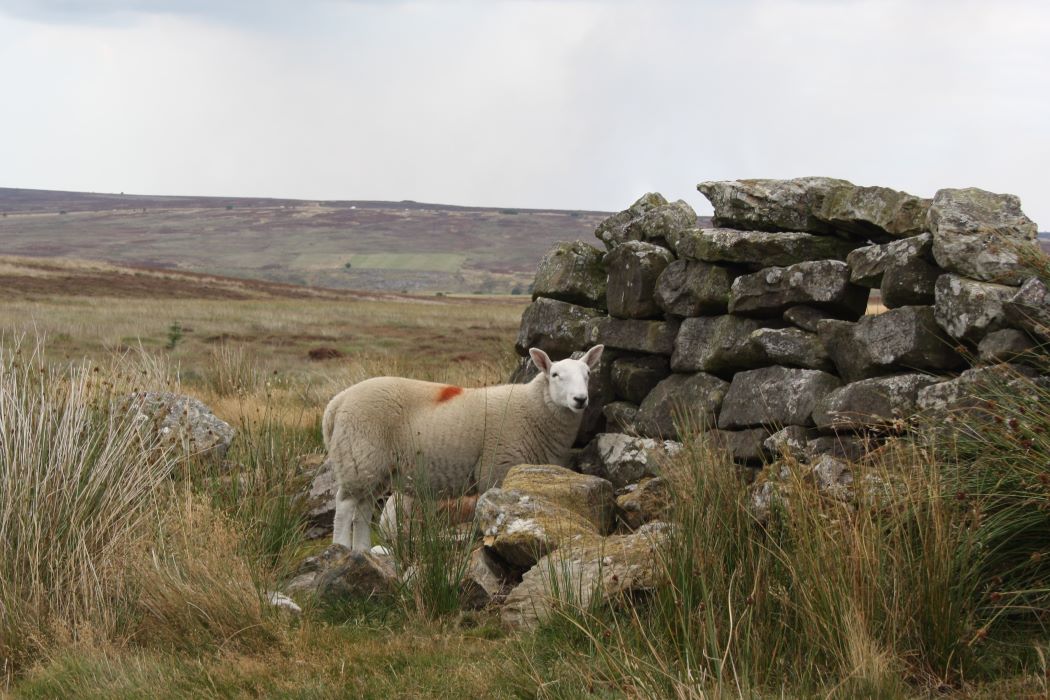
The North York Moors have not always been dominated by a backdrop of heather moorland. As the climate warmed after the last glaciation, the land was colonised by a succession of trees to form a closed canopy forest cleared by prehistoric people first for hunting and then agriculture. Subsequent changes in ecological systems, climate conditions and land management practices have caused shifts in the type and distribution of vegetation, with heather only coming to dominate the landscape in more recent centuries. How might a better understanding of these long-term changes in the landscape inform or influence how people envision the future of the North York Moors?
During my PhD, I will reconstruct a detailed landscape history of the North York Moors and trial ways to visualise and impart this information. I plan to work in collaboration with stakeholders to develop a range of scenarios imagining how the landscape could function and look like in the future, in a process known as participatory scenario planning. I’m interested to learn whether the past landscape might bridge different knowledge systems, facilitate creative and deliberative dialogue between different viewpoints and offer a range of alternative visions to inform decision-making.
Despite Cathy’s protestation to Heathcliff to “make the moors never change and you and I never change”, my research aims to show the inherently changeable character of moorlands, how people have shaped their story, and our agency in choosing the next chapter.