
Making conservation more inclusive: Launching a horizon scan on the practical realities of implementing the Principles for Inclusive Nature Action
Posted on Tuesday 3 February 2026
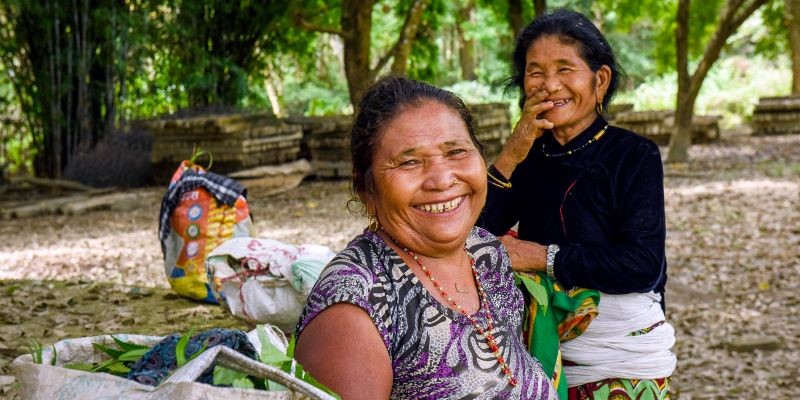
Across the conservation world, one theme is gaining increasing momentum: the recognition that protecting and restoring biodiversity cannot be separated from questions of rights, power and inclusion. Around the world, marginalised groups, including women, youth, people with disabilities, displaced people, and many Indigenous Peoples and local communities, remain at the forefront of biodiversity stewardship, yet are routinely excluded from decision-making, funding, and the benefits that conservation can bring. This is not only unjust, but also undermines the effectiveness and long-term sustainability of environmental programmes.
In response to this persistent challenge, a new guiding framework – the Principles for Inclusive Nature Action – has emerged. These eight principles were developed during a Wilton Park conference hosted by the UK Department for Environment, Food and Rural Affairs in 2024, and were subsequently launched at major global biodiversity and climate events. They draw inspiration from the Principles for Locally Led Adaptation and the Shandia Principles, and they align closely with the Convention on Biological Diversity’s Gender Plan of Action.
At their core, the Principles seek to help governments, funders, NGOs and practitioners design and deliver biodiversity action that is locally led, gender-responsive, respectful of rights, and inclusive of the many groups who experience environmental change most directly. Increasing evidence shows that such approaches are not simply “good practice”, but actually lead to better outcomes for both nature and people.
But while their ambition is widely shared, an important question remains: what does it actually take to put these principles into practice?
This question sits at the heart of a new horizon scan that I am leading, in collaboration with colleagues at the Global Centre on Biodiversity for Climate (GCBC) and a strong group of experienced partners. The project aims to explore the practical realities – the challenges, trade-offs and co-benefits – that emerge when organisations attempt to implement the Principles in real-world contexts.
What the Principles aim to achieve
Although the eight Principles cover a broad range of issues, they revolve around a central idea: conservation is most durable and impactful when it recognises rights, shares power, and meaningfully values a diversity of knowledge and leadership.
The Principles call for:
- Respecting rights – including human rights, customary land and resource rights, and the rights of groups that have historically faced discrimination.
- Strengthening local leadership – ensuring that local organisations and communities can genuinely shape priorities, design actions, and hold decision-making power.
- Addressing structural inequalities – understanding and tackling the gendered, racialised and intersectional barriers that influence whose voices are heard and whose are not.
- Encouraging adaptive, flexible programming – recognising that top-down, rigid project structures rarely work in complex social and ecological systems.
- Providing direct, accessible and predictable funding – especially to locally led initiatives, women’s groups, youth organisations, and communities who often cannot access conventional funding streams.
- Valuing multiple knowledge systems – combining scientific evidence with local, traditional and Indigenous knowledge to make conservation more relevant and resilient.
- Promoting collaboration – ensuring that different actors and sectors reinforce rather than duplicate one another.
- Safeguarding local actors – going beyond “do no harm” by actively
protecting and empowering those who face the greatest risks, including environmental defenders.
Seen together, these principles offer a vision of conservation that is socially just, locally legitimate, and more likely to succeed over the long term.
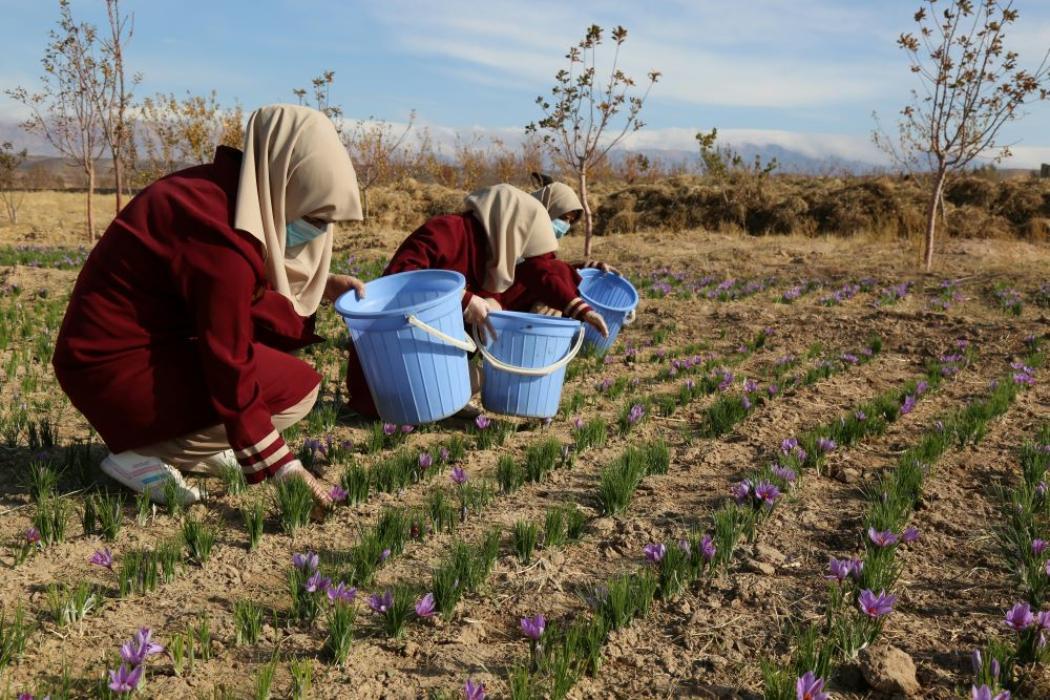 In Afghanistan, women and girls play crucial roles in managing natural resources through roles in agriculture, foraging, and seed saving, yet are often excluded from formal decisions around conservation. Photo credit: Mustafa on Unsplash
Why implementation is not straightforward
Although the Principles enjoy broad support from governments, donors, civil society organisations and researchers, they inevitably encounter the complexities of real political, social and institutional systems.
For example:
- National legal frameworks may inhibit genuine local leadership, even where decentralisation is officially encouraged. In several southern African countries, contradictory or incomplete forest and land laws prevent communities from making decisions about the resources they depend on.
- Formal recognition of customary land rights may conflict with existing conservation measures. For example, in the Northern Sierra Madre, ancestral domain claims and long-standing local use overlapped with strict conservation zones, stalling both rights recognition and conservation efforts
- Efforts to promote local leadership can be undermined if the actors with the most influence (even inadvertently) legitimise – or even exacerbate – or socio-economic inequalities.
These tensions do not mean the principles are unworkable. Rather, they highlight the need for honesty about the challenges organisations face, and for collective learning about what helps, what gets in the way, and where unexpected synergies might arise.
A horizon scan to capture global perspectives
The purpose of the horizon scan is not to revise or rank the Principles, but to gather diverse perspectives on the issues that can arise when trying to implement them. Drawing on a structured process developed with GCBC and an expert steering committee, the horizon scan will explore three types of insight:
- Challenges – barriers, constraints or risks that make implementation difficult.
- Trade-offs – cases where achieving one desirable outcome may compromise another.
- Co-benefits – positive outcomes that go beyond the original intention of the principle.
The process will begin with an open online survey later this year, inviting contributions from across the world. Participants will be encouraged to reflect on one, several, or all the principles, and to submit examples or insights from their own work. Contributions will then be cleaned, clustered and synthesised into coherent themes.
Regional online workshops will follow, providing an opportunity to discuss and prioritise the most important issues. Finally, the project will culminate in a peer- reviewed publication and a suite of practical guidance materials designed to support governments, NGOs, funders and community groups seeking to implement the Principles in more effective and equitable ways. The project also aims to provide the basis for follow-up research on pathways to successful implementation.
The horizon scan is co-led by myself and colleagues at GCBC, with oversight from a steering group that includes internationally recognised experts in inclusive conservation, governance, gender, and biodiversity policy. A growing Community of Practice has also emerged around this agenda – particularly among GCBC- supported grantees and participants in the original Wilton Park meeting.
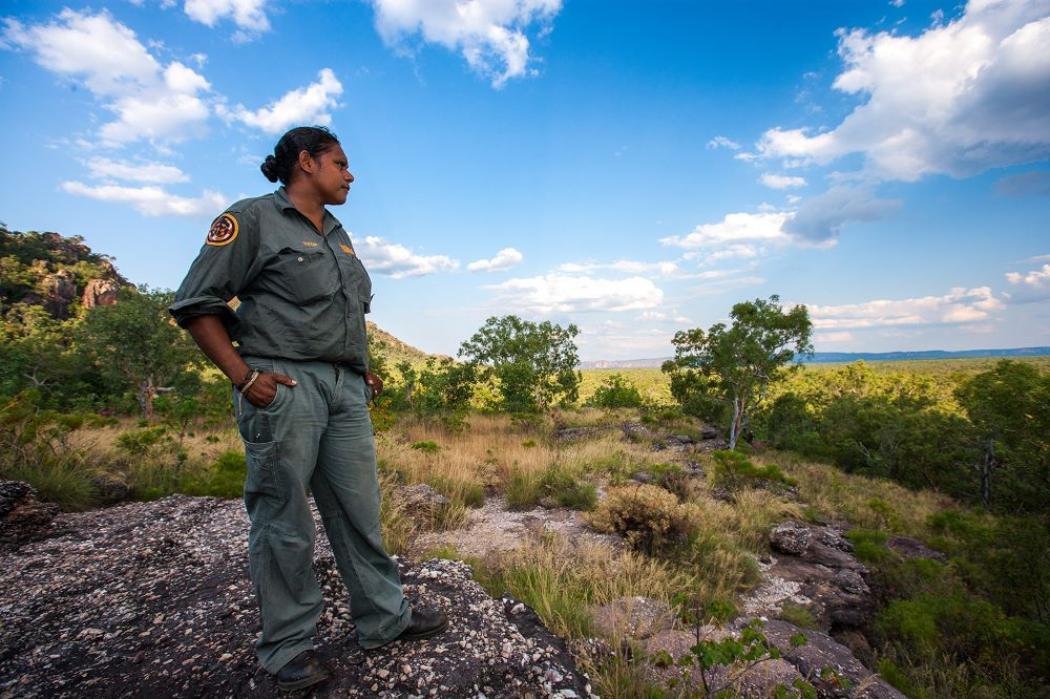 In northern Australia, Indigenous ranger programmes in places such as Kakadu National Park have shown how recognising Indigenous leadership and knowledge can deliver clear co-benefits for biodiversity and local communities. Photo credit: Parks Australia’. Licensed under creative commons CC BY-NC-SA 2.0
How you can get involved
One of the aims of this horizon scan is to draw on a very broad set of experiences. Inclusive conservation looks different across regions, cultures, ecosystems and political systems – meaning that no single organisation or discipline holds all the answers.
We therefore warmly welcome interest and involvement from colleagues both within and beyond the University of York. When the survey is launched, we encourage academics, practitioners, donors, policy specialists, and community- based organisations to contribute their reflections. You may choose to respond individually, or collectively as a group or research team. Insights from outside the UK – especially from stakeholders and practitioners in the global South – will be particularly valuable.
If you would like to help contribute to this project, then please feel free to reach out to me, and I will make sure you are alerted when the survey is officially launched.
Looking ahead
The Principles for Inclusive Nature Action offer an ambitious and timely framework for rethinking how biodiversity action is designed, led and implemented. Yet ambition alone is not enough. By coming together to explore the realities that shape implementation – the constraints, the tensions, and the unexpectedly positive outcomes – we can help ensure that future conservation efforts are both more equitable and more effective.
As the impacts of biodiversity loss and climate change intensify, the need for inclusive, rights-based, locally led action has never been clearer. This horizon scan is a step toward understanding what it takes to make that vision a reality – and we hope you will join us in shaping it.