
Effectively managing sub-tropical savannas
Posted on Friday 12 December 2025
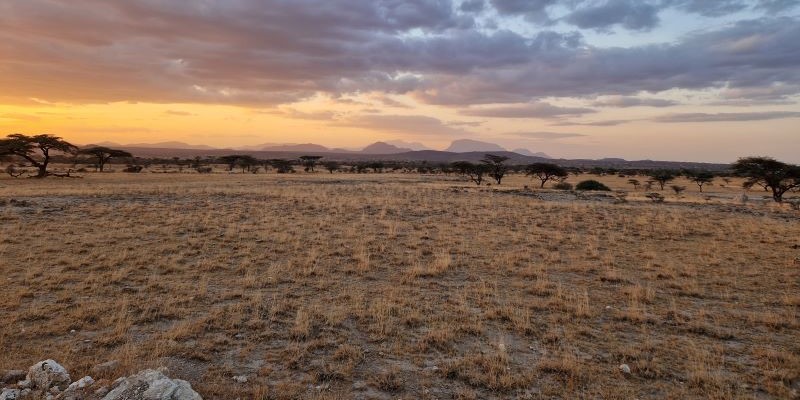
Often seen as a readily available, cost-effective, and environmentally sound means of increasing carbon storage in grassland areas, the homogenisation of otherwise heterogeneous savanna, via afforestation, is becoming increasingly prominent in climate change mitigation policy across Africa. But in areas such as savannas, the natural state is not one dominated by trees. Savannas provide a plethora of ecosystem services; however, the value of these landscapes and their merit as carbon stores may be undervalued by landscape managers and policymakers alike.
Understanding how these dynamics play off against each other and trade off against carbon stock demands will likely play a key role in effectively managing sub-tropical savannas.
Afforestation and fire suppression schemes are dominating the carbon mitigation policy in sub-Saharan Africa. The Kruger National Park (KNP) is no different. Nearly two million hectares, KNP is an area comparable in size to Wales. Currently dominated by grassland and savanna ecosystems, the park is managed by South African National Parks (SANParks) with biodiversity conservation being a primary focus. However, when confronted with a statement like this as an ecologist, I always wonder what are they actually conserving to? What is the baseline?
Current media coverage would have you believe that the tree cover in KNP has been drastically reduced in the past few decades by growing elephant numbers, fire, and climate change; therefore, why not plant more trees to restore numbers to what they were? Unfortunately, it is not quite as simple as this. The idea of “what the park should be” is likely heavily influenced by colonial activities, such as mass hunting and the impacts this had on the fauna makeup of the landscapes now being conserved. Could it be then that the landscape is just returning to a steady state?
To find out whether this is the case, we intend to utilise paleoecological data, in this case, tree pollen from six basins in the KNP. By applying age depth and dispersal models, we hope to reconstruct the park's tree coverage over time. This historical record is then converted into quantifiable carbon stocks using above-ground and below-ground carbon measurements, which we can then verify. By generating these models and exploring how both tree cover and carbon stocks may have fluctuated over time, we hope to explore and predict the range of possible future carbon stocks under various environmental and management scenarios.
The second part of this project will involve stakeholder consultations and a review of the existing literature to determine the ecosystem services gained from the current landscapes of the park. We can then use the model to determine the tradeoffs associated with future scenarios. These bundles of tradeoffs and future scenarios can then be presented to the stakeholders, allowing SANParks to implement a management scheme that will guide the park towards the preferred future scenario.
Fundamentally, we hope that by taking this holistic assessment of ecosystem services, complemented by insights from a modern study and paleoecological data, we can provide the information that SANParks will need to make the most informed decisions regarding the future management of the Park.