
Aligning Environmental Agendas for Nature Recovery - unlocking synergies through an ecosystem approach in the UK
Posted on Tuesday 25 November 2025
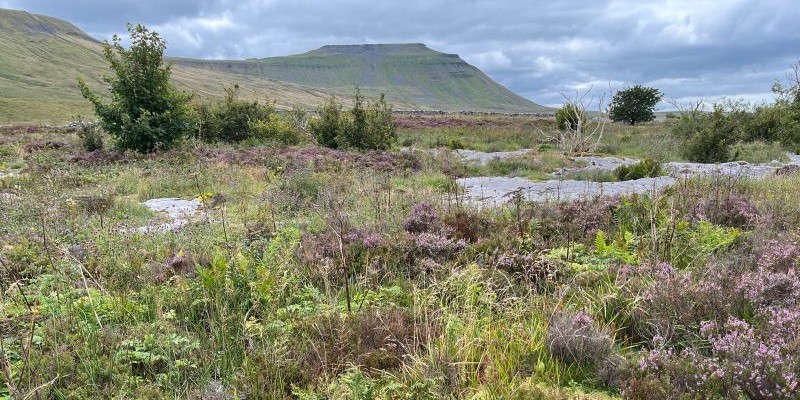
The report highlights that an ecosystem approach is the best way to make sure that ecosystems continue to function for people and nature. Whilst there are many examples of conservation successes in improving the status of individual species, the authors of the report argue that an ecosystem approach is a more effective way of boosting biodiversity. An ecosystem approach aligns well with many LCAB researchers who integrate socio-ecological perspectives. The lead authors are Nathalie Pettorelli and Rosie Hails, and many of the co-authors are members of Defra’s Biodiversity Expert Committee, including LCAB’s Jane Hill, providing opportunities to share ideas with Defra on how such an approach can be implemented in the UK.
Why is an ecosystem approach being recommended?
Adopting a standardised ecosystem approach that can work alongside species-based approaches could lead to a much better return on investment and deliver better outcomes for people and nature. Countries such as Italy have made great progress in this respect, recently publishing their national Ecosystems Map, and providing a framework for others to follow. The report includes several case studies that highlight how ecosystem approaches have been successful, including Lyme Bay in Dorset, Loch Levan in Scotland, and the Riven Wensum in Norfolk. In these examples, integrated approaches have delivered better outcomes than focusing on individual species, features or sites. For example, in Lyme Bay, an ecosystem approach that includes socio-economic approaches, has resulted in the total abundance of taxa increasing by 95% compared with only 15% in neighbouring locations that are using feature-based management approaches (Renn et al. 2024).
So why has the report been produced now?
The report was launched to coincide with COP30 (10-21 November 2025; UN Climate Change Conference in Belém, Brazil). These COP meetings focus on climate change but it is clear that the global challenges of climate and biodiversity need tackling together to produce successful outcomes.
A plea for taking an ecosystem approach in conservation has been around for decades - and an ecosystem approach was introduced by the Convention on Biological Diversity in 2000. However, the authors argue that the time is now right for the adoption of ecosystem approaches given that there are now agreed definitions and topologies for ecosystems (e.g. IUCN definitions) that were not available previously. Arguably, nearly all of the information that is needed to identify, map and assess UK ecosystems already exists, capitalising on Defra’s Natural Capital and Ecosystem Assessment Programme. The report argues that an ecosystem approach will be most effective at achieving UK commitments to nature recovery through the Environment Act and the Kunming-Montreal Global Biodiversity Framework.
What are the main recommendations?
The report makes four recommendations: (1) standardise and align ecosystem monitoring frameworks; (2) integrate the species and ecosystem perspectives; (3) make use of the ecosystem perspective to align global and national agendas; and (4) assess the risks that ecosystem changes pose to people. The next step is to share the report with stakeholders and follow up on these recommendations.
Sir John Lawton, in his foreword to the report, says “fully functional ecosystems are not just ‘nice to have’ for nature, but fundamental for human health, happiness and (without being too dramatic) survival. It’s hard to think of anything more important.” The report concludes that “We must grasp both the opportunities and myriad benefits offered by the ecosystem approach … delivering [of] robust ecosystems with their extraordinary benefits for all life on Earth.”
What is the relevance to Leverhulme Centre for Anthropocene Biodiversity (LCAB) research?
A systems approach is core to LCAB’s interest in reconnecting people and nature and managing complex social-ecological systems in ways that benefit all. It is possible that progress on ecosystems has been hampered in the past by the suggestion that ecosystem approaches and species-led approaches are somehow in opposition, whereas a greater integration might reveal novel approaches to conservation. For example, John Lawton suggests that rewilding represents a way of considering the integration of species and ecosystem perspectives for articulating a vision for nature recovery that goes beyond conventional protected area or species based approaches.