
The lakes of the Lake District
Posted on Monday 19 January 2026
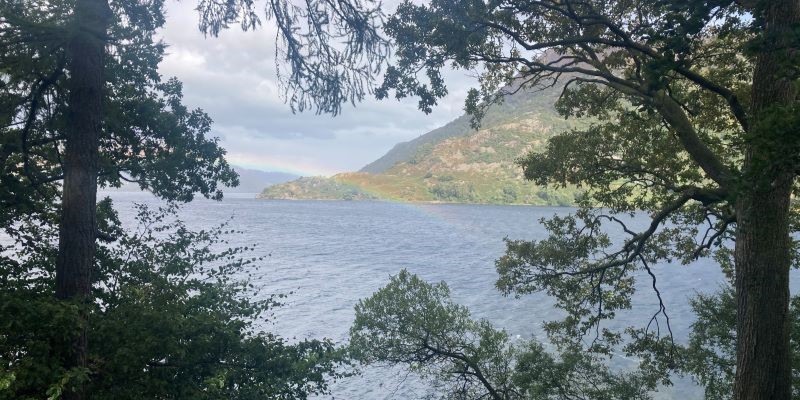
The Lake District, popularised through the Romantic period for its awe-inspiring landscapes and strong rural communities, evokes joy for many of us; we picture tranquil lakes, imagine verdant landscapes and reminisce on holidays spent climbing the hills. However, despite the widespread popularity of the National Park, there are few descriptions in literature of the lakes themselves.
As far back as 1675, Ullswater is mentioned in Sandford’s ‘A cursory relation of all the antiquities and familyes in Cumberland’ as containing “scellies in abondance” and a “great store of some chars” [1]. In J.Clarke’s 1789 book ‘A Survey of the Lakes of Cumberland’, which speaks of a thriving fishing industry operating from Pooley Bridge, hauls from nets could easily number 10-12,000 fish, with a regular fishing market at Penrith indicating high demand [2]. At some point, there are alleged to have been 21 fishing companies working the lake. However, somewhere between the publication of J.Clarke’s book and the 1860s, the entire industry appears to have vanished. Dorothy Wordsworth refers to fishermen working at Place Fell in 1805 [3], but by 1829, census records indicate no fishermen. Newspaper entries from the 1860s discuss the decline in fish numbers at the lake, and it seems that recreational fishing decreased as a direct result of this. So the question here is: where did the fish go, and what caused this apparent decline?
A significant part of my research aims to answer this question. Piecing together various sources of historical information (fishing guides, romantic literature, newspapers, generational ecological knowledge), I hope to be able to gather sufficient data to attempt to model the history of the lake. Currently, my research is indicating that the pollution from Greenside Mine may be mainly to blame for the extinction of arctic charr (Salvelinus alpinus) [4], but other factors may be at play, such as overfishing. I suspect that there was a tipping point at some point in the 1850s, after which the arctic charr population could no longer be sustained. Numbers of schelly (Coregonus stigmaticus) also significantly dropped at a similar time, going from a record draught of “between seven and eight thousand” [4] in the 1770s to “presumed totally extinct” [5] in 1872. However, extreme weather in both 1966 and 1977 resulted in “hundreds of dead schellies” [6] [7] washed up on the shoreline, indicating that the population was still present later on.
It won’t be possible to explain all of the fluctuations in these populations but ultimately I aim to create a set of models that can answer some questions that arise throughout history. For example, is it possible that the pollution from the mine would be sufficient to wipe out an entire population of fish within several years? Would an earlier ban on netting have been enough to prevent the collapse of the populations? What would be the carrying capacity of the lake?
In addition to this, I hope to be able to consider the future of Ullswater. Following two participatory workshops that I ran in Pooley Bridge, I have gathered some main concerns of local stakeholders and residents, which I will incorporate into my projections. Tourism and poor water quality were raised as primary issues, so creating indicators that reflect this will be important. There is also potential for incorporating introduction of predatory species such as pike, mapping any chemicals that may be entering the water and finally considering effects of a changing climate.
References
[1] Sandford, Edmund A cursory relation of all the antiquities and familyes in Cumberland 1675
[2] Clarke, James A survey of the lakes of Cumberland, Westmorland, and Lancashire: together with an account, historical, topographical, and descriptive, of the adjacent country 1789
[3] Wordsworth, Dorothy Journals of Dorothy Wordsworth Vol 1 Edited by Ernest de Selincourt 1941
[4] Braithwaite, George Foster The Salmonidae of Westmorland: Angling Reminiscences ; and Leaves from an Angler's Note Book Hamilton, Adams and Co., London 1884
[5] ‘Piscator’ Ullswater Field Vol.39 (1,012) 1872-05 p.442
[6] Fish which is peculiar to Ullswater - Hundreds dead along lakeshore Cumberland and Westmorland Herald 29 Jan 1966 pg 1
[7] More dead schelly fish at Ullswater - Rough weather to blame? Cumberland and Westmorland Herald 09 Jul 1977 pg 1