
Understanding the complexities of biodiversity change
Posted on Thursday 5 February 2026
Biodiverse ecosystems support essential ecological processes which provide the services that humans rely on, including clean air and water, crop pollination, healthy productive soils, and climate regulation. Ecosystems that host a rich diversity of species also tend to be more resilient and capable of maintaining those essential ecosystem services in the face of environmental change.
In the Anthropocene, human activities are significantly impacting the natural world. Drivers such as habitat loss, overexploitation, pollution, invasive species, and climate change are all contributing to increasing pressures on ecosystems, which can result in the loss of species, habitats and ecosystem functions. It is therefore vital that we understand how biodiversity is changing in response to widespread human pressures, and how effective conservation policy and management interventions are likely to be.
Yet, measuring biodiversity is not an easy or straightforward task, with continuous debates in the literature about how biodiversity is changing, and to what degree, across the planet. While global rates of species extinctions are high, biodiversity trends at local scales present a more complex picture. Species richness - the number of species found in a site - is commonly used to measure biodiversity. However, at local scales, species richness does not always show a consistent pattern of decline, which would indicate a systematic biodiversity loss. While many habitats are seeing some species disappear, new species often take their place, most commonly through distributional changes and range shifts. In some places, the arrival of new species is sufficient to offset the losses, resulting in relatively stable species richness trends over time.
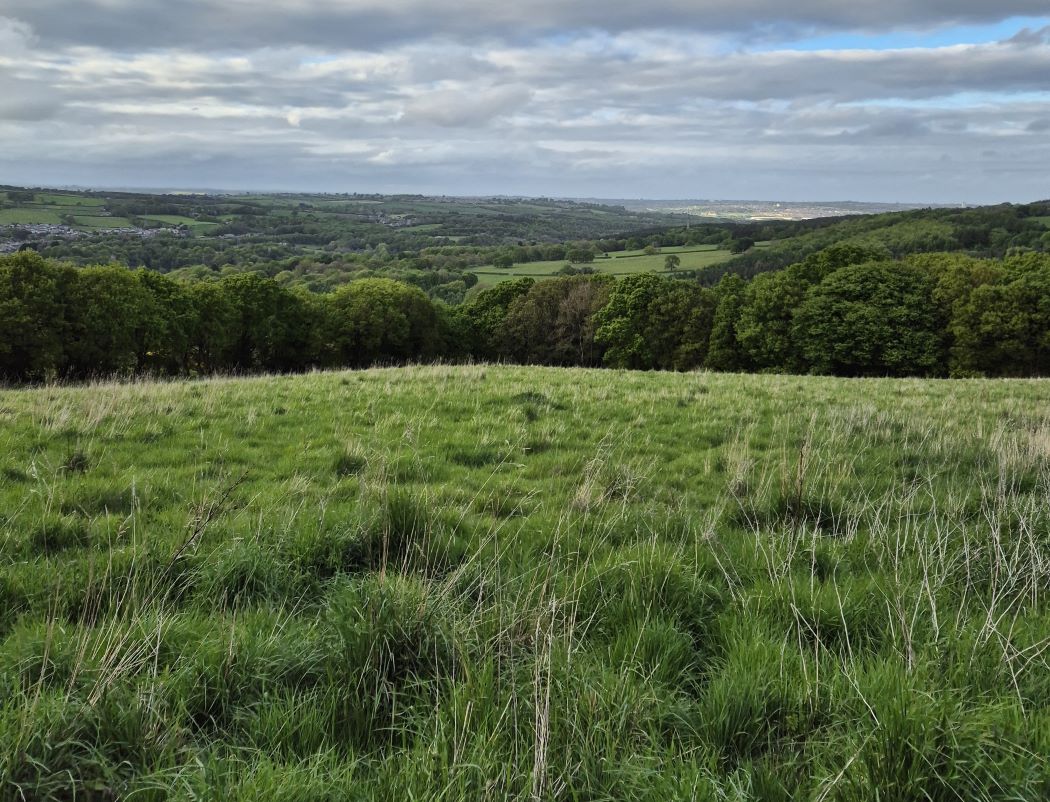 Mosaic of pasture, grassland and woodlands in Northern England. Diverse arrays of habitats often lead to diverse communities of species (Photo: Daniel Gray)
Stability in species richness, however, should not be mistaken for ecological security. Species richness is only one measure of biodiversity and cannot alone provide us with a clear picture of how ecosystems are changing. Other critical biodiversity metrics, including the relative abundances of species and their identities (including the variety of ecological roles) may be shifting dramatically, even when richness remains stable. The speed at which species communities are changing (temporal turnover), or the degree to which communities are becoming more similar (beta diversity), can also be used to monitor biodiversity change, as these measures may observe trends that richness alone cannot detect.
There are many factors that may influence the observed trends in biodiversity, besides the choice of biodiversity metric, leading to inconsistencies in findings and debates among researchers. For instance, discrepancies may be due to differences between geographic regions, ecosystem types or drivers of ecological change, but may also pertain to other methodological choices, including the types of data used, analytical approaches applied, and the spatial and temporal scales at which it is observed.
LCAB PhD student Victoria Coulton, along with supervisor Dr Inês Martins, is beginning to address some of these questions, to enhance understanding of how biodiversity is truly changing in response to human interventions. Throughout her PhD, Victoria will work on exploring the effects of multiple interventions such as land-use change, conservation policies, and habitat management on biodiversity trends. By comparing different methodological approaches and examining how they shape our interpretation of biodiversity trends, this research will help bridge existing gaps in the field and support more robust, comparable assessments of ecological change.