
Reflections on an overseas fellowship
Posted on Monday 23 March 2026
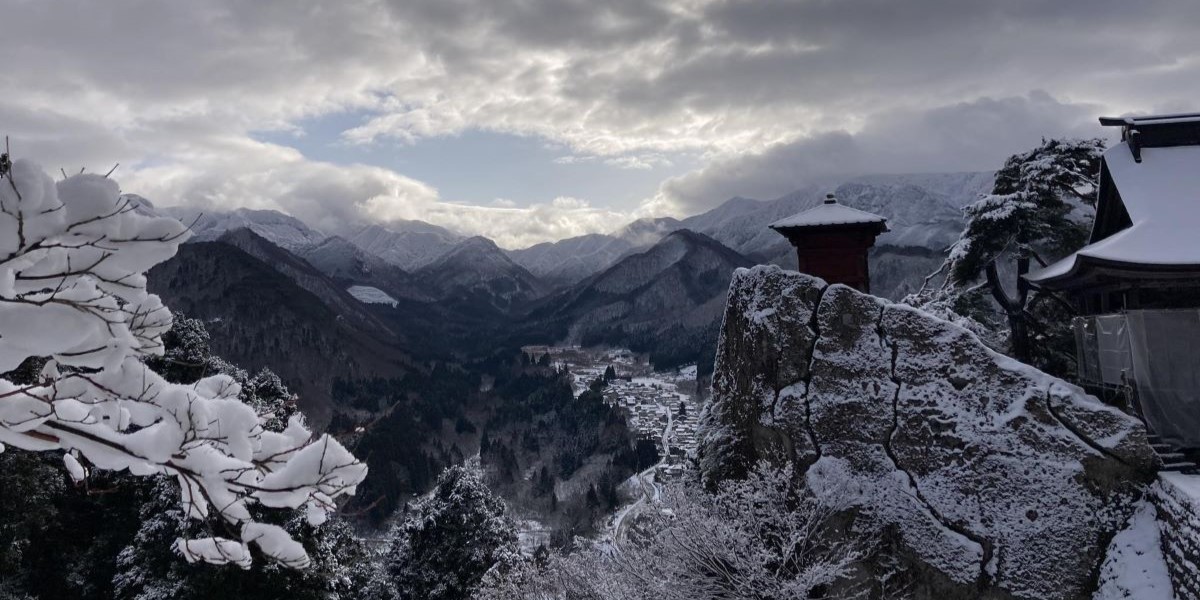
Last year, I was awarded a fellowship to move to Japan and conduct a portion of my PhD research. As a first-year student, I was familiar with visiting opportunities to other universities, but never of fellowships available to those who had not yet completed their PhD. I hope others might consider this or other overseas fellowships for their PhD or early academic career.
I have tried to condense below some of the most striking parts of the experience to me, but there was a lot more I got out of the fellowship.
JSPS and the fellowship
The Japanese Society for the Promotion of the Science (JSPS) is an independent government institute in Japan with ‘the purpose of contributing to the advancement of science in all fields of the natural and social sciences and the humanities’. The institute runs a series of international fellowships of various durations for early-career researchers, which, despite being referred to as ‘postdoctoral’ , are open to PhD students in their final years (2nd and 3rd year depending on your course duration) and postdocs.
For JSPS programmes but I think other international fellowships too, the application process was relatively long: I started the application to the JSPS PE Fellowship programme in mid 2024 by contacting professors I would have liked to work with, and I arrived at Tohoku university in Sendai at the start of August 2025 where I stayed for six months.
During this time, I worked at the Graduate School of Environmental Studies on the second chapter of my PhD research - the development of a consumption model capable of retracing the transnational impacts of capture fishing on biodiversity.
An opportunity to focus on research
Maybe this reveals more about my organisational skills rather than the fellowship, but, by setting down a clear project for the fellowship with clear goals and deadlines, I was able to carve out some time to focus on that research and not being dragged into my other PhD projects or wider academic work. I actually tailored my application on purpose so that the research in Japan would overlap with one of the chapters of the PhD.
Moreover, I found myself with more time for the research in general. By not being a full member of the university but only a visiting researcher I had fewer commitments. Additionally, whilst this may differ depending on the university, department and lab, I found that there were fewer meetings and events, which could sound as a downside but gave me more time to spend more time doing actual research.
Focusing on the single project was really beneficial for progress, but I had to remind myself at times to ensure a functioning worklife balance: it is the cultural norm in Japan to have longer working days, and simultaneously it is easy to get drawn in the work for the fear of not being able to finish the research within such a strict timeline.
A whole new world (of expertise)
Another major perk of the fellowship was to access an entire network of experts that from the UK was either difficult to find or simply not possible to collaborate with due to time differences. Having basically another supervisor on top of the PhD ones not only provided interesting views from methodology to publication, but also helped linking up with experts across the country. This was further supported by the extra funding provided by the fellowship, allowing extensive travelling for meetings and conferences. Some of these links have turned into full collaborations for my other PhD projects.
Moreover, I found that fewer meetings meant that, when they occurred, they were more tailored to discuss specific relevant topics to the project. Colleagues at my lab, university and across the country were also open to help with the fellowship project and the wider PhD research.
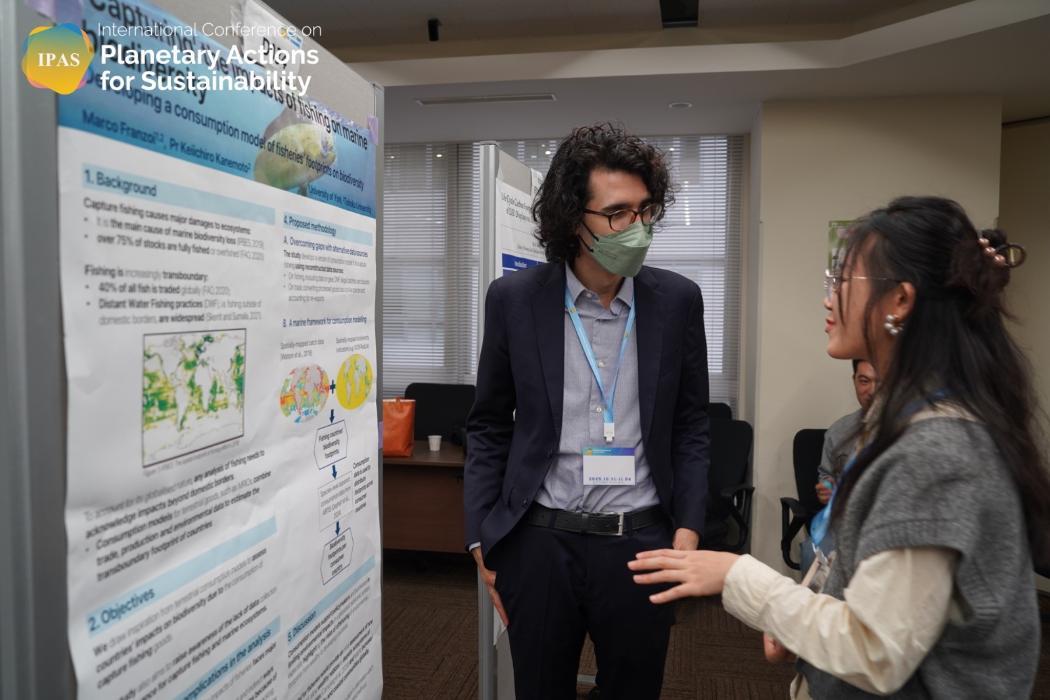 Poster presentation at the IPAS conference, discussing my research and trying not to spread a cold to the other 300 attendees.
Life outside research
While research is the cornerstone of the fellowship, it is equally important to dedicate time to other aspects of the experience—both the rewarding and the purely practical.
Navigating the administrative landscape in Japan can be quite different from the UK; the 'bureaucratic burden' is often higher, and the regulations can be complex to navigate initially. While the administration team is incredibly helpful, I found it vital to perform my own due diligence to ensure I wasn't over-relying on their support.
Being in Japan for six months meant focusing on truly settling in—developing a new routine and establishing a social circle while navigating significant cultural differences. This brought both positive changes and unique challenges. While living in accommodation for international researchers allowed me to meet others in my position, language barriers (many overseas researchers did not speak English or Japanese fluently) and age differences meant that building a community wasn't always as effortless as I had expected. Ultimately, speaking the local language was a major benefit, allowing me to build friendships and move more freely throughout the country.
Finally, if you are considering a fellowship, my main recommendation—aside from simply applying—is to embrace the experience in its entirety, well beyond the research itself. While I initially felt a sense of guilt for spending weekends or bank holidays exploring the country, I soon realized that these experiences were actually an investment in my work. Stepping away to explore left me feeling more fulfilled and energized, which in turn made me more productive than ever before.