
Researching God’s Acre: The Biodiversity of British Churchyards
Posted on Wednesday 18 February 2026
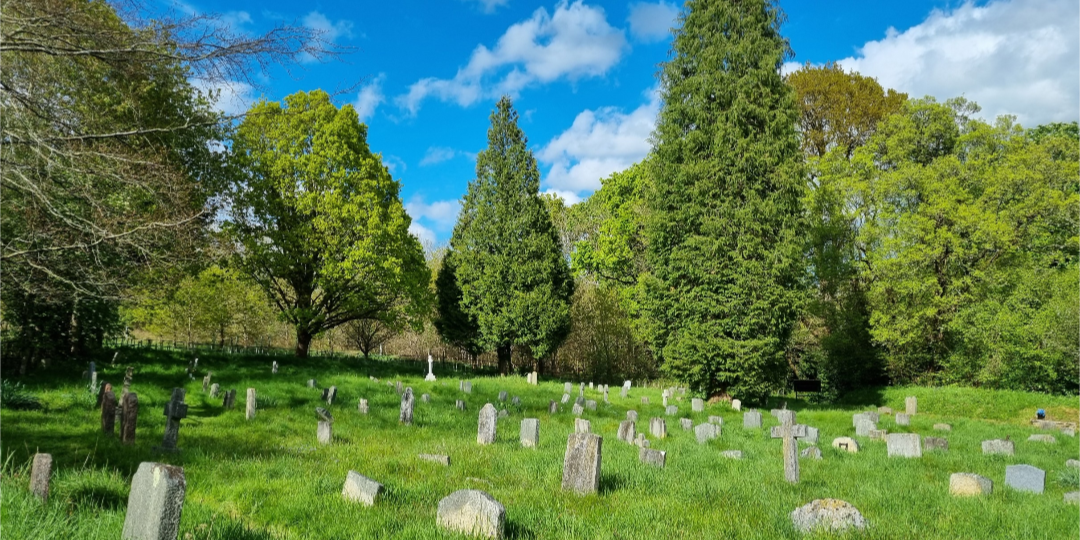
“I like that ancient Saxon phrase, which calls
The burial-ground God's-Acre! It is just;
It consecrates each grave within its walls,
And breathes a benison o'er the sleeping dust.”
- Henry Wadsworth Longfellow, 1842
I often find myself in a churchyard when in need of a moment of quiet contemplation, reflection, or simply a break from the relentless pace of modern life. While the idea of walking amongst the resting places of so many who have died - and therefore staring one’s own mortality in the face - might not seem like a relaxing thought, I find it soothing to surround myself with trees, birds, and flowers, and remind myself that life continues in all its infinite forms long after we return to the dust from which we are made.
This personal sense of solace is mirrored in the physical prominence of these spaces across the nation. Churches, and their associated churchyards, are a familiar sight across England and Wales; it is estimated that there are at least 20,000 churchyards in these two countries[1]. These sacred spaces are valuable archives of hundreds of years of social history, places for commemoration and remembrance, and sanctuaries for wildlife and flora. Their prominence in the landscape and in the lives of those past sees them featured in poetry, play, and story. Thomas Gray’s ‘Elegy Written in a Country Churchyard’ is undoubtedly one of the most famous examples. The fourth verse features the yew tree, the tree most strongly associated with churchyards:
“Beneath those rugged elms, that yew-tree's shade,
Where heaves the turf in many a mould'ring heap,
Each in his narrow cell for ever laid,
The rude forefathers of the hamlet sleep.”
Beyond the shade of the yew, Gray weaves other elements of the natural world into his landscape: the 'droning' beetle, the 'moping' owl, and the 'twitt’ring' swallow.
While Gray saw the churchyard as a place of quiet rest, modern perspectives have increasingly recognised these spaces as living landscapes with importance for biodiversity. They have remained relatively unchanged through the years, watching the country around them alter drastically, driven by industrialisation, urbanisation, and the intensification of agricultural practices. Due to the separation of consecrated land (which churchyards are) and unconsecrated land, the grassland habitat within churchyards mostly escaped the ploughing, fertilisers, and pesticides that impacted the surrounding landscape. As such, the ancient grassland ecology within churchyards can remain relatively unchanged from when the church was fenced hundreds of years ago. This type of grassland was widespread within the UK but has declined by 97%[2]. With much of what remains being held within churchyard walls or fences, these spaces have become a microcosm of a vanished natural habitat which, in turn, provides a home for a number of species.
These sites offer a unique diversity of habitat. The stone walls, headstones, grave markers and chest tombs provide niches for species such as ferns, mosses, algae and lichens. The British Lichen Society states that of the approximately 2,000 British lichen species, over a third are found in churchyards. In fact, in some parts of the country, there are species of lichen which are found exclusively in churchyards[3]. Even the church buildings themselves can be vital; research published in 2025 as part of the Bats in Churches Project found that around half of the 753 churches surveyed housed bats. When the churches were medieval, this percentage rose to 78.4%[4], highlighting the importance for conservation of these buildings for both historic interest and species protection.
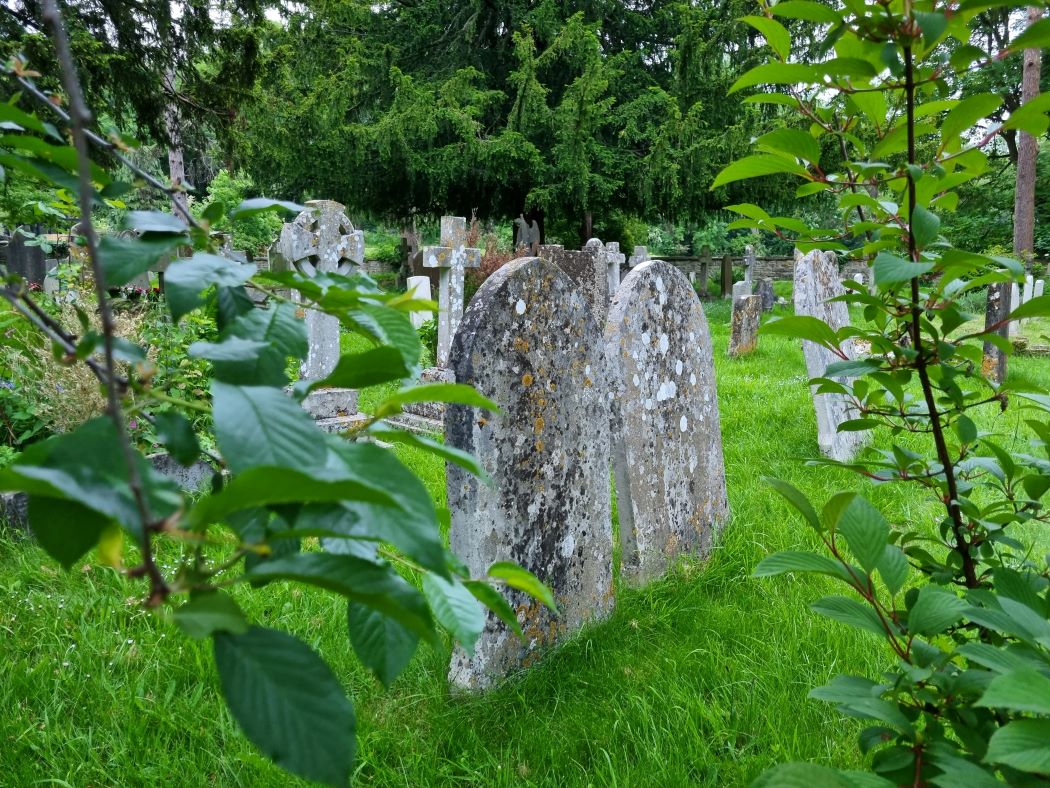 Holy Trinity Churchyard, Oxford: the resting place of C. S. Lewis. Credit: Jess Botha
Recognising this value, the charity Caring for God’s Acre, established in 2000, works to promote the conservation and appreciation of churchyards and other burial grounds[5]. Eco Church, an initiative launched in 2016 by the Christian charity A Rocha UK, provides a framework for sustainable management through a survey filled in by participating churches[6].
Having the opportunity to analyse this Eco Church data for the first time, I aim to provide insight into what these church groups are doing for nature, the methods they employ, and perhaps most importantly, the challenges they encounter. By combining these findings with ecological surveys and interviews, this research aims to create a clearer picture of what these sites contain, how they are managed for this biodiversity, and how these local efforts can be applied to nature recovery on a wider scale.
While there is evidence for the ecological importance of churchyards, the wider landscape faces increasing pressure. These 20,000 sites are time capsules of a vanished landscape and have potential to be important for nature recovery. By identifying which species live within their walls and how their habitats are best managed, this research aims to ensure that churchyards remain vibrant hubs of biodiversity. Additionally, it seeks to identify a management balance that fosters the life above the soil while maintaining a profound respect for the generations resting beneath it - preserving the sanctuary of ‘God’s Acre’ for the future as much as for the past.
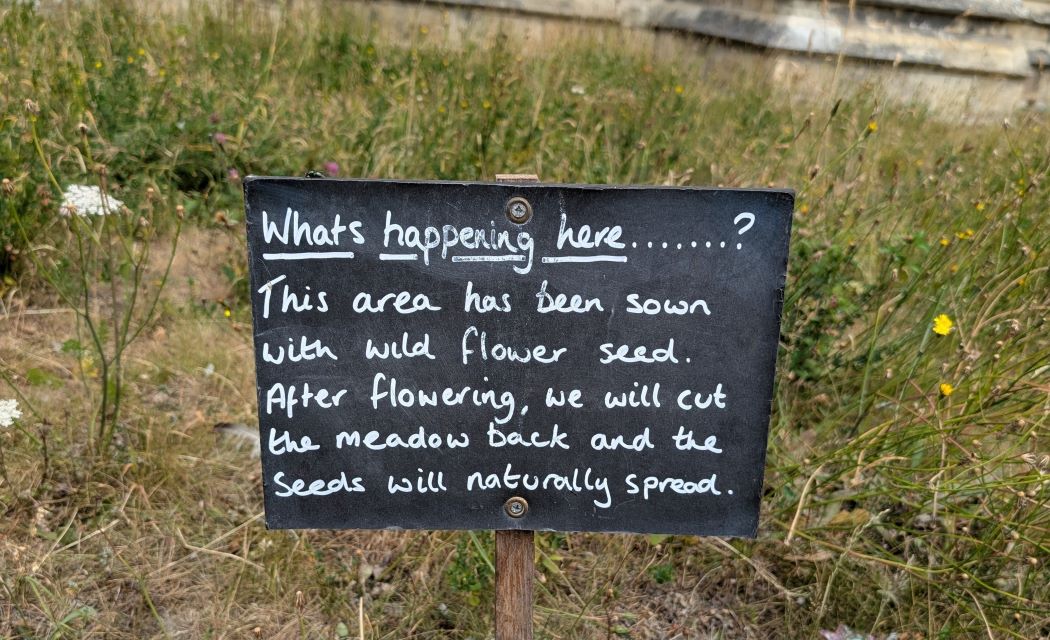 Information sign outside York Minster, a Gold Eco Church. Credit: Jess Botha
References
[1] Ministry of Justice (2007) The results of a survey of burial grounds in England and Wales
[2] Caring for God’s Acre (2025) Meadows and Wildflowers
[3] The British Lichen Society (2025) Churchyard Fact Sheet
[4] Boothby et al. (2025) Understanding bats in English churches: A citizen science approach. People and Nature, 7(12), pp.3154-3167
[5] Caring for God’s Acre (2025) About Caring for God’s Acre
[6] A Rocha International (2025) Eco Church