
Urban green spaces matter most where people and biodiversity are most vulnerable
Posted on Friday 7 November 2025
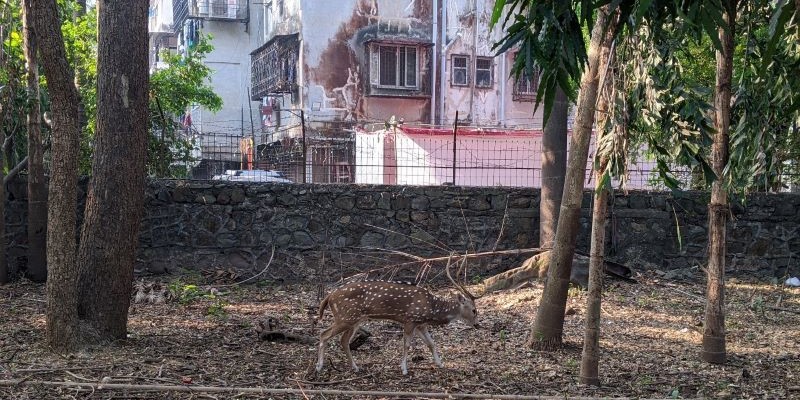
Over half of the world’s population now lives in cities, with the move driven by better access to education, healthcare, employment, modern technology and cultural exchange. However, this comes at a cost; space for such amenities must be prioritised, and high demand for resources reaches far beyond municipal borders to support a concentrated population. This is especially true in low- and middle-income countries (LMICs), where rapid and often informal urbanisation leaves little room to factor in space for nature. The ecological impact of this is particularly concerning in tropical LMICs, where the habitats of rich and rare biodiversity are lost and fragmented, and extreme weather events can’t be absorbed as readily. As well as the impact on wildlife and climate resilience, losing contact with nature and its well-documented health benefits can have detrimental impacts on the wellbeing of urban dwellers.
Urban green spaces, from public parks to green roofs, have the potential to mitigate some of the negative effects of urbanisation, delivering broad positive impacts to people, biodiversity and the urban ecosystem. This aligns with the concept of ‘One Health’ – an approach to tackling complex challenges at the human-animal-environment interface with holistic, whole systems thinking. Urban green spaces can keep cities cool, filter harmful pollutants, intercept storms, trap carbon dioxide, provide spaces for exercise and restoration, and support wildlife by offering refuge or corridors to move through the city. However, in tropical LMICs, many urban green spaces are under-researched, under-managed and under-performing, with some even harbouring harmful pollutants and disease vectors.
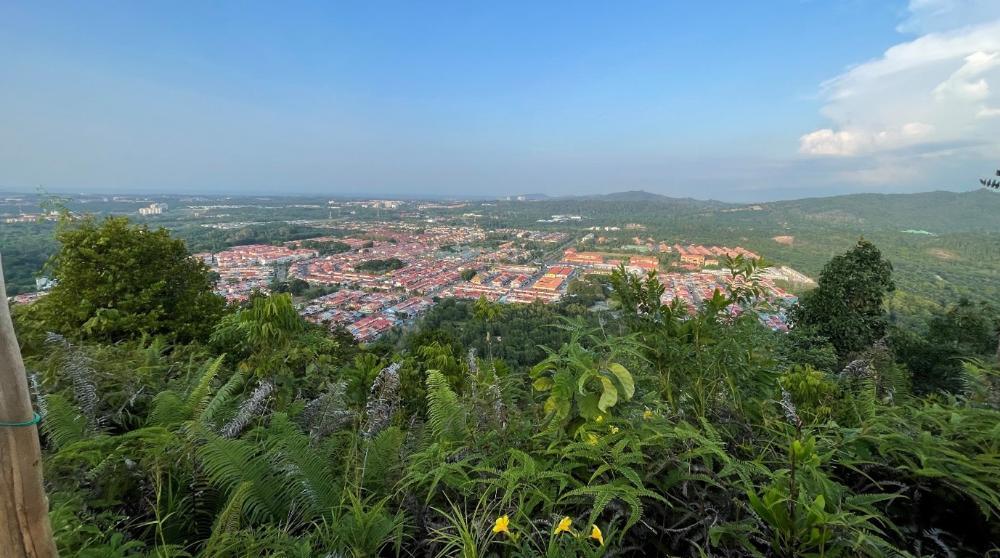 Bukit Taman Mawar, a hiking trail on the edge of the city of Sandakan, Malaysian Borneo. This popular trail draws many local people and visitors for a rewarding walk through dense jungle up to the viewpoint. Photo: R. Morris.
Rebecca Morris, a PhD student at the Leverhulme Centre for Anthropocene Biodiversity, talks about her project investigating this multi(dis)functionality of urban green spaces by examining the existing research, and planning her own case study in Bangladesh.
My scoping literature review of urban green spaces in tropical LMICs explores research where two or more One Health outcomes (human, wildlife or environmental health) are investigated together. After reviewing 5177 titles and abstracts, a clear pattern is emerging – urban green space research in tropical LMICs often focuses on mitigating problems, rather than enhancing quality of life or complementing the urban ecosystem. This is understandable as a baseline must be reached before enhancements may be sought, however this perspective might limit the true potential of urban green space benefits. Also, few studies assess urban green spaces at a systems level – that is, they rarely investigate all three One Health outcomes simultaneously, thus missing potential opportunities to identify synergies and trade-offs. This is also understandable, given the multitude of methods that could be employed to collect such data, however it is the multifunctionality that makes green spaces so special. Tree cover, for example, can provide shade, sequester carbon, attract birds and harbour a sense of place all at once. The birds that a tree attracts might also have an especially beautiful song, providing an enhanced calming experience for those who sit beneath it. Particular species of tree might perform better in one or all of these benefits than others, or actually be problematic in some way, producing allergenic pollen or attracting pests. This is the value of a whole system or One Health perspective, seeing the wood for the trees.
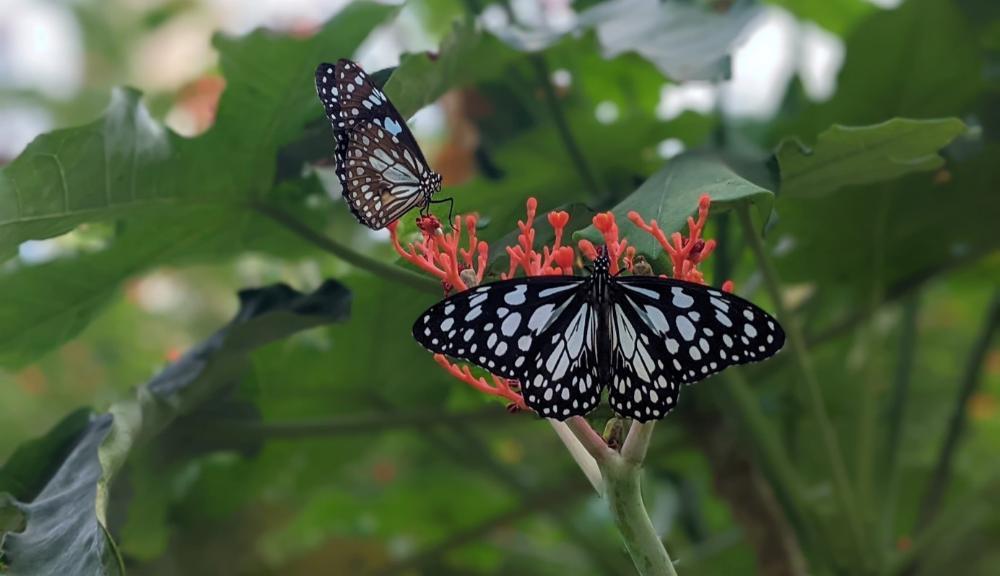 Blue Tiger butterflies at Maharashtra Nature Park in the heart of Mumbai, India. Hosting a wide variety of carefully managed plants that attract many insects and birds, it is a place to connect with nature in the otherwise human-dominated landscape. Photo: R. Morris.
This is why I will be working with a diverse range of Bangladeshi collaborators in socioeconomic development, public health, biodiversity, climate change and urban design. I plan to include place-based research in public parks, and participatory action studies with stakeholders to determine what the ideal urban green spaces in their cities might look like.
Within a number of parks across a number of cities, I plan to collect data on:
- Public perceptions on the impact of the park on wellbeing, and what characteristics are most important, through questionnaires and interviews with park visitors.
- Wildlife in the park, through surveying a variety of species including birds, butterflies, bats and aquatic invertebrates, including evidence of ecosystem services such as pollination.
- Climate, pollution and carbon sequestration as evidence of a healthy functioning ecosystem, using a variety of data collection methods.
Participatory action might include a utopian thinking activity imagining the ‘perfect park’ through a table-top game where stakeholders co-design a green space that has maximum benefits. Photovoice, a method where participants take photos to share and reflect upon their personal experience of a subject, might also be employed, showcasing what nature means to urban communities and how they connect with it.
I’m setting off for a scoping visit to Bangladesh in a few weeks to meet collaborators and develop these ideas. It is through collaboration across disciplines, skills and priorities that urban green spaces in the Anthropocene might be an effective One Health solution to urbanisation in tropical LMICs.