
Why Scientists Need to Tell Their Stories: Lessons from the Voice of Young Science Workshop
Posted on Wednesday 27 August 2025
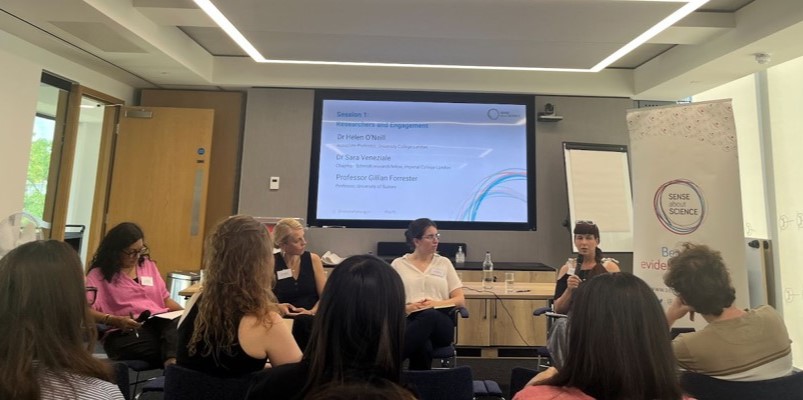
The event brought together early-career scientists to explore how we can communicate research clearly, confidently, and creatively to the public.
Throughout the day, speakers including psychologist Gillian Forrester, geneticist and business person Helen O’Neill, and AI researcher, mathematicism and policy adviser Sara Veneziale challenged us to rethink what we value as scientists. The key message was simple: communication should not just be an add-on, it should be an integral part of our job as (usually) taxpayer-funded scientists.
Science as a story
The idea that science is a story was a powerful thread running through the workshop. Whether we’re talking to policymakers, kids, or a diverse audience at a festival (as Gillian does at Glasto!), we have to find ways to make our work relatable and memorable. All the speakers stressed that we should try to avoid dumbing down our work, instead finding language and ideas that connect non-specialists to our research area.
Some of the best practical tips from the speakers were
- Test your explanation on a non-scientist friend.
- Aim for the “8-to-80” rule: can both an eight-year-old and an eighty-year-old grasp the idea?
- Tell your story without slides, using narrative rather than plots/images.
Changing the Culture Around Engagement
The workshop challenged the idea that outreach is optional but that funders, institutions, and PIs all need to buy into this. Engagement can - and should - be part of grant applications and impact statements, not a box ticked at the end.
Someone raised their hand to point out that the vast majority of outreach activities are done on a voluntary basis and that there is not usually ‘buy-out’ for time spent on them. This was a major obstacle to many doing more outreach and the speakers agreed, but said that positioning outreach at the front and centre of grant applications, rather than as an add-on, would help change the dial on this.
Honesty Builds Trust
Another key takeaway: scientists don’t have to know everything. It’s OK to say “I don’t know” in public. Admitting uncertainty makes science feel human and credible. It also gives us space to evolve our understanding as new evidence emerges, avoiding getting trapped in the “I told you so” dynamic that often plays out in public debates.
“Learn it till you earn it, not fake it till you make it.” (Gillian Forrester)
Dealing with Emotion and Misinformation
We also discussed how to navigate emotionally charged conversations, especially when dealing with people who see themselves as “experts” but are misinformed. The advice was clear:
- Show, don’t tell.
- Be evidence-led but empathetic.
- Be visible - scientists that can be seen are more likely to be trusted.
The speakers consistently emphasized that if we don’t actively communicate our research, others - sometimes less informed or with ulterior motives - will fill that void. This is especially relevant to our work at LCAB, where we address topics of public interest that are increasingly politicized and weaponised.
Overall, the biggest message I took from the VoYS workshop was a call to action: Don’t wait, start communicating your research now - be that with friends and family or to wider audiences through initiatives such as Pint of Science, the York Festival of Ideas or by visiting schools. It’s not about having perfect slides or media training; it’s about making science part of public life.