
East African Mountains: charting pathways to sustainable futures in the midst of social ecological complexity
Posted on Friday 7 November 2025

Mountains provide habitat for biodiversity as well as being important water towers, carbon sinks and food production areas. They contain steep climatic and ecological gradients, and are therefore sensitive to environmental change. Rapid change can occur over shorter temporal and spatial scales than occurs in lower-lying areas - as a result, they are home to unique biodiversity and are hotspots of adaptation.
The increased interconnection between human systems and ecosystems raises the question of how nature and societies will keep interacting in warmer, more populous environments that are more prone to extreme events. The mountains of East Africa have a rich biocultural heritage which has responded to changing environmental, ecological and socio-economic drivers.
The AFRI-CAN project
A new project, funded by a € 10 million European Research Council Synergy Grant, will explore these dynamics, and leverage a greater understanding of past dynamics to co-create pathways to sustainable futures. The project focuses on nine East African mountain settings, located in Kenya, Tanzania and Uganda, and examines the principal services provided by mountain ecosystems (food, energy and water) using a past-present-future approach covering key socio-environmental changes of the past 6000 years and extending into models simulating the next 40 - 100 years.
A more complete synthesis of data on past changes is helpful in highlighting how contemporary landscapes, ecosystems and human land-use strategies are legacies of past changes. It can also help a diverse range of stakeholders from community members to policy makers to envision complex systems and to more accurately forecast future change. The project aims to facilitate the co-production of plausible and mutually acceptable pathways to sustainable futures.
PI Professor Rob Marchant said “This is indeed great news for the wider community interested in Mountains, and mountain research. I am sure we can make the most of this opportunity and build a much stronger research community that is embedded within African partners. Research across the AFRI-CAN project will showcase how important mountains are for people, for nature and for future sustainability. Insights from the project will help us to navigate through the multiple and linked challenges that lie ahead in the coming decades. I am particularly excited about developing the science in an East African context and applying our insights to other mountain systems around the world.”
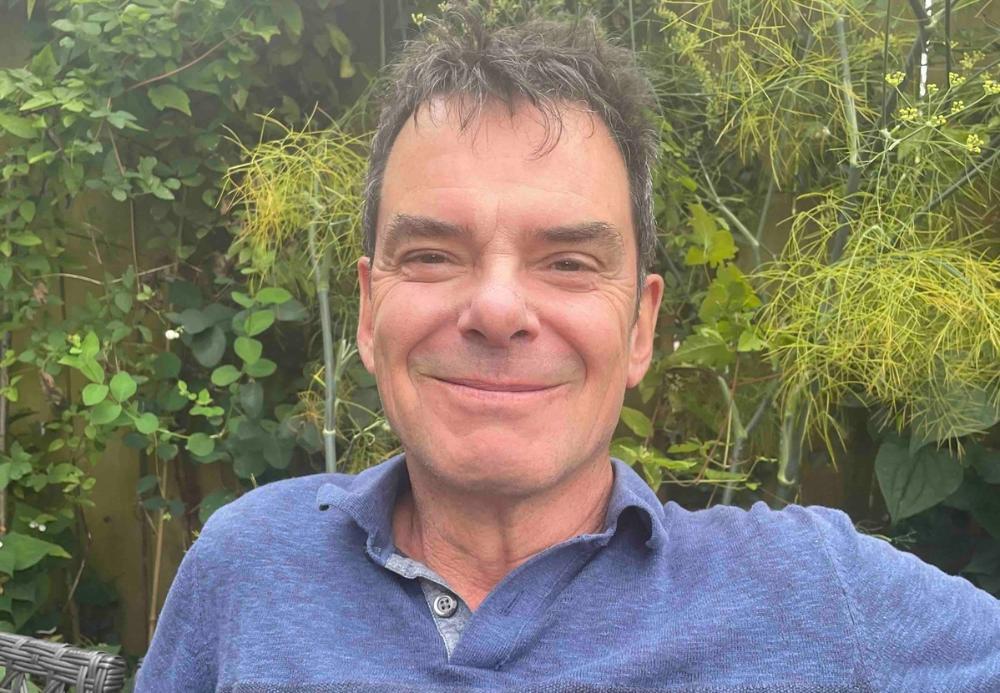 Professor Rob Marchant is PI on a European Research Council Synergy Grant focussing on social ecological systems in East African mountains, which will start in 2026
Interdisciplinary expertise
This use of past data to better understand the present and assess future sustainability is reflected in the team’s interdisciplinary expertise, which links the past to the present at decadal, centennial and millennial scales and includes palaeoecological, ecological, archaeological, remote-sensing and historical land-use research, together with work on colonial and post-independence conservation policies in Africa. The international team includes researchers from York, Cambridge, Basque Centre for Climate Change, BIEA, Makerere, SUA, and National Museums of Kenya.
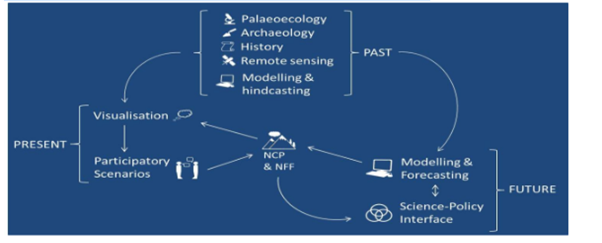
The AFRI-CAN project blends long-term data with stakeholder participation to develop plausible and desirable scenarios for the future of mountain social-ecological systems
The York team includes LCAB Director Lindsey Gillson and Fellow Christopher Lyon. Professor Gillson is delighted to be part of the project. “The interface between ecology and society is central to LCAB’s vision, as is the past-persent-future perspective. We want to understand complexity and change the narrative of doom and gloom to one of challenge, adaptation and opportunity. We can learn a lot from African Mountain social-ecological systems, where people have adapted to periods of rapid environmental and social change. We are very pleased to be part of the AfriCAN project and look forward to working with Rob and team on this exciting research.”
The ERC Synergy Grants foster collaboration between outstanding researchers, making it possible for them to combine their expertise, knowledge and resources in order to push the boundaries of scientific discovery. This funding is part of the EU’s Horizon Europe research and innovation programme. Alongside researchers from the University of York, the team includes experts from South Africa, Spain, Germany and partners from Kenya, Tanzania and Uganda. PI Rob Marchant, professor of tropical ecology at the University of York, has a research focus on ecosystems and how they change over time. Laura Pereira is a professor in sustainability transformations and futures at the Global Change Institute from the University of Witwatersrand, Johannesburg. Professor Unai Pascual is an ecological economist at the Basque Centre for Climate Change, and Thomas Hickler is a professor of biogeography at the Senckenberg Institute.