How does biodiversity conservation contribute to human wellbeing?
Posted on Friday 6 June 2025
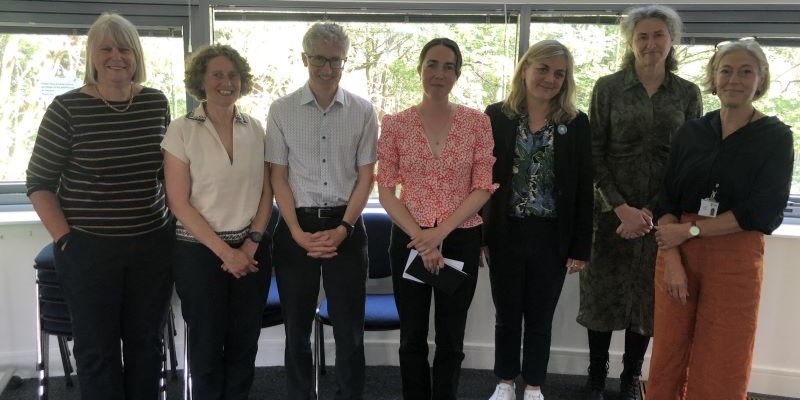
The event on 30th May brought together a group of experts with diverse perspectives, who discussed how biodiversity conservation and nature connectedness can contribute to health and wellbeing. This is an area LCAB is keen to explore more deeply from an interdisciplinary perspective, in line with our vision to contribute to more optimistic narratives of biodiversity change and human - nature connectedness.
Our special guest was Professor Baroness Kathy Willis, Professor of Biodiversity in the Department of Biology and the Principal of St Edmund Hall, University of Oxford. She talked about the findings in her new book Good Nature: The New Science of How Nature Improves Our Health. Kathy’s research includes an exploration of how interaction with nature can bring about positive physical and mental health outcomes. Kathy explained how research from medical journals has shown that biodiversity benefits our health through the sense of sight, sound, smell, touch and the hidden sense of our immune systems and microbiomes. Scents from cedar, for example, enhance cancer-fighting cells in our immune system, touching wood makes us feel calmer, and children playing in forest soils have healthier gut microbiomes than those who play in sand. Children also performed better in school if they could see green space from their classrooms. Kathy’s book empowers us all to make positive changes to our well-being through simple interventions such as having houseplants in our homes and offices, and enjoying the everyday scents such as lemon, prine and lavender. On a larger scale, she highlighted how access to green space has measurable benefits across all socioeconomic strata, with particular importance for those in more economically deprived areas.
Helen Elsey, Professor of Global Public Health at the University of York, spoke of how public health interventions and health systems can improve the health of disadvantaged populations. She highlighted issues of rapid urbanisation and uncontrolled development and, pointed to taxation and regulation mechanisms that could help to make access to green space more equitable. She also emphasised the importance of taking a holistic view of the various health challenges we face in different parts of the world, from tobacco control to vector borne diseases, and how many of them are directly or indirectly linked to biodiversity.
Professor Alison Dyke, of the Stockholm Environment Institute at York is a political ecologist working on nature-society relations. Her work includes bringing non-humans into research and decision making processes, and investigating the impact that these relationships have on human and non-human health and well-being. Alison spoke of relationships of care, and the mental health benefits of purposeful activities such as walking, citizen science and taking part in conservation activities. She gave examples of the deep connections between people and trees, and how they symbolised connections to family, place and culture.
Nikki Paterson, a PhD candidate at the Leverhulme Centre for Anthropocene Biodiversity, University of York, explained how her research explores human-nature relationships in the Anthropocene, and the impact of biodiversity on the humans experiencing it. Nikki discussed the importance of understanding links between the living world and human wellbeing, through the lens of connection, with a more-than-human framing and relational approach.
She discussed how immersion in nature through cold-water swimming brought psychological and physical benefits, blurring the boundaries between people and nature and considering how non-human entities were affected. Her work with wild swimmers illustrates how experiences outdoors are changeable and depend on context, yet converge when it comes to the mental and physical health benefits.
Finally, Piran White, Professor of Environmental Management in the Department of Environment and Geography at the University of York discussed his interdisciplinary research looking at the interrelationships between people, nature and health. His work in with campesinos in the Colombian paramos (upland grasslands) emphasised the lack of separation between people and nature in the ecosystem and how this connection is celebrated in the art and cultural life of the communities there. He then went on to describe his work in the woodlands of England, using the framework of Engage, Celebrate and Access to create empowering stories that offer opportunities for care and connection.
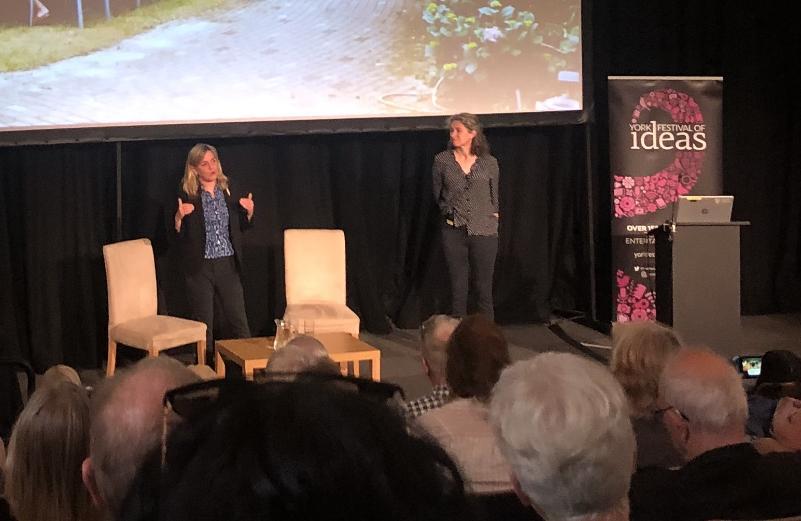
The talks were followed by a lively discussion, which was chaired by Emeritus Professor Deborah Smith, OBE. Debbie, formerly chair of LCAB’s external advisory board, said she was delighted to be back at LCAB and find us exploring important new research avenues. The following day, Baroness Willis held a public lecture as part of the York Festival of Ideas, chaired by LCAB director, Lindsey Gillson. The event was extremely popular and an enthusiastic audience enjoyed a discussion and book-signing with Kathy.