
Contextualising anthropogenic extinctions
Posted on Tuesday 7 October 2025
An ever-building body of work is showing how species communities are rapidly changing in response to human activity. This has led to concerns that we could be experiencing a sixth mass extinction. Mass extinctions are events where the number of extinctions increases substantially vastly reducing the number of species on Earth. There are currently five events labelled such with the last and probably most famous being the extinction of the dinosaurs (except birds) which was caused by a large asteroid impact. This event changed the planet in multiple ways with mammals then diversifying to fill the roles previously held by dinosaurs. It is in this last 66 million years that the world we know really started to take shape. Outside the mass extinctions there have also been many other rapid extinction events often caused by climate change.
In our new review we looked at the published evidence to determine how the current event compares to these past extinctions, considering a number of factors. We concluded that based on the available evidence it is likely that the current extinction event is the greatest since the dinosaur killing asteroid. The current event is however below widely posited thresholds for mass extinctions and to pass these would require high ongoing rates of species loss well into the future. This means that as ever the future is highly uncertain and action now can prevent the current event developing into a mass extinction.
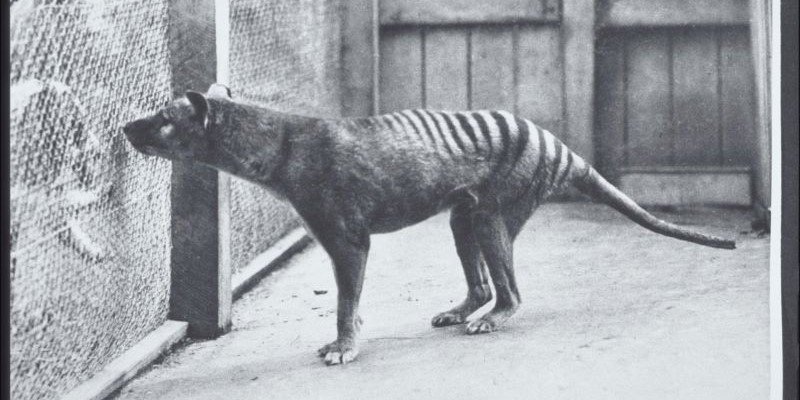
We considered human caused extinctions starting around 130,000 years ago with the extinction of some of the largest species on the planet – the megafauna extinctions. The loss of large species continued and was added to by the loss of island species as humans reached more remote locations. There are then then more recent extinctions such as the Tasmanian Tiger (not a tiger and not always restricted to Tasmanian!) and Steller’s Sea Cow (not a cow but a relative of the dugong) that were hunted to extinction. The last few decades have then seen rapid losses as humans influence reaches all parts of the planet. The only other contender in the last 66 million years for the greatest extinction event was found to be the Eocene-Oligocene event 34 million years ago, believed to have been caused by relatively rapid global cooling, but current evidence suggests that this was a more drawn-out process.
Such comparisons are always highly uncertain with our knowledge of present and past biodiversity always limited. Many extinctions can go undetected even today and we only know of a fraction of all the species that have ever lived. We investigated these biases and uncertainties finding a complex nuanced picture.
This work was a huge collaborative effort and would not have been possible without everyone’s contributions.
Jack H. Hatfield, Bethany J. Allen, Tadhg Carroll, Christopher D. Dean, Shuyu Deng, Jonathan D. Gordon, Thomas Guillerme, James P. Hansford, Jennifer F. Hoyal Cuthill, Philip D. Mannion, Inês S. Martins, Alexander R. D. Payne, Amy Shipley, Chris D. Thomas, Jamie B. Thompson, Lydia Woods, Katie E. Davis. 2025. “The Greatest Extinction Event in 66 Million Years? Contextualising Anthropogenic Extinctions.” Global Change Biology 31, no. 9: e70476. https://doi.org/10.1111/gcb.70476.