Rare diseases
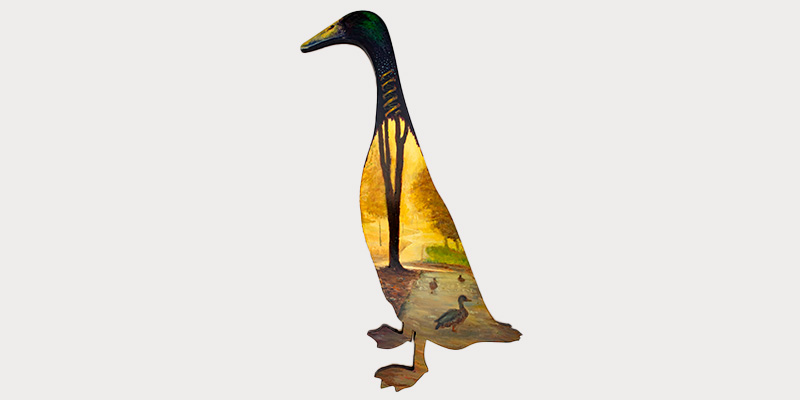
This duck is decorated using oil on wood. Technically, the process involved applying a thick layer of gesso first. Drawing and blocking was then done using diluted oil painting with turpentine.
Finally, undiluted oil painting was carefully applied over several sessions until I felt that the it-ness of the selected place was captured in the painting. I then tried to combine all key elements in a fluid manner, to include details of Long Boi himself, genetics and the environment.
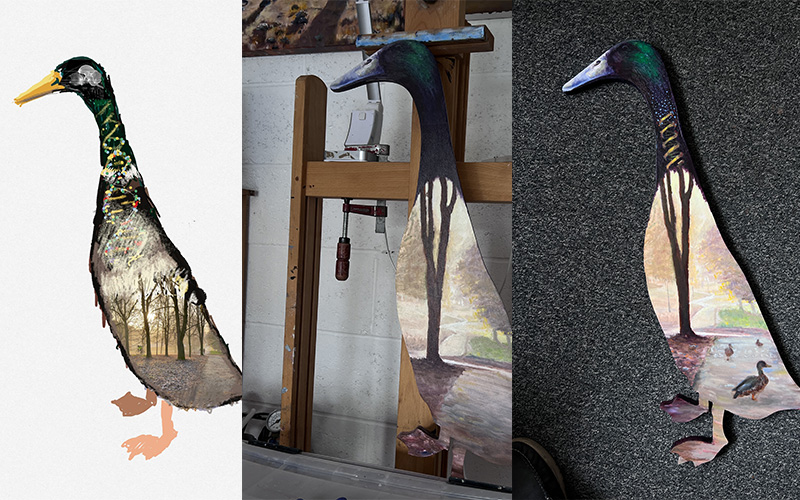
Research into rare diseases has inspired this design. Just as it may be the case with Long Boi, rare diseases arise from very infrequent mutations within the general population. It is precisely the 'rarity excuse' that we need to overcome to provide much-needed hope to those living with these challenging conditions.
Research funding into specific conditions often needs to compete with sceptical views because individual rare diseases have a low impact on the general population.
This perspective is misleading, as there are approximately 7,000 rare diseases identified, collectively affecting an estimated 1 in 17 individuals in the population. By neglecting research on these conditions, we are simply turning a blind eye to a substantial number of sufferers and their families.
Gonzalo Blanco carries out research in molecular and cellular biology in the York Biomedical Research Institute at York.
Study with us
Final year research projects in this area might explore topics from immunology and cancer to degenerative diseases, working with researchers at the forefront of health and disease.
Make your own duck
Didn't get the chance to attend the Art Trail Festival of Ideas workshop?
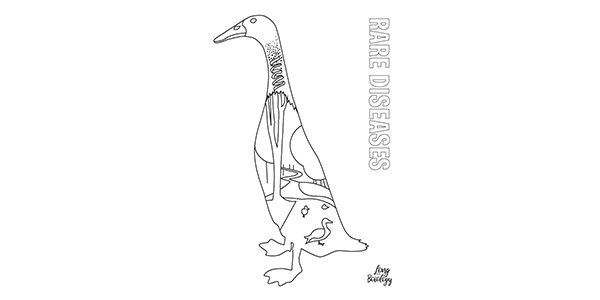
You can still colour your own rare diseases duck and make it your own.