Victoria
Victoria
Physics, 2004
Environmental Modeller
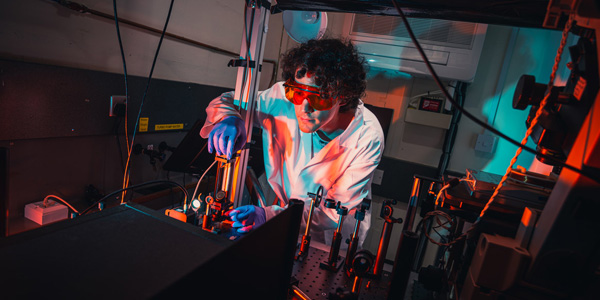
I started working with E.ON in September 2004, just after I graduated from York with a degree in Physics. I’ve been with them for nearly seven years now and am part of the New Build and Technology Global Unit which is the Group’s scientific and engineering unit. I am part of the Environmental Modelling team. We are responsible for modelling emissions released from power stations to ensure that they will not have a detrimental impact on the local environment. This includes emissions released to the atmosphere and into local water bodies.
I was initially attracted to York because of the campus and small city. When I went for my open day the guide who showed us round seemed to know everyone. The University’s small size means it is a close and friendly community and provided for great cheesy nights out. And it’s close enough to big cities like Leeds for big nights out if you fancy it.
It was the people at York which were really the highlight of the degree for me. The university provided the opportunity to meet a whole host of different people from places in both the UK and abroad.
Besides my Physics degree which is obviously essential to my job, my time at York allowed for a lot of networking opportunities. I was able to meet a whole new set of people and get to know them really well. The Physics course itself is very highly rated. The lecturers were very good and supportive. I always felt they were approachable. I remember a lot of them also had research projects going most of the time too which was always interesting.
I chose to study Physics both because I enjoyed it and I knew it meant there would be a wide range of careers available for me when I graduated.
Tomas
Tomas
Physics with Philosophy 2005, PhD 2009
Scientist, Centre for Applied Science and Technology, The Home Office
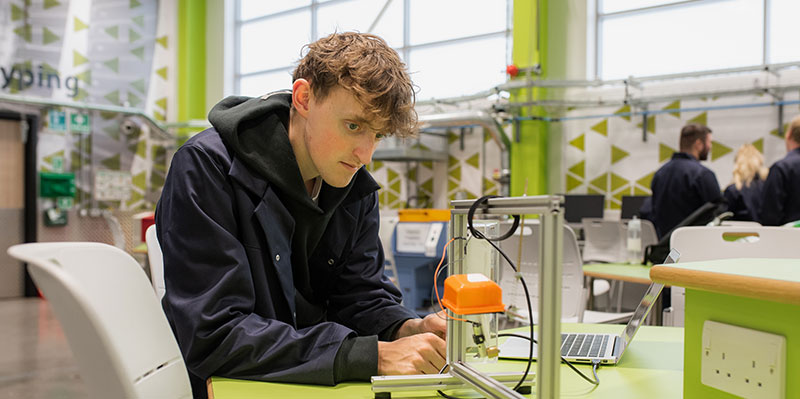
After graduating from my Phd in Physics at York in 2010 I immediately found a job in Government at the Home Office. The department I work for is called the ‘Centre for Applied Science and Technology’. It’s made up of about 200 scientists who work for the home office as well as other Government departments. As a physicist, the area I predominantly work in is explosives and weapons. My job has two aspects: the first is to test explosives and weapons detection technologies produced by manufacturers to examine their capability and compliance with standards. The other half involves researching to help develop technology and information which is then given out to companies in the industry to help them produce more developed equipment.
I really enjoyed my time studying in York. The academic and support staff in the Physics Department were very important. The academic staff were always very open; you could always go and chat and they were very supportive in helping you apply for jobs. The Department was a bit like a family; people were always around to chat and have a cup of tea with. It was definitely the people who made the experience of completing my PhD so incredible. My supervisor, Dr. Sarah Thompson was just amazing.
Anwen
Anwen
Physics, 2006
Accountant, John LewisOnce I had graduated from York in Physics in 2006, I trained as an accountant on the Ernst and Young graduate scheme and now I work at John Lewis, which I absolutely love!
The mathematics element of my degree has been helpful in the finance industry but, mainly, Physics at York is very project based, which has really helped me when working in audit teams. It has also really allowed me to develop my leadership skills and the proficiency to meet deadlines efficiently.
The communication and people skills I gained at York have been invaluable to my career; at York you get lots of face time meaning that I had to interact with people on a daily basis, which is really useful in the world of work. York felt like a natural progression for me – I thought it looked stunning, was a really sociable and friendly environment, and was community based. The collegiate system really helps to strengthen this.
The best thing I got involved in at York was sport – especially lacrosse and netball. The most important attributes I developed as a person were definitely through sport: I became more confident, more motivated and more assertive.
Going to York really helps you to set your CV apart from the others – it offers a fantastic academic reputation and develops your personal and professional skills in the meantime.
Laura
Laura
Mathematics and Physics, 2008
Engineer, BAE SystemsI started at BAE Systems the September after I graduated. I had been studying in Germany on the Erasmus scheme in my third year which was a fantastic experience. The opportunity to study a year abroad is a huge perk at York. I had to do all my lectures in a foreign language and adapt to a completely different culture, which looks very impressive on your CV and give you lots to talk about at interview.
I felt that my degree gave me an advantage at interview because the skills you learn are so diverse and adaptable. The numerical skills and analysis skills are extremely useful to the work I do. The degree really helps to keep your options open, as you gain the skills to adapt yourself to wherever you wanted to be.
I chose York because everything looked so appealing – the campus and city alike. The course and place both appealed to me and I loved it as soon as I saw it. Being able to do a joint degree was also a massive advantage, as it gives you a wider range of skills and opportunities.
I was the President of the University Gliding Club for a year, which was a further challenge that gave me lots to talk about at interview! It showed that I could handle lots of responsibility, and employers like to see that you are a well-rounded person outside of academic work. I also used to play college sport, swim, and had a Saturday job as well as my degree to do! They were all great talking points at interview and also make you good at managing your time - a question that's asked a lot in competency based interviews.
There are so many opportunities available to York and there is something for everyone, so grab the chance while you can!
Hannah
Hannah
Experimental Physics, 2004
Management Accountant in Food ManufacturingAfter graduating from York in 2004 with a degree in Experimental Physics I got a job doing basic accountancy work as maternity cover. I was then fortunate enough to join a finance graduate scheme with a major food manufacturer. I completed 18 months with the company before relocating to Leeds and joining another food company called Northern Foods. With Northern I have predominantly worked within the Strategic Procurement department – a centralised buying team responsible for £600m of spend. My role is to provide information and analysis to the company around its purchasing patterns.
Studying a degree in Physics helped me get my foot in the door and get a place on a graduate scheme. Physics is a highly numerate course and has helped me with the market and inflation analysis my job requires.
I loved studying at York; the city is small and beautiful and it was always lovely to be able to walk around the lake and enjoy watching the wildlife on campus. It’s a small campus and you sometimes end up making your own fun which creates a great university spirit. On top of this, the university is academically very well respected by employers.
In terms of my degree course, Physics, I remember that the content was really challenging and the standard of teaching was very high. You always had to put the work in and the course was highly academic; the coursework and exam process were rigorous and demanding.
Wherever possible, prospective students should choose a degree which will support their ultimate career aim; although sideways moves are always possible as I have demonstrated. You don’t need to know which specific job you are going to do, but it’s good to take a degree in the general subject area and a degree that is well respected. You should choose the most academic course you are capable of.
Paul
Paul
BSc Physics 2001 and then PhD
Barclays BankI graduated from York with an undergraduate degree in Physics in 2001 and decided to stay on to do a Ph.d. I then moved to London and found a job working as a business analyst. Four years ago I joined the Finance Department at Barclays bank. I currently manage a team that is responsible for determining how much capital the corporate bank needs to hold to protect itself from unexpected credit losses.
The problem solving skills I gained from my undergraduate degree are certainly applicable to my career today. Furthermore, given I work as an analyst, the data analysis techniques I learnt during my PhD have been invaluable.
I initially considered doing a four year undergraduate degree at York because it was recommended to me by a teacher at school. I decided to stay on at York to complete my PhD because of a research interest I developed during my final undergraduate year that I wanted to pursue.
One of the best aspects of York as a University is the size and location. For me this was important as I came from a small community and small school and didn’t want to feel overwhelmed in a huge University. York is a great place to live; as an undergraduate you live under a collegiate system and in halls. This system allows you to meet lots of different people and develop great friendships.
The quality of teaching at York is also really good. The small size of the University means you have small tuition groups and tutorials that you might not get at bigger universities. It also means you get to know the teaching staff really well. My biggest achievement at York (besides my degrees) was completing my research paper during my PhD.