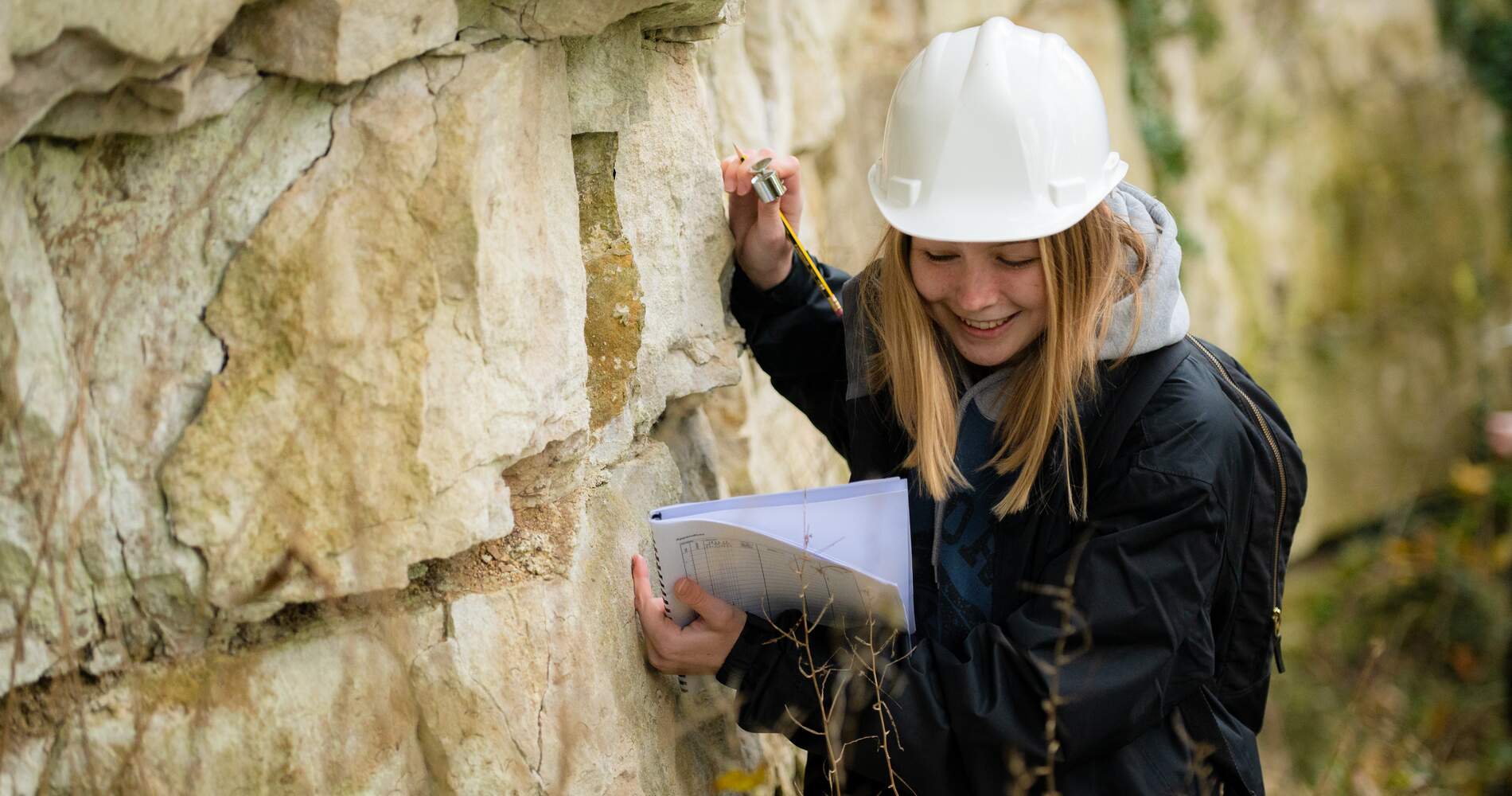

Using a microscope in the labs

BSc Environmental Science

Overview

UCAS code: YORK F900 BSc/ES
Final award: BSc (Hons)
Length of programme: 3 years (full time)

Threats from the potential impacts of pollution of the atmosphere, soils, water resources and crops are serious, and governments face severe difficulties in meeting human expectations for energy supply and lifestyle. Finding truly sustainable solutions to real-world problems requires a grasp of many disciplines, such as chemistry, physics, biology, astronomy, geology, hydrology, soil science, meteorology, climatology, agriculture and geography. These disciplines are incorporated into the ES programme, to provide a fully integrated approach to Environmental Science, engaging students with topical and challenging issues from the outset. The course also embraces broader social and economic issues, helping students to use their scientific understanding realistically in the context of policy formulation and environmental management.

A typical offer is ABB at A level or equivalent qualifications. You should have at least one subject from among Biology, Geography, Geology, Chemistry, Mathematics, Environmental Science and Physics. After developing a broad knowledge base in the first year, our modular structure allows students to align their ES programme with particular needs and career goals.

Aims

In order to solve environmental problems, it is essential that we understand the science underpinning the major issues such as climate change, air pollution and water quality. The Environmental Science degree at York provides you with the necessary aspects of chemistry, physics, biology, meteorology, oceanography, astronomy and ecology to train you to make informed judgements in your later career. This degree programme will provide you with the knowledge and practical skills to develop your understanding of:

  • The science underpinning climate change and how we can adapt
  • Energy use and efficiency and how we move to a renewable future
  • The pathways of chemicals and pathogens through our environment
  • The impact of pollutants on health and ecosystems
  • Food and water security
  • How to formulate and test hypotheses through research

From the first week of your course you will analyse environmental issues in depth. The course will expand your scientific knowledge, laboratory, analytical and reporting skills and develop key transferable skills in IT, data analysis and decision making. The flexibility of our programme allows you to specialise increasingly in an area of your choosing as you move through the degree programme.

Modules

Key:
C = Compulsory, O = Optional, B = taught by Biology department.

NB: Modules offered may be subject to change

A total of 120 credits must be selected each year

Year 1 Year 2 Year 3
The Earth: An Introduction to the Science of the Environment (C) 20 credits Field Course (C) 20 credits Research Project in Environmental Science (C) 40 credits
Tools & Techniques for studying the environment (C) 20 credits Environmental Chemistry (C) 20 credits Pollution Control & Waste Management (O) 10 credits
Environment Field Project (C) 20 credits Climate Change (C) 10 credits Environment & Health (O) 10 credits
Economics for the Environment (C) 20 credits Energy & the Environment (C) 20 credits Wildlife conservation and management (O) 10 credits
Ecological Principles for the Environment (C) 20 credits Environmental Biology (C) 10 credits Agriculture & the Environment (O) 10 credits
Current Topics in Environmental Science (C) 20 credits Environmental Monitoring & Assessment (O) 10 credits Glaciers, Ice Sheets & Climate Change (O) 10 credits

Applied Ecology & Environmental Management (O) 10 credits Coastal Zone Management (O) 10 credits

Earth Processes & Landforms (O) 20 credits Forest Management (O) 10 credits
  Geographical Information Systems (O) 10 credits Atmospheric Change (O) 10 credits
  Ecosystems & the Environment (O)(B) 10 credits Environmental Change and Ecosystem Dynamics (O) 10 credits
  Population & Behavioural Ecology (O)(B) 10 credits Dynamics of Social-Ecological Systems (O) 10 credits
  Sea Level Change (O)(B) 10 credits
Ocean & Coastal Processes (O) 10 credts 
Environmental Systems Project (O) 10 credits
Global Change Ecology (O)(B) 10 credits

Admissions

Applicants are offered conditional or unconditional offers on the basis of their predicted or actual qualifications, respectively.

There are no formal interviews. We meet students at University Open Days and applicants to whom we have offered places are encouraged to attend one of the departmental open days held during the Spring term.

Mature students are particularly encouraged to apply and we welcome enquiries and prearranged visits from such applicants.

Enquiries for Environmental Science should be made to:

Dr Nicola Carslaw
Undergraduate Admissions Tutor
Environment Department
University of York
Heslington
York YO10 5DD
United Kingdom