
Harvesting the sun twice
Project objectives
The issue
Access to energy is a widespread problem across East Africa, where 55 per cent of the population still do not have reliable electricity. Providing secure and affordable energy infrastructure is crucial to promoting inclusive development of rural communities in this region, and solar power is a sustainable way of achieving this. However, ground-mounted arrays of solar panels also remove land from food production at a time when crop yields are threatened by a changing climate, and increasing populations, insecure ownership and land "grabbing" are putting pressure on land resources. Renewable energy technologies that resolve energy, climate and land security conflicts are urgently needed.
The research
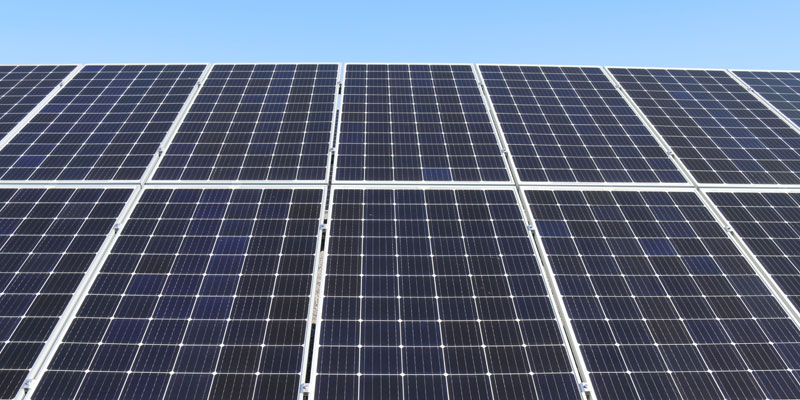
Agrivoltaic (AV) systems permit the delivery of solar electricity, crop production, and rainwater harvesting on the same land area. Instead of being mounted close to the ground, arrays are constructed several meters high and with gaps between the arrays - enabling crops to be grown underneath. In locations with high light intensity, high temperature, and low rainfall, such as many places in East Africa, the productivity of crops grown beneath these elevated solar arrays can be significantly improved because shade from the panels creates a more favourable growing environment with reduced heat stress and water loss.
This more favourable environment for plants means the range of crops can be extended to higher-value ones, which can improve farmer incomes in disadvantaged rural communities. Crops may also be grown in locations previously unsuitable, further increasing food supplies and revenue sources.
The project aims
- To identify areas in Kenya, Uganda and Tanzania that are most physically suitable; for example climate, existing land use, lack of energy access, for realising the benefits of AV systems and their uptake by communities.
- Field test AV systems in communities in Kenya and Uganda to provide data on resulting livelihood enhancement; increasing crop yield and farmer income, access to sustainable energy, as well as perceptions and attitudes of rural communities to AV systems.
- Using the data collected to develop a decision support tool for regional and national governments and NGOs to deliver AV systems effectively and in line with community needs.
Expected outcomes
The findings from this project will reveal the potential for this technology to lead to livelihood improved access to energy and increased incomes through production of higher-value crops, as well as the barriers within local communities to the uptake of AV systems. It will also show which economic, social, cultural and political factors help or hinder the expansion of AV systems in this region. We will assess how AV technology can best be co-designed with the users and seek input from national and regional policymakers to inform the potential rollout of AV systems across East Africa and potentially beyond.
Project details
Research group: Managing Natural Resources
Start: 2020 End: 2023
Funders: Global Challenges Research Fund, Economic and Social Research Council
Collaborators: Stockholm Environment Institute Africa Centre, African Centre for Technology Studies, World Agroforestry Centre, Centre for Research in Energy and Energy Conservation
Region: East Africa
Countries: Kenya, Uganda, Tanzania