
Patients and family involvement
This isn't the case any more, and patients and their families are involved in deciding what should be researched, fine tuning how the research is done, and sharing the results in ways that make sense.
The Candlelighters Supportive Care Research Centre is leading the way in this, with their work determined by a priority setting exercise, and regular groups where families on and off treatment advise researchers on their plans for the future.
The priority setting exercise gives a list of the most improtant areas for research to focus on and you can see the results in this infographic (or download a copy below).
The CSCRC has done this, with work in infections, gut problems including sickness and mucositis and getting more time at home.
 , 74kb)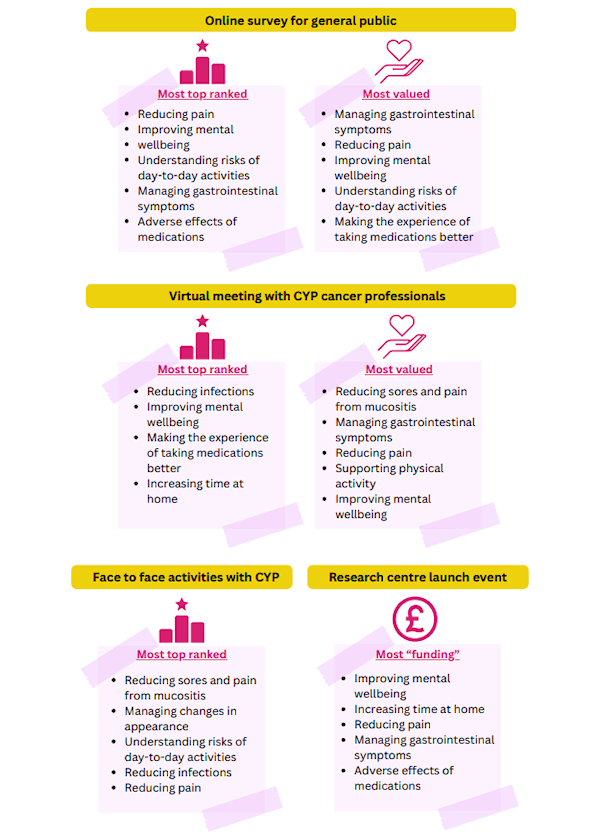
Patient Family Involvement Research Group
Our award-winning Patient Family Involvement Research Group meets every three months and researchers from Yorkshire and beyond come to ask questions, and be grilled, on the studies they want to do.
Our work in this area recently won an award from the Children's and Young People's Cancer Association.
Read an article about our patients and family involvement work in the Yorkshire Evening Post.
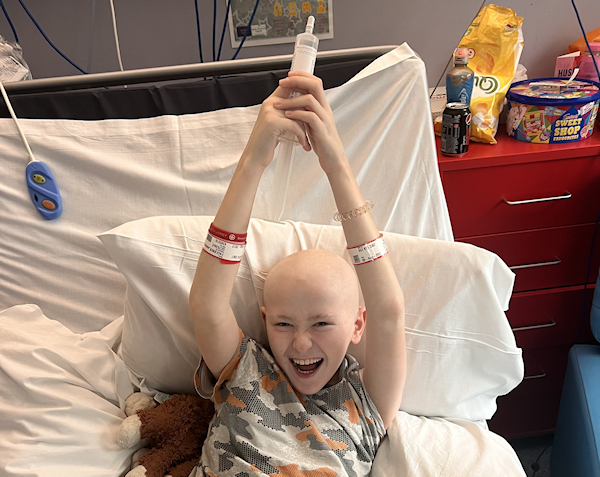
Josh and his family are involved in our Patient Family Involvement Research Group.
Josh's mum:
“The group sessions are great. They’re a mixture of updates as to where the research studies are up to, and then they get our experiences and opinions on things, including the kids. There are families with completely different experiences, different diagnoses, different treatments and different outcomes, so you get such a lot of different perspectives.
“Our journey with research started when Josh was in isolation. He did a video of him using the red light therapy on himself, to show it’s nothing to be afraid of, and we did an interview about what it was like. It was something we really benefited from, so it was really important to us that we tried to do as much as we could, so that other families didn’t have to go through the same complications with mucositis that Josh did.”