
Anti-sickness medicines for preventing chemotherapy-induced nausea and vomiting in children and young people
As most research in this area has been done with adults, the evidence in children is comparatively lacking, and this can mean we are unsure about which anti-sickness medicines work best and for whom.
To overcome this, this project has combined and re-analysed existing evidence on anti-sickness medicines using statistical techniques that aim to improve our understanding of these medicines in children.
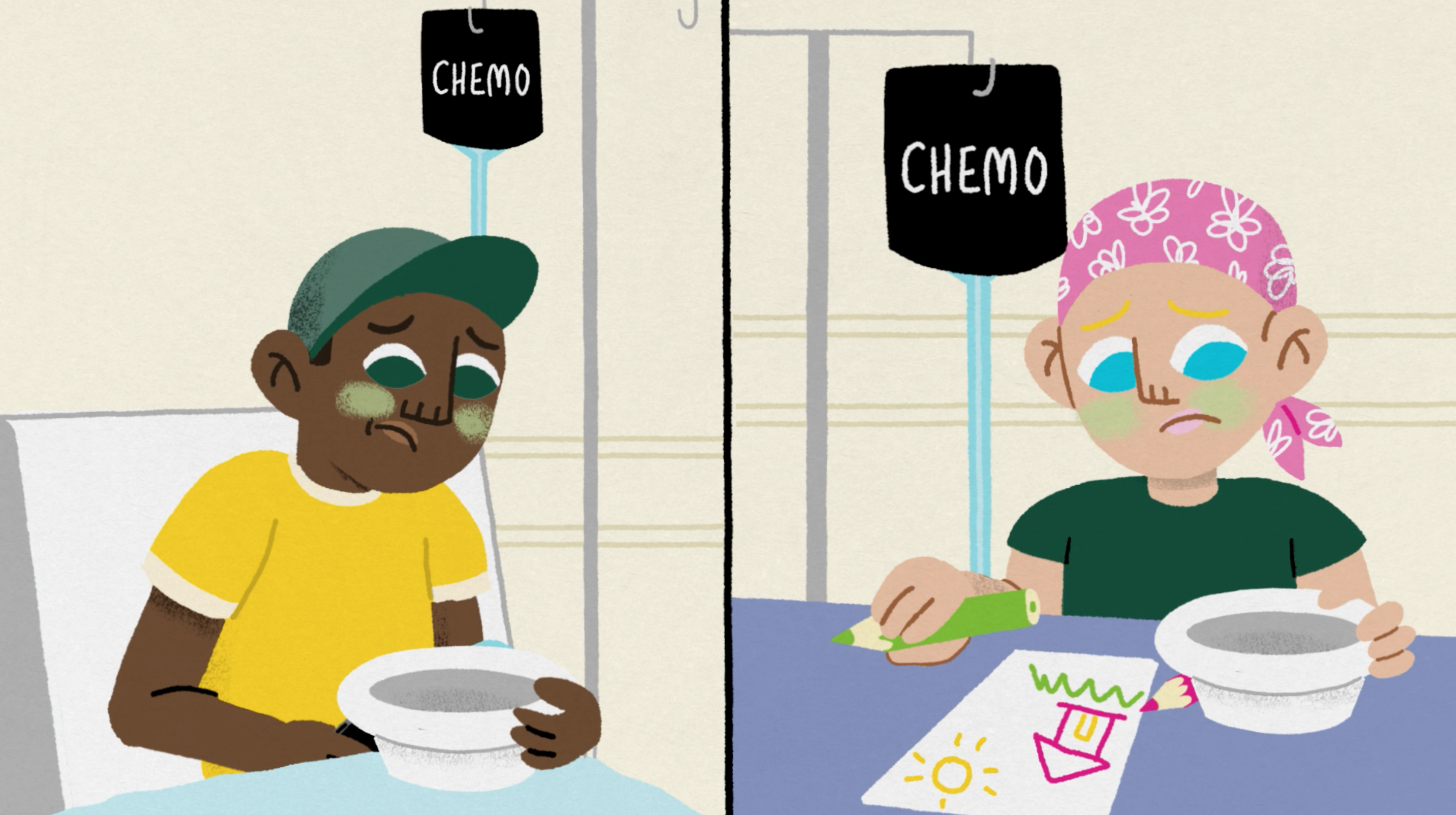
We confirmed that taking combinations of different anti-sickness medicines leads to less nausea and vomiting, but found this could cause more (or make worse existing) side effects, which are not trivial to patients.
Older children may benefit more from taking combinations of anti-sickness medicines, so they may choose this option from their first round of chemotherapy (depending on which chemotherapy they are receiving).
Public involvement
We involved children and families to better understand which outcomes are important, and found these outcomes were not always well collected and reported in clinical trials.
Our findings were shared with children and families who helped us to interpret these from a patient perspective. We created the following infographic to visualise these findings:
Anti-sickness medication study information (PDF  , 665kb)
Finally, to summarise the project and share its findings, children and families helped to design the following short animation video.
Reflections on the use of evidence synthesis methods in child health more broadly.
Issues around data scarcity are common across many areas of child health; as such, this project also reflected the usefulness of the applied statistical methods in child health more broadly.
We have summarised the methods and reflections in the following document and these may be of interest to researchers and/or clinicians applying these methods within their own fields of child health.
Anti-sickness medicines study - reflections on methods (PDF , 175kb)