
YORK CHEMIST ELECTED FOREIGN MEMBER OF THE ROYAL SWEDISH ACADEMY OF SCIENCES
Posted on Monday 26 January 2026
Founded in 1739, the RSAS is one of the world’s oldest and most prestigious science academies. It is best known as the body which awards the Nobel Prizes in Chemistry, Physics and Economic Sciences.
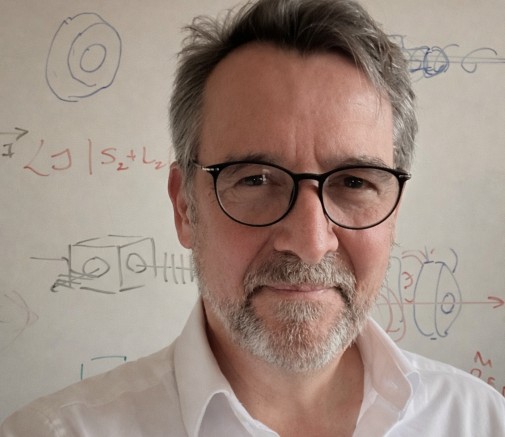
Professor Walton is one of only 18 members worldwide elected to the RSAS in its Chemistry class, and the first to be elected from York in any of the RSAS’s classes.
Professor Walton is a bioinorganic chemist who studies how living organisms use metals, especially copper, to drive essential chemical reactions. His research uses a combination of theory and biochemistry to shed new light on how nature breaks down some of the toughest materials on Earth, such as cellulose in plant fibers and chitin found in crustaceans and fungi. These insights are important for the development of more sustainable biofuels.
Advancing science
Professor Walton said: “I am honoured to be elected to the Royal Swedish Academy of Sciences. It is humbling to be part of such an outstanding group of Academy members, and an Academy that has supported scientific discoveries for more than 280 years. It is also a recognition of the collective efforts of many colleagues and collaborators over the years.
“I hope to contribute to the Academy’s important role in advancing science, supporting the next generation of researchers, and promoting knowledge that benefits society.”
One of Professor Walton’s most significant discoveries is a previously unknown way that copper is held within proteins, known as the “histidine brace.” This structure allows the protein to activate oxygen from the air and use it to break strong chemical bonds, a process that is crucial for breaking down otherwise stubborn materials.
He has close ties to Sweden and has held visiting professorships at Chalmers University of Technology, Gothenburg and KTH University, Stockholm. In addition to his scientific work, he is a long-time advocate for gender equality in science and has advised universities around the world on the issue for more than two decades.