
A spicy take on indoor air science
Posted on Saturday 13 December 2025
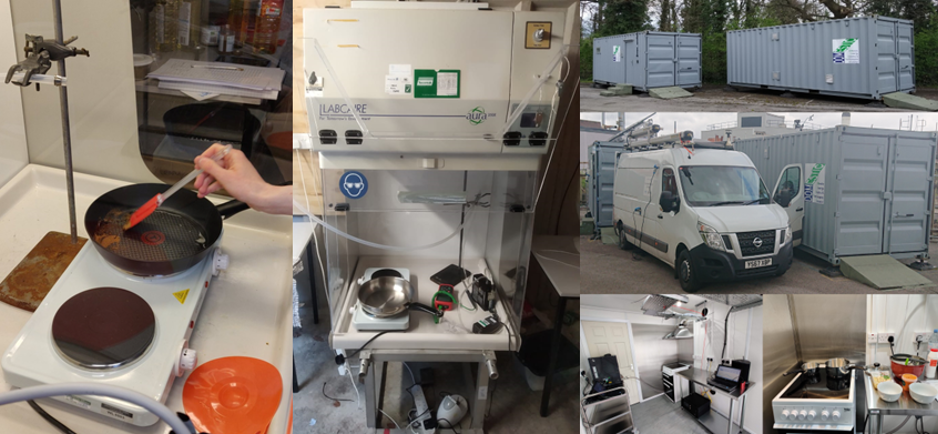
Scientists from University of York studied the emissions of pollutant gases when cooking curries and other spicy foods. Dr. Ashish Kumar featured in the Royal Society of Chemistry's Chemistry World magazine this month, talking about his research into indoor air science. Ashish, together with the team from Wolfson Atmospheric Chemistry Laboratories, conducted a series of experiments on individual herbs and spices and then popular recipes that combine such ingredients, such as curries.
With a particular interest in home cooking, Dr Kumar and his colleagues based their study on Madhur Jaffrey’s chicken in a fried onion sauce. ‘Coming from India, that is what I am also familiar with,’ says Kumar ‘It’s a common curry that I would cook at my home as opposed to one you would find in a restaurant.’
The experiments confirmed that cooking has a significant impact on indoor air chemistry, with a variety of volatile organic compounds being produced during the cooking process.
Reflecting on the results, Dr Kumar says ‘definitely do not stop cooking curry at home - that’s not what we advise’. However, he does recommend using an extractor fan to reduce exposure to fumes and to cook on the back rings of the hob, where extraction is more effective.
The work, led by Dr. Terry Dillon and Professor Nic Carslaw, formed part of the INGENIOUS project, a multidisciplinary collaboration between researchers at York, other UK universities and the NHS.
Notes to editors:
This work has been published in the the journal Environmental Science: Processes & Impacts