
Measurement of ship emissions using a large research aircraft
Posted on Wednesday 3 December 2025
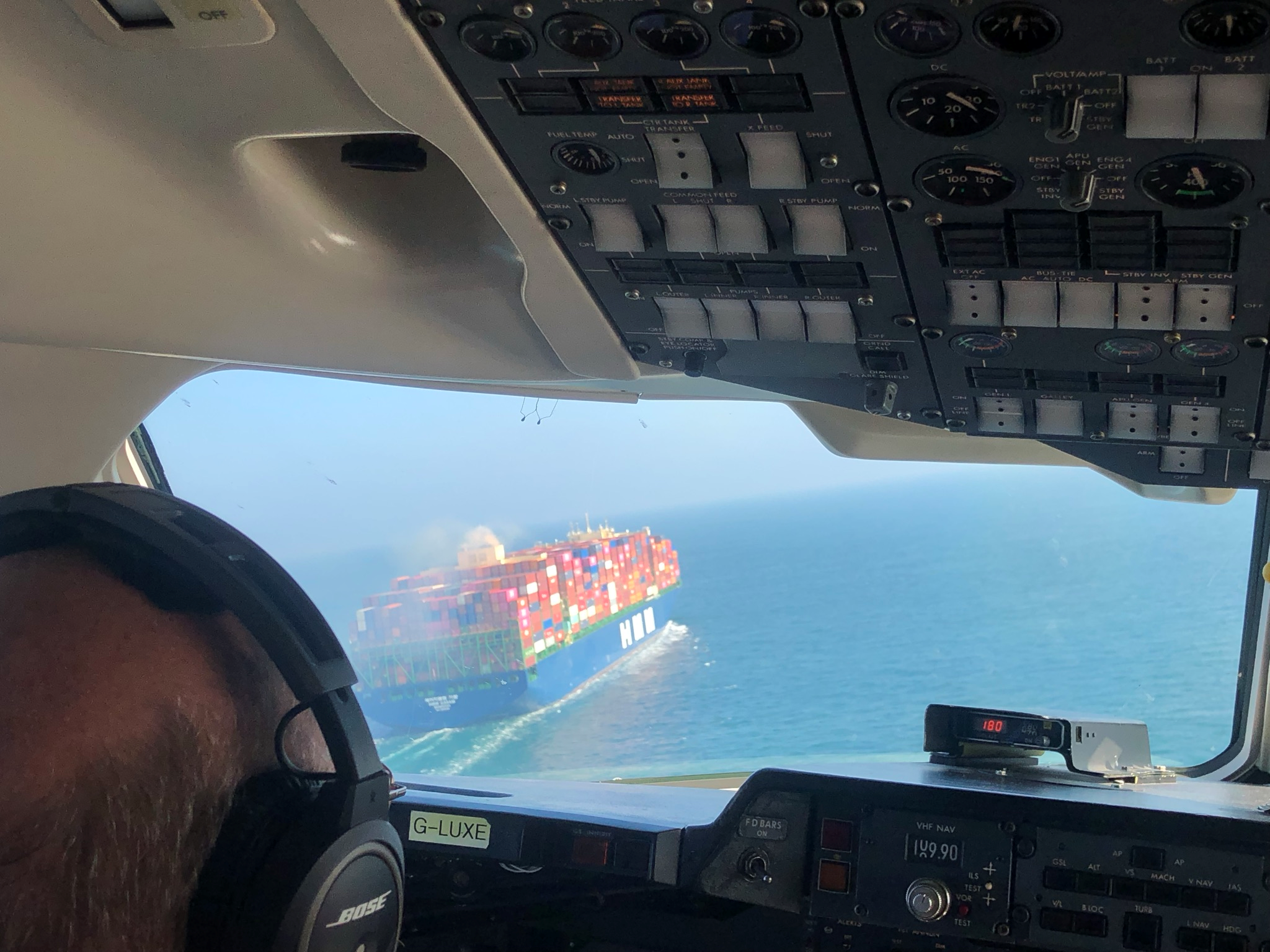
Recent global regulations have significantly reduced sulfur emissions from ships, helping to improve air quality in coastal regions – confirmed by a study led by researchers from the Department of Chemistry at the University of York (Professor James Lee) and National Centre for Atmospheric Science.
The research, published in Environmental Science: Atmospheres, used aircraft and ground-based instruments to measure sulfur dioxide and nitrogen oxides emitted by ships in the North-East Atlantic and European coastal waters between 2019 and 2023.
The team found that the average sulfur content in ship fuel dropped nearly tenfold in open ocean areas following the International Maritime Organization’s 2020 regulation, which capped sulfur content in marine fuel at 0.5%. Before the change, many ships exceeded the previous 3.5% limit. After 2020, only a small number of ships were found to breach the new standard.
In European Sulfur Emission Control Areas (SECAs), such as the English Channel and the Port of Tyne, sulfur levels were even lower – well below the stricter 0.1% limit. Interestingly, ports outside these zones, like Valencia in Spain, also showed low sulfur levels, likely due to EU rules requiring cleaner fuel when ships are docked for extended periods.
The work also found significant amounts of nitrogen oxides (NOx), being emitted by the ships. These emissions, which are less regulated in ships, could have an important effect on air quality, especially around ports, inland waterways and coastal regions.
Notes to editors:
This work has been published in Environmental Science: Atmospheres and also featured in the Guardian newspaper.