
New Protein Search Method Reveals Hidden Metalloproteins in Bacteria
Posted on Thursday 6 November 2025
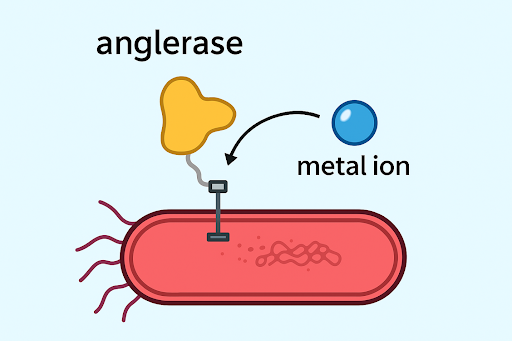
Scientists at the University of York have combined bioinformatics, EPR spectroscopy and protein crystallography to develop a novel approach for discovering metalloproteins—proteins that bind essential metals such as copper and nickel.
Their new method, called signal-strapping, appends a metal-binding amino acid to protein signal sequences, enabling a database search for proteins capable of coordinating metal ions.
Published in Nature Communications, the research led to the identification of four new bacterial metalloprotein families, including anglerases—proteins that “fish” for metal ions outside the cell and deliver them to transport systems in the bacterial membrane.
By integrating computational prediction, structural biology, and spectroscopy, the team has provided a powerful new framework for identifying hidden metalloproteins across diverse organisms.
Notes to editors:
This work has been published in Nature Communications.