
Lasers measuring ‘protein fingerprints’ could provide early warning of high-risk cancers
Posted on Monday 12 May 2025
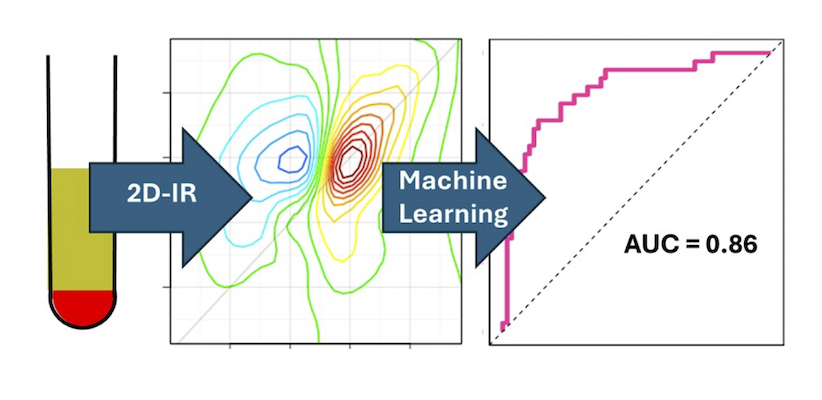
Using state-of-the-art lasers at the University of York, funded by EPSRC and led by Professor Neil Hunt, the team measured ‘protein fingerprints’ from blood serum taken from 40 patients with melanoma and applied machine learning methods to classify them according to the presence, absence or later development of metastatic disease. The tests use just 20 microlitres of blood serum and take only a few minutes using new technology, developed at York. They allow detailed measurements of proteins under physiological conditions by making the surrounding water ‘transparent’.
Powerfully, these new tests provide the ability to identify post-treatment patients at higher risk of relapse from a simple spectroscopic measurement, raising the prospect of a new route to an optical blood-based test capable of risk stratification for melanoma patients, which may have impacts in terms of clinical management of melanoma
Notes to editors:
The work is published in the Royal Society of Chemistry journal Chemical Science