
CHE research highlights the value of mother-child relationships in supporting long-term child development
Posted on Tuesday 30 September 2025
One in two children globally are exposed to adverse childhood experiences (ACEs) such as abuse, neglect, or family violence during the earliest years of life. Left unaddressed, these experiences can negatively influence health and mental health outcomes over time. Children of substance-involved parents are at particularly high risk of exposure to ACEs, which make them especially vulnerable to destructive brain development.
Alongside partners at The University of Ottawa, York University, and Brock University in Canada, Shainur Premji, Research Fellow in Economic Evaluation (TEEHTA) at CHE, is involved in the Early Relationships study, funded by the Canadian Institute for Health Research, which is a comparative effectiveness study looking at outcomes for mothers and children exposed to different models of care. Part of this work also includes completing a social return on investment (SROI) for Breaking the Cycle (BTC), an award-winning programme that serves substance-involved pregnant and parenting mothers and their young children.
Using a comprehensive, integrated, multi-sectoral, community-based model, BTC was established in 1996 one of the first Canadian prevention programmes designed to reduce the incidence of child maltreatment and enhance the development of children by addressing the needs of pregnant people and mothers experiencing addictions and focusing on the mother-child relationship. The findings of this project have the potential to position Canada as an international leader in infant mental health and to inform policies and practices that improve outcomes for children exposed to ACEs.
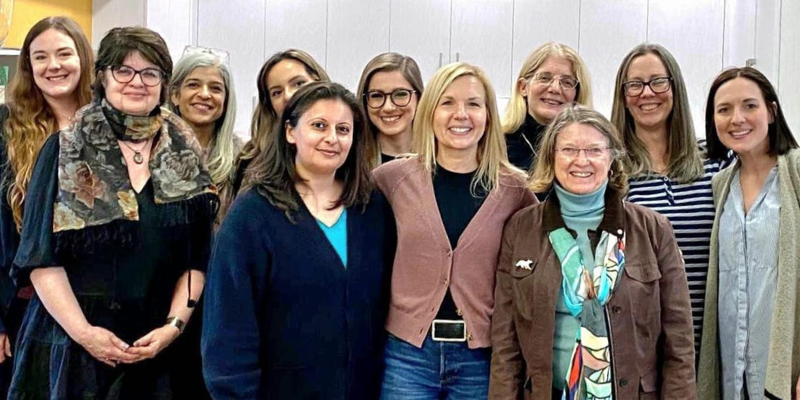
During her recent visit to Toronto, Shainur met with stakeholders and students working on the project. She says:
“The project team was very engaged throughout the process of building the programme Theory of Change and learning more about what an SROI entails. As we continue working together, it has also been a privilege for me to spend time with them and see the amazing work they do changing the lives of women and children.”