

CHE Seminar - Dynamic Distributional Cost-Effectiveness Analysis: Tracking Cost-Effectiveness and Health Inequality Over Time
ARC/010 (Alcuin Research Resource Centre Seminar Room), Alcuin Research Resource Centre, Campus West, University of York (Map)
Event details
Abstract:
Objectives: Conventional distributional cost-effectiveness analysis (DCEA) employs static frameworks reporting aggregate lifetime outcomes, obscuring how health inequality evolves as preventive interventions diffuse through populations. We develop Dynamic DCEA, extending conventional approaches by modelling inter-cohort interactions through knowledge transfer and disease risk spillover.
Methods: The framework employs a rolling multi-cohort Markov model stratified by socioeconomic subgroups, with time-varying logistic uptake functions and cohort-specific knowledge transfer. Inequality is tracked annually using Atkinson indices and equally distributed equivalent health. Application compares Dynamic DCEA against DCEA without interactions and conventional single-cohort DCEA using a hypothetical preventive intervention across 20 birth cohorts and five socioeconomic quintiles over a 20-year horizon.
Results: Dynamic DCEA generated 49% higher net monetary benefit than conventional DCEA (AUD~5,443 million versus AUD~3,640 million), transitioned to cost-saving by year~20, and revealed a qualitative reversal in equity conclusions: conventional DCEA estimated sustained inequality worsening, while Dynamic DCEA showed transition to inequality-reducing status by year~17. Three distinct equity--efficiency phases were identified.
Conclusions: Modelling framework choice can alter the direction of equity conclusions and the magnitude of cost-effectiveness estimates. Dynamic DCEA enables identification of temporal transition points for adaptive health technology assessment.
If you are not a member of University of York staff and are interested in attending a seminar, please contact richard.cookson@york.ac.uk so that we can ensure we have sufficient space.
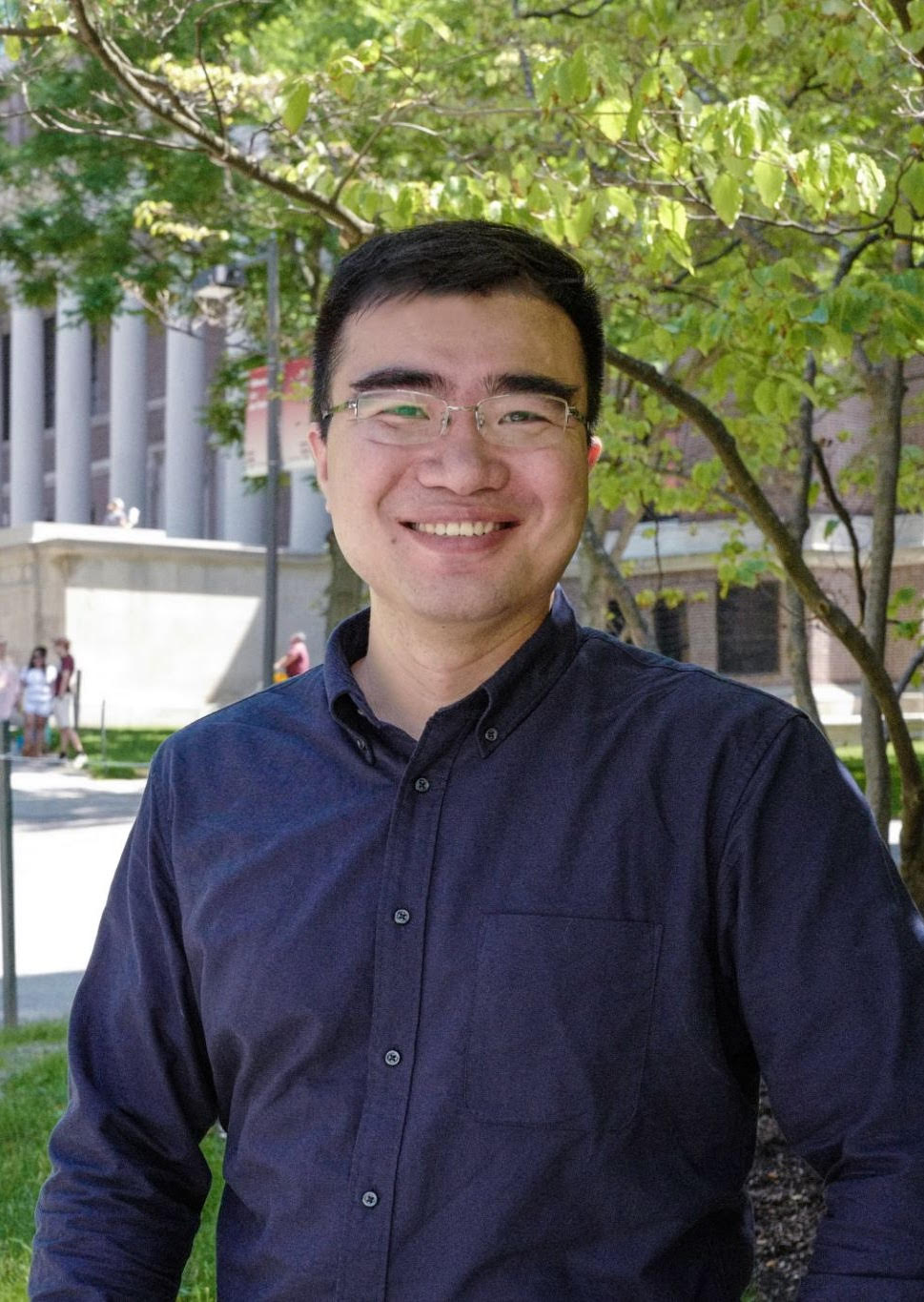
About the speaker
Shan Jiang
Shan Jiang is a health economist at the Macquarie University Centre for the Health Economy (MUCHE) in Sydney, Australia. He received health economics training from Shanghai Jiao Tong University for master's degree and Macquarie University for PhD. His research focuses on equity-informative economic evaluation, particularly distributional cost-effectiveness analysis (DCEA), methodological development in economic evaluation, and advanced health economic modelling. He has published more than 50 peer-reviewed articles in journals including JAMA Network Open, Genetics in Medicine, BMJ Global Health, Value in Health, PharmacoEconomics, and the European Journal of Health Economics. One of his publications was selected as Value in Health Paper of the Year Award (2025). he is a Brocher Foundation (Geneva, Switzerland) Visiting Research Fellow and an Adjunct Research Fellow at the Shanghai Health Development Research Center.
Venue details
Wheelchair accessible