
Student research spotlight: overcoming obstacles to sustainable urban development
Posted on Monday 23 March 2026
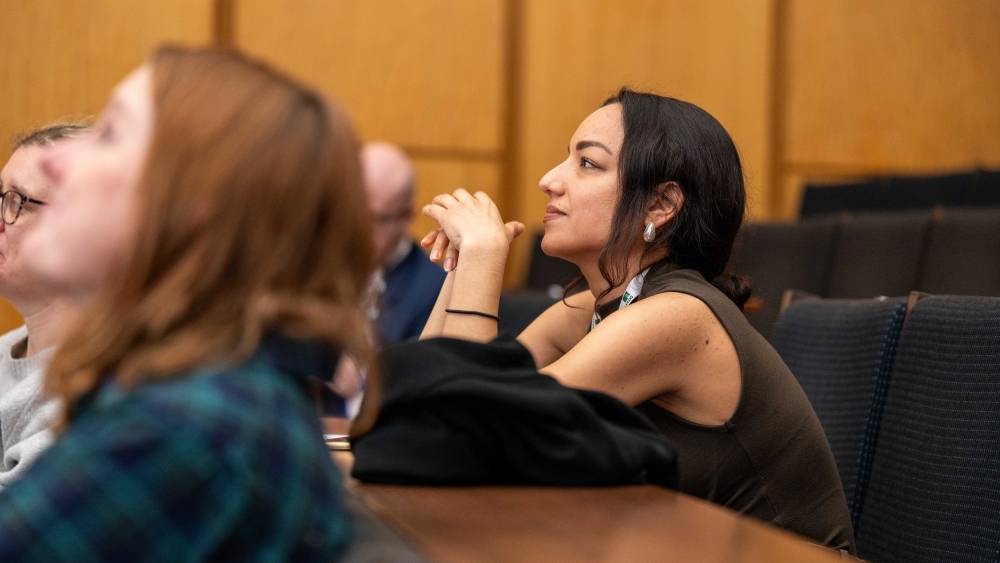
Following the recent Student Sustainability Research Conference (SSRC26) at the University of Leeds in early March, we are delighted to showcase some of the inspiring research presented by our students.
Ana Karen Cota is currently studying for an MSc in Sustainable Business in the Department of Environment and Geography at the University of York. Before coming to York, Ana took part in the SDSN Youth Local Pathways Fellowship Program, where she designed and launched the “Connect to Create Future” initiative. She is now continuing to develop this work as part of her master’s research.
Ana presented her research at the conference and received an award for her poster in the Message of Hope category.
We spoke to Ana to find out more about her research, her journey so far, and her experience presenting at this year’s conference.
Can you tell us a bit about yourself?
My name is Ana Karen Cota. I have a bachelor degree in Architecture and I am currently studying the MSc Sustainable Business: Leadership, Innovation and Management in the Department of Environment and Geography. My research started back in 2021, as part of SDSN Youth’s Local Pathways Fellowship Program. While the fellowship provided the framework and global mentorship, it served me as the incubator for my own independent project. It was during this 10 month journey that I ideated, designed and launched the “Connect to Create Future” initiative.
Interestingly, this research was born out of an entrepreneurial venture first. I initially launched the Connect to Create Future Initiative as a social ecosystem to turn passive anxiety into a "virtuous loop" of local action. However, as stakeholders began asking for the underlying evidence and methodology, I took a deliberate step back to conduct rigorous academic research.
Now, I would like to keep investigating how inclusive communication and technology can dismantle the barriers preventing residents from becoming co-creators. By applying Erica Chenoweth’s "3.5% rule" to local contexts like Ensenada in Mexico or York in the UK, my work transforms a speculative initiative into a data-driven framework for collaborative governance and sustainable urban design.
What inspired you to pursue this area of sustainability research?
This research wasn’t a choice; it was a discovery.
When I began designing my initiative in Ensenada, Mexico, I initially focused on tangible infrastructure like cycling paths. However, I quickly realised that people weren't cycling because of a deeper, systemic issue: a lack of security. When I looked at green spaces, I saw the same pattern. It was only until month 4th of the fellowship and Local Pathways training, that it was revealed to me that the primary barriers were not just physical, but systemic rooted in issues like public security and institutional fragmentation. This, together with the 2020 massive unemployment wave that was happening because of COVID, and recognizing strong feelings of disempowerment and eco-anxiety not only in me but a whole generation, motivated me to find a solution that will tackle the problem in all these different scales.
After studying the problems through a systemic lens, I transitioned to the present initiative Connect to Create Future which focuses on bridging the "action gap" and “implementation gap” simultaneously. Connect to Create Future Initiative it’s not just another platform; it’s a digital and social ecosystem designed to be the 'missing bridge' between climate science and local action.
What was your experience presenting at SSRC26?
Presenting at SSRC26 was a deeply insightful experience. It was fascinating to see how sustainability translates across different disciplines, and I found a great deal of interdisciplinary inspiration in the innovative solutions presented by my peers. A major highlight was the opportunity to connect with other student researchers to share our collective challenges and exchange perspectives on the research process.
My key takeaway was the importance of adaptive communication. Even though I have presented this project before, the unique academic context of SSRC26 pushed me to refine my public speaking and data visualisation skills. Navigating the constraints of timed oral sessions and poster presentations taught me how to distill complex sustainability data into engaging, accessible narratives for a diverse audience, a skill that is essential for my future research impact.
Finally, I would like to express my sincere gratitude to Yorkshire Universities for hosting this event. Providing a platform where students can not only develop essential career skills but also launch their research into the professional world at such an early stage is invaluable.
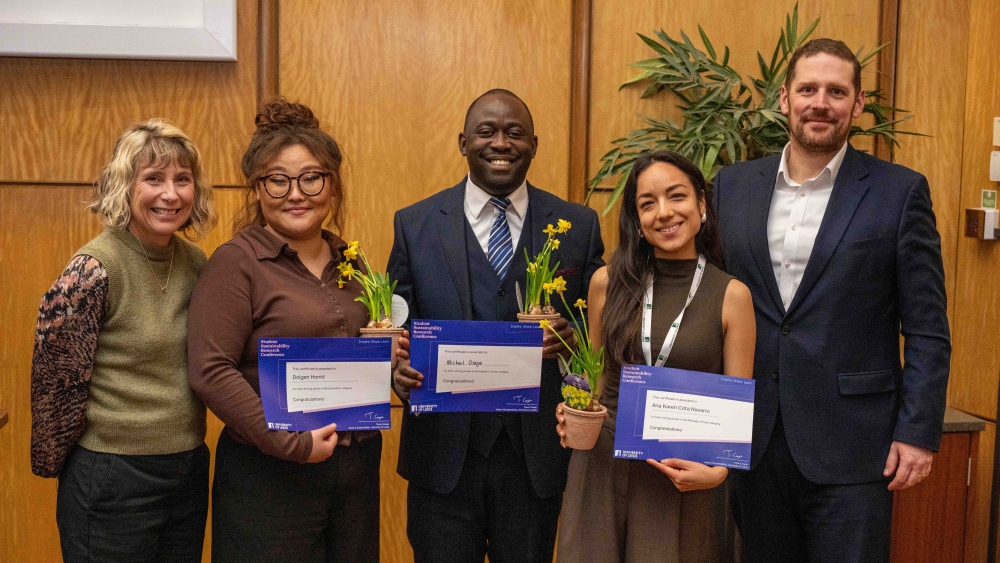
Ana (second from the right) received an award for her poster in the Message of Hope category.
What do you hope to do in the future?
My immediate goal is to embed my research within a professional, collaborative environment. I am specifically looking to bridge the gap between academic theory and the practical 'how-to' of urban sustainability.
The University of York was my first choice because of its commitment to interdisciplinary impact. I am currently exploring how my project, which integrates GIS, collective intelligence platforms, and collaborative governance can support the goals and/or collaborate with York Environmental Sustainability Institute (YESI) or the York & North Yorkshire Combined Authority. I am particularly inspired by YESI’s recent work using artistic interventions and storytelling to translate data into public dialogue.
I see this as the perfect 'Phase 0' for a pilot project aligned with Connect to Create Future Initiative, that uses creative tools such as: storytelling and other types of media, to move residents from passive critics to active co-creators.
To provide the evidence base for this, I am preparing applications for the Sustainable Development Grant (targeting the May or August 2026 deadlines). Whether this evolves into a local case study within the City of York or a larger entrepreneurial venture, my ultimate objective remains the same: building the infrastructure for socially equitable and environmentally responsible urban growth. I am eager to collaborate with researchers and industry experts to ensure that sustainable development frameworks are not just studied, but successfully implemented in the real world.
---
A huge thanks to Ana for sharing more about her research and experience presenting at the conference. Stay tuned for more stories showcasing the incredible work being done across our student community.