
Student research spotlight: Investigating the Lost Species of the Indo-Australian Archipelago
Posted on Monday 6 April 2026

We’re continuing to share incredible research presented by our own students at the Student Sustainability Research Conference (SSRC26) back in March.
Tom Morris is a Third Year undergraduate student in the Department of Biology at the University of York. He has focused his research on identifying “lost” species of the Indo-Australasian Archipelago and trying to unravel the biological/ecological causes of species “loss”.
We spoke to Tom to find out more about his research, and his experience presenting at this year’s conference.
Can you tell us a bit about yourself?
My name is Tom, and I’m a third year undergraduate in the Department of Biology. My work with the Research for Insular Divergent & Globally Endangered Species (RIDGES) Foundation has been on identifying “lost” species of the Indo-Australasian Archipelago and trying to unravel the biological/ecological causes of species “loss”.
What inspired you to pursue this area of sustainability research?
As someone who grew up with quite a romantic idea of what a biologist does (trekking through unknown parts of jungles, looking for new species), the idea of working on lost animals (species not seen in 10 years or more) is very appealing to me. It’s a concept that can get people excited about species that otherwise go overlooked and under-researched, and hopefully something that will continue to expand, reaching more people and resulting in targeted research effort on these animals.
What was your experience presenting at SSRC26?
The questions I was asked after my presentation showed that people connected with the idea and understood the importance of lost species. I think it’s a concept that can resonate with people with any level of experience in Biology, and it was good to practice explaining my work to a multi-disciplinary audience and hearing their key takeaways.
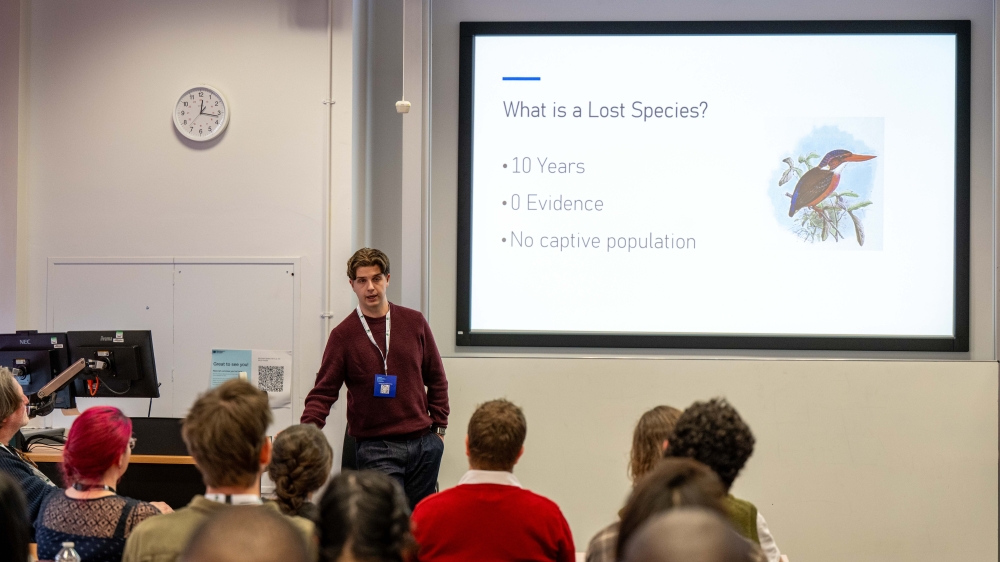 Image: Tom presenting his research at the Student Sustainability Research Conference 2026 at the University of Leeds in March.
Where do you hope you research will lead, and what do you hope to do in the future?
This research will hopefully contribute to the scientific backing of lost species as a recognized concept. Personally, I’d like to go and find some of these lost species, so that they can be researched and protected.
I want to take my career in a direction that will benefit the animals most overlooked by research, whether that’s due to geographical, socio-political or practicality barriers (or sometimes just a lack of charisma!).
---
A huge thanks to Tom for sharing more about his fascinating research and experience presenting at the conference.