
Sustainability Clinic spotlight: Sustainability Storytime with York Explore Libraries
Posted on Monday 16 June 2025
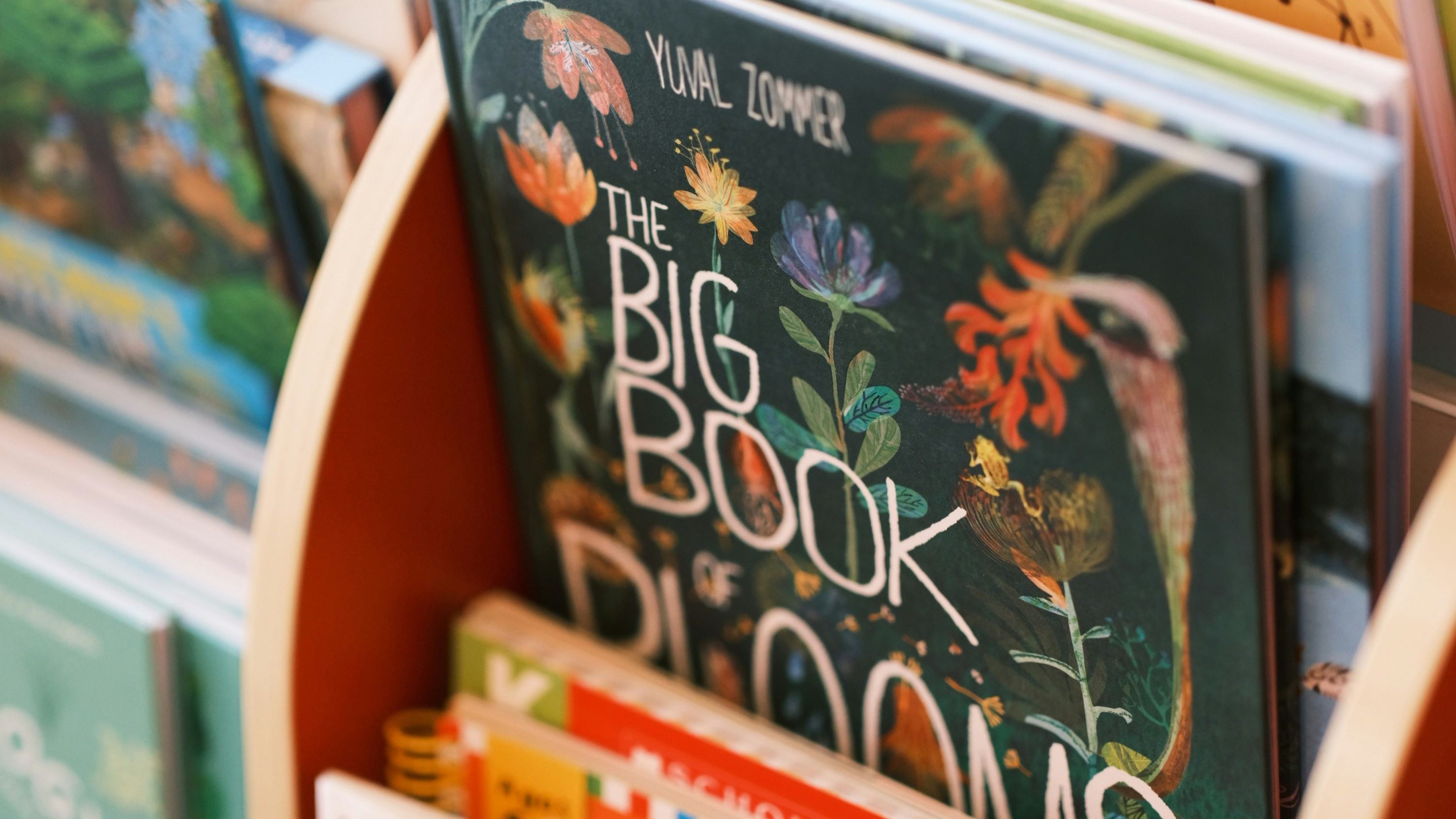
We are continuing our series on sharing fantastic student research from this year’s Student Sustainability Research Conference 2025 (SSRC25). This week, we’re showcasing a student team who presented their Sustainability Clinic project at the conference in March.
Last semester, a team of students from the Department of Environment and Geography teamed up with York Explore Libraries to help develop engaging Sustainability Storytime sessions as part of the University of York’s Sustainability Clinic module. Katie Lamy, Abbey Reardon, Violet Wingfield, Harriet Preston, Nicole Swinnerton, and Jake Bennett, created a series of session plans, along with a curated list of sustainability-themed books, rhymes, songs, and activities. Their work, supported by a research-based report, will help the Explore team deliver Sustainability Storytimes across all their libraries.
The student team presented their project at the recent SSRC25 in March.
About the Sustainability Clinic project
We’ve been collaborating with York Explore Libraries and Archives to introduce sustainability to the storytime sessions for early years at York Explore. At the start of the project we received a brief that outlined what the library wanted from us and we worked with a project partner who represented the library.
During this project we researched case studies of previous informal sustainability education initiatives for early years, looking at what worked and what didn’t. We then worked with the York Explore to generate 6 sustainability storytelling themes, each one representing a different concept of sustainability that would be accessible for younger children.
The first step was to look at case studies of best practice for early years informal education. The first case study was based in Kenya and then repeated in the UK, which researched how to foster conservation behaviours in informal nursery settings. One of the key takeaways from this project was that fostering curiosity and empathy should be the key focuses, and that storytellers should equip themselves with sustainability knowledge prior to running the sessions so they feel able to respond to any questions that children may have.
Sustainability themes and storytelling sessions
Within our methodology we chose 6 themes, all of which were child-friendly topics. Our 6 sustainability themes included:
- Snack time - based around sustainable eating and food choices.
- Under the sea - based around different sea creatures and why it is important to protect our oceans.
- In the trees - to help children empathise with the environment and to encourage them to spend more time outdoors.
- On the farm - to build an age appropriate understanding of where our food comes from and set foundations for lifelong appreciation for local grown food.
- In the garden - about the wildlife that can be found in your garden, as well as how gardening encourages more wildlife to visit.
- Polar - about exploring the impacts of climate change on the polar region.
Within each theme we included 4 books, two of which targeted 0-2 year olds (more interactive, easy to understand) and the other two aimed at 3-4 year olds (slightly more complex, wordier, more story focused, and slightly more challenging topics).
We tried to source books from the existing York Explore library catalogue, which helped them save costs as they didn’t have to buy any new books. We also included 6-8 rhymes and songs within each theme, keeping them catchy and familiar for engagement, along with an activity sheet to encourage children to continue learning about sustainability after the sessions.
Accessibility in session planning
Inclusivity was a top priority for the sessions as we were dealing with members of the public, including children with their parents, guardians and carers. This meant we chose books with lots of tactical and sensory elements, the right colours, bold imagery for the rhymes and songs, plus adding gestures and including objects related to the theme which helped with engagement.
Potential impact on wider society
The student group aimed to achieve several wider impacts through their project.
Education and development
Within our choice of books and rhymes we focused on children learning the alphabet and numbers, counting, shapes, and helping children develop their literacy and numeracy skills, which is very important for early stage child development. We also focused on cognitive and language skills using vocabulary, and addressing their attention spans and processing skills. Addressing complex topics and problems, such as “why are trees important” also allowed the children to develop their critical thinking and problem solving skills.
Wider societal impact
York Explore welcomes children from every background, which helps bridge the gap between socio-economic status within the community.
Furthemore, the messages children learn don't stop at the library door. They share them with their families, clubs, and other groups, sparking generational change. By introducing these important topics early, we're helping kids carry these values throughout their lives and pass them on for generations to come.
Supporting formal education
These storytime sessions are informal and accessible to everyone, and complement formal education strategies taught within schools. Demonstrating their success within an informal setting can provide compelling evidence to encourage increased funding and support for similar initiatives across various educational levels, particularly within early years' education.
Going forward
We had 11 weeks to complete this project and during that time we put together the books, rhymes and interactive worksheets. While we managed to observe an earlier pilot session to see how effective the rhymes and tactile elements were for the children, we weren't able to see one of our full storytime sessions in progress.
Moving forward, we think there’s a potential to expand storytime to 4-6 year olds so that more challenging topics can be tackled, such as green energy. We could also expand for children with additional needs by including more interactive elements. Finally, there’s a potential to scale up the project by collaborating with more libraries outside of York.
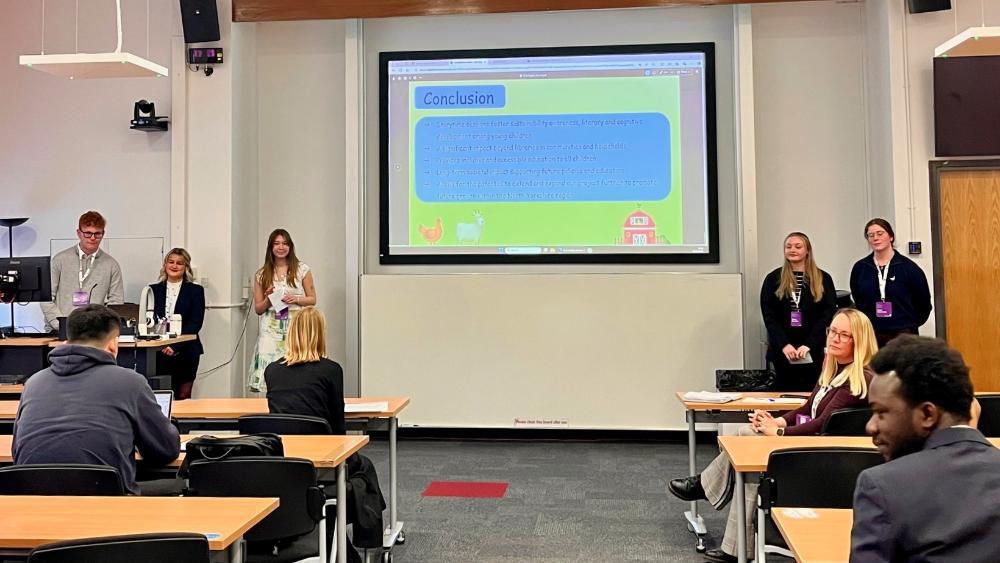
Student team presenting their project at the Student Sustainability Research Conference in March 2025
-----
About the Sustainability Clinic
The Sustainability Clinic is part of a suite of sustainability-related York Interdisciplinary Modules (YIMs) available to take as an elective module. Find out more about the Sustainability Clinic, and how you can take it as an elective in 2025/26.
The Sustainability Clinic has also been embedded as a core module for all 3rd Year Environment and Geography students, enabling all students to experience real-life problem solving, teamwork and partnership working.