
Special edition: our seismic survey
November has been a significant month for our deep geothermal project, marked by the successful completion of our seismic survey across Campus East and surrounding areas. This milestone has not only advanced our geothermal journey, but has also brought valuable engagement from our wider community. In this update, we share behind the scenes from the survey and outline our next steps going forward.
Seismic survey: what happened
Over the last few months, the University has worked closely with Echo Geo Ltd, our specialist contractors, to prepare for and undertake a seismic survey across Campus East and surrounding areas.
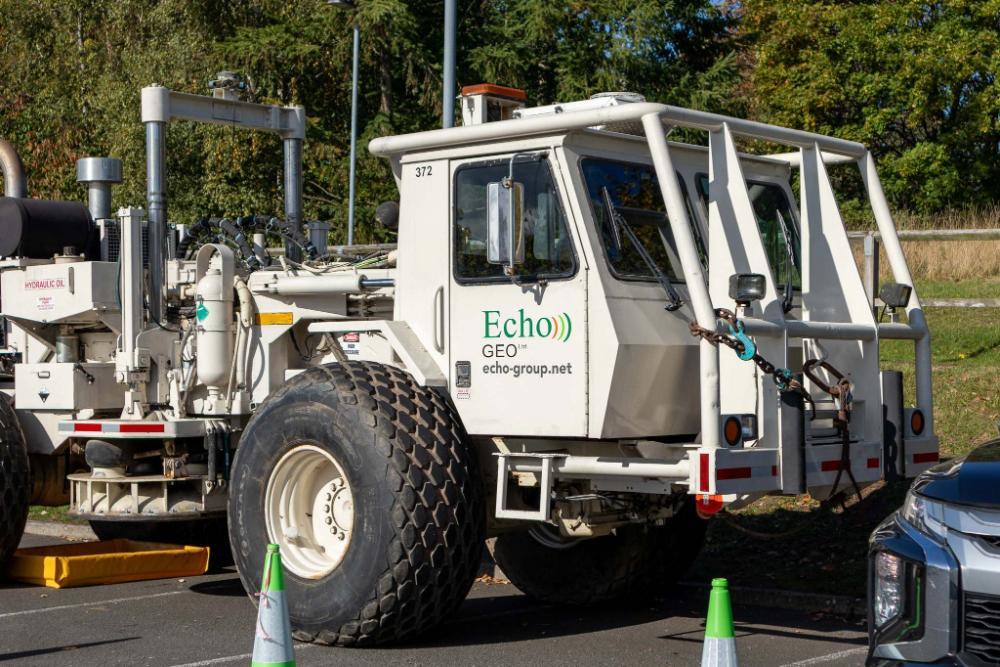
Before recording any data, Echo Geo placed 4800 nodes within the survey area. This was done using GPS equipment to make accurate placements. Once all the nodes were deployed, one or two vibriosis trucks worked their way along the survey lines, covering a 30km radius. At set locations, the truck lowered a large pad and sent vibrations into the ground for around 16 seconds at a time (called a VP). The process was repeated at 25m intervals down each survey line, while the nodes recorded the returning signals from each VP.
Most of the work took place off-road on private land, with some short sections of activity being carried out across the University’s campus and the surrounding areas near Osbaldwick, Murton Park and Derwenthorpe.
BGS gravity survey
In parallel with the 3D seismic survey, the University and the British Geological Survey (BGS) carried out a gravity survey. The results of the gravity survey will give another window into the variations below our feet, helping to highlight structural trends and help improve the interpretation and calibration of the 3D seismic survey.
Seismic survey: Next steps
The seismic survey has been completed with all nodes collected, and we will now process approximately 20TB of data from over 4000 nodes to produce 3D results. Geologists will analyse these results and integrate them into the existing 3D model built from legacy data to provide a more detailed map of the stratigraphy.
This updated model will support the ongoing design of the well in the ground. We expect to have results sometime in the new year.
Students support our seismic survey work
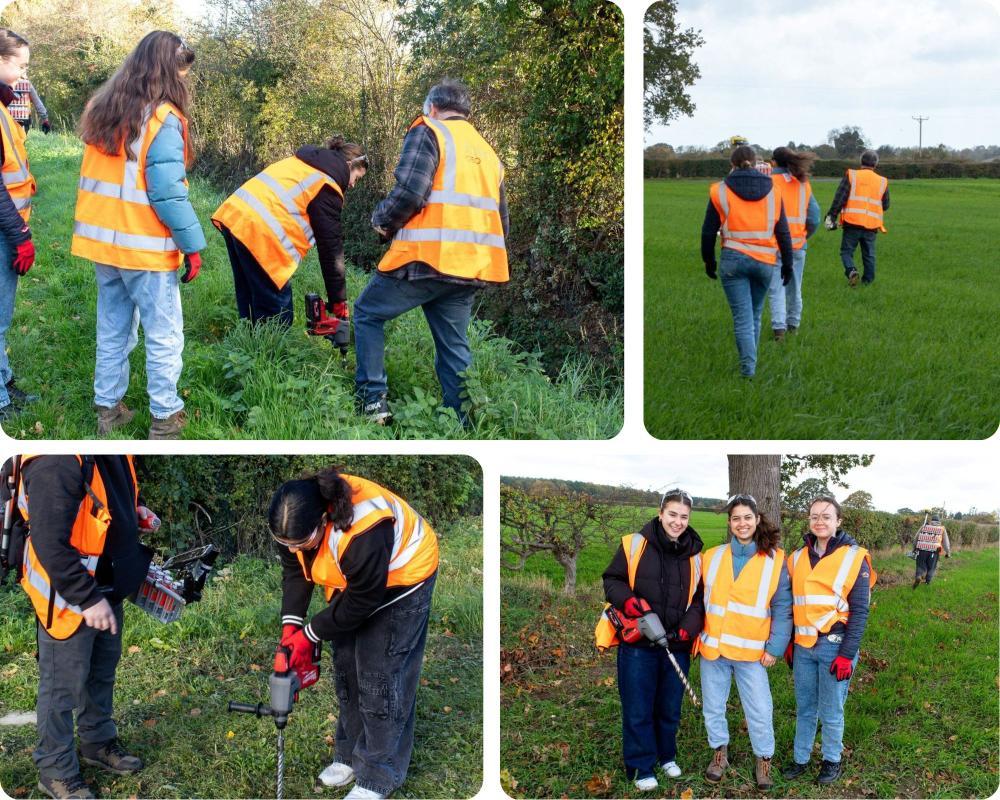
A dedicated team of students from the University of York, along with students from Leeds and Durham, were selected to support our seismic survey.
To support the seismic survey work, Echo Geo recruited students from the University of York, alongside GeoScience or GeoPhysics students from the University of Leeds and Durham University. Tasks included delivering information leaflets to local properties and helping to place and collect thousands of seismic sensors across the survey area.
The opportunity attracted significant interest, with more than 250 applications in just 24 hours. A final group of 29 students from three universities were selected for paid roles, representing a wide range of disciplines including geophysics, natural sciences, engineering, robotics, human geography, environment, biotechnology and archaeology.
Students began by distributing explainer packs to households within the survey area, providing advance notice of the seismic activity and directing residents to further information. Students then received training and safety briefings before heading out in teams, each led by an Echo Geo specialist, to deploy seismic nodes along the survey routes. Using GPS equipment, students helped position, set up and bury the sensors, contributing to the deployment of 4800 nodes across a 30km radius.
Students described the experience as an inspiring and memorable opportunity to gain hands-on field skills.
"Being part of the recent geothermal project with the University of York was an exciting opportunity to look at integrating renewable energy into the university campus and surrounding areas,” said Trixie Green (Human Geography and Environment, University of York). “I was given the chance to get hands-on experience through node deployment. This allowed me to deepen my understanding about geothermal energy and it was also a great opportunity to meet and work alongside new people."
Reece Sharp (BSc Geology, Durham University) added: “Taking part in the seismic survey gave me real field experience and insight into how seismic nodes are used to map the subsurface. Seeing how field data is collected on a large scale was fascinating, and working as part of a coordinated field team made the practical challenge especially rewarding. Overall, it was memorable to see how a professional seismic survey operates from start to finish on a project with real environmental impact.”
For Nada Abdelaziz (Pre-Master’s in Science and Engineering, University of York), the project offered valuable new skills. “Taking part in the seismic survey was a completely new experience for me, and I genuinely enjoyed the adventure of it, from the teamwork to the process of planting the nodes in the field. It gave me new skills, valuable knowledge, and a really memorable experience that I’m grateful to have been part of.”
A huge thank you to all the students who contributed to this key stage of the geothermal project, and to the many students who showed a strong interest in taking part.
Local community supports survey by hosting ‘gnodes’ in gardens
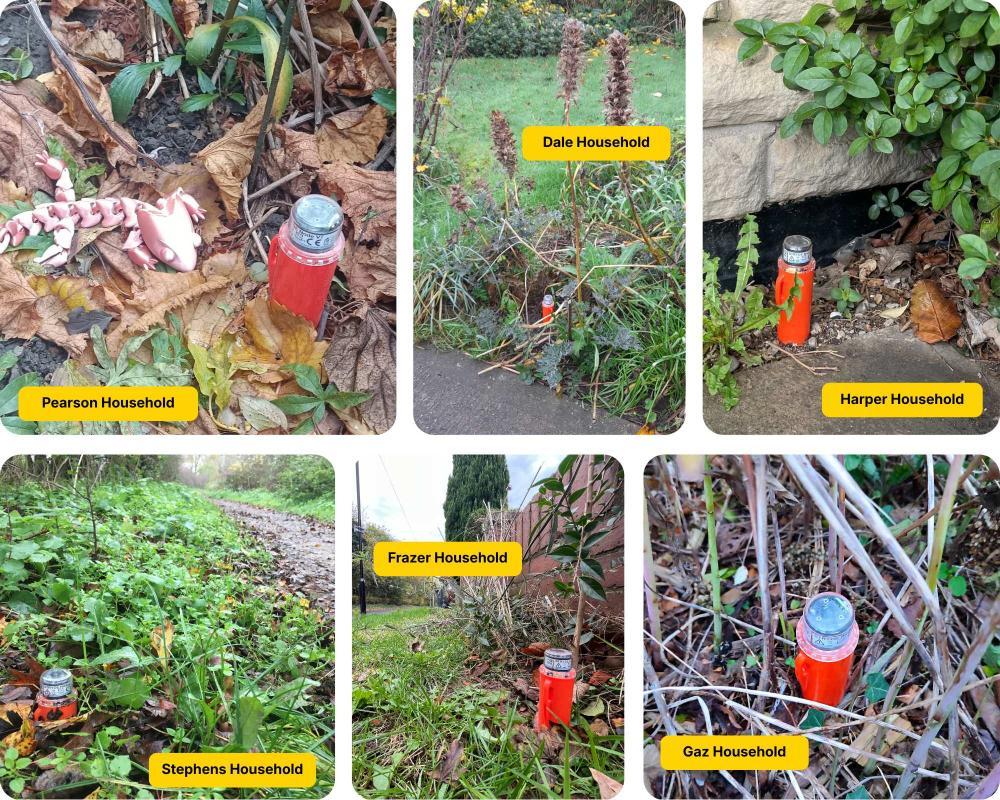
Our local community played an important role in the seismic survey by volunteering to host seismic sensors, known as “nodes”, in their gardens.
To support the work and involve the local community, the University and Echo Geo invited households within the survey area to volunteer to host a node. The response was enthusiastic; 129 residents applied and 100 nodes were successfully deployed in gardens across the survey area.
Participants said they were keen to contribute to a project with clear local benefits:
“We received a leaflet through the door with advance notice of the project and thought it sounded like a good idea and we wanted to help if we could,” said the Smith household. “We like to hear what the local university is up to. This seemed a fun way to get involved.”
For some, the novelty was part of the appeal. “We thought it would be cool to have our own ‘gnode’ for a while!” said the Dale household.
Others were motivated by the project’s potential impact. The Frazer household shared that they wanted to support “our local university and potentially a new energy source for the community,” while the Stephens household added: “I’m hoping that in the future we can have a geothermal source for our local heat network.”
A huge thank you to all those who volunteered to host a sensor in their garden.
In the spotlight: Engineering students visit University’s Energy Centre
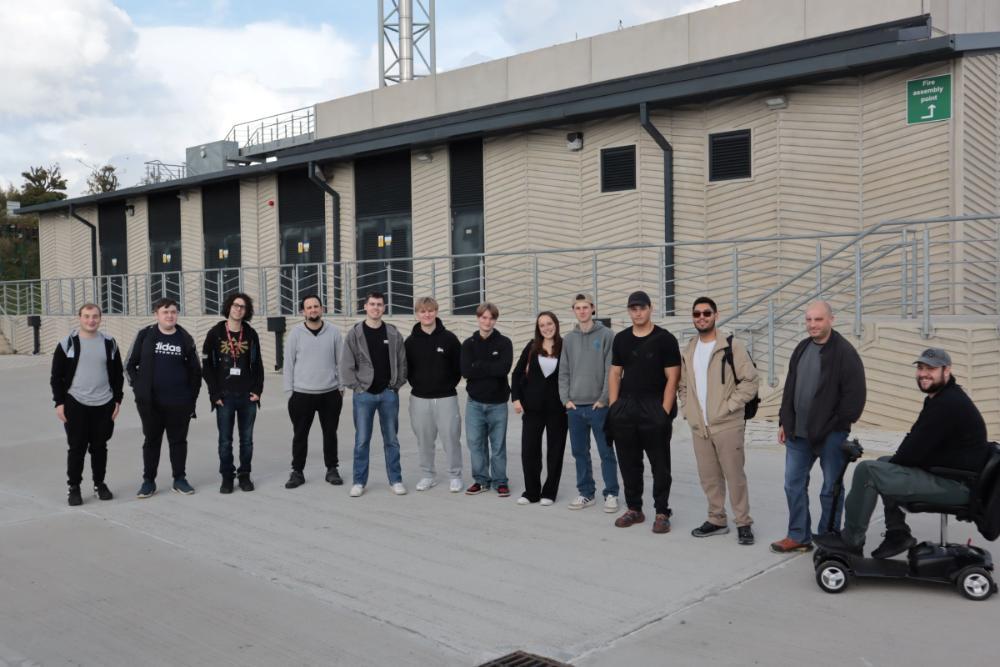
Foundation year students from the School of Physics, Engineering and Technology recently visited the University of York’s Energy Centre. The trip offered young engineers a close-up look at how a combined heat and power plant operates, and how its byproducts can be used to boost sustainability on campus.
Students were particularly inspired by seeing how the heat generated by the engine is captured and reused to provide heating and hot water to our University buildings. The visit sparked new conversations about practical, real-world solutions to energy challenges.
As the geothermal project continues to progress, the team is keen to create more opportunities for students to explore the Energy Centre and deepen their understanding of the University’s energy systems.
What's coming up
- Hydrogeological Risk model: We’ll be working to model the hydrogeological risk of the project, as well as working with the relevant regulatory authorities.
- Planning application: We’ll be submitting our planning application for the project.
- Site design: We’ll be sharing the final site design for the geothermal wells and exact site location.
- Talking Heads video with Salix: We’ve been working with Salix to create a Talking Heads video with interviews from our project team.
---
Download our November 2025 update:
UoY Geothermal Project Update November 2025 (PDF  , 1,384kb)
Want to receive regular updates about the geothermal project? Sign up to our mailing list.