Modules from the third year

Core/Optional modules

Advanced Theoretical Techniques

Module details will be posted here soon.

Analysing the Nanoscale and Magnetism & Superconductivity

Lecturer(s): Dr S P Tear, Dr I D'Amico
No. of lectures: 18
Credit value: 10

The first part of this module is intended to give you a background to the current interest and challenges that exist in the burgeoning area of nanoscience and nanotechnology, and introduce you to some of the state-of-the-art techniques for addressing these challenges.

Nanotechnology is an all encompassing topic and covers a vast area of science and technology. It has generally been defined as relating to any created structure which has dimensions of less than 100 nanometres.

The first part of this course will focus on the understanding of some of the properties of materials (particularly semiconductors) when dimensions are reduced and also on the underlying principles of some key techniques for analysing materials on the nanoscale.

The second half of the module introduces cooperative phenomena in the solid state which requires the simultaneous, collective participation of atoms or electrons throughout the solid. The subject of magnetism will be treated under three principal headings, diamagnetism, paramagnetism and ferromagnetism; and further to include ferrimagnetism and antiferromagnetism. The behaviour of bulk magnetic solids will be studied including magnetic domains, magnetic anisotropy and the differences between hard and soft magnetic materials.

The dramatic electrical and magnetic properties exhibited by superconductors will largely be treated phenomenologically. Both Type I and, and the more technologically useful, Type II superconductors will be studied. Throughout, concepts and principles drawn from other lecture modules will be used, for example, from atomic physics, electromagnetism and thermodynamics.

Atomic Physics II

Lecturer(s): Prof G J Tallents
No. of lectures: 18
Credit value: 10

This course develops our basic understanding of atomic structure developed in Atomic Physics I by supplementing and/or replacing the semi-classical theories with results from Schrödinger treatment of the hydrogen atom from Quantum Mechanics I. Electron spin is introduced together with the implications this has on atomic structure from spin-orbit coupling and fine-structure, to the Pauli exclusion principle and the building of the Periodic Table.

An elementary description of relativistic and quantum-electrodynamical effects, and the Lamb-Shift, is given. The structure and spectra of atoms with more than one single valence electron is described and the concept of exchange interaction is introduced. The course ends by illustrating how the ideas associated with atomic structure extend to the description of simple molecules.

Cosmology

Lecturer(s): Dr M D Cohler
No. of lectures: 18
Credit value: 10

We have all seen Hubble Space Telescope images of galaxies of extraordinary beauty but how varied are they in size and mass? How do galaxies change over time, and for how long do they exist? How do individual stars move through a galaxy? These questions will be investigated in the first part of the course.

When we study the motion of galaxies relative to ourselves we find they move away from us at speeds that increase in proportion to how far a galaxy is from us. This Hubble Law leads us to cosmological models that point to a "beginning" for the universe, called the Big Bang, where both space and time were created. From this point the universe developed from the immensely hot and dense stages, where knowledge of how fundamental particles behave is crucial to our understanding, through to the much cooler universe that we know today.

The equations that govern this behaviour will be explored, and allow us to relate cosmology to vital pieces of experimental evidence that confirm the model, and lead to information about how long ago the Big Bang occurred.

Electrons in Solids

Lecturer(s): Dr R Kröger
No. of lectures: 18
Credit value: 10

To understand many of the physical properties of matter, such as the electronic and magnetic properties or the the interaction with light, it is necessary to study the electronic structure and transport properties of electrons in (crystalline) solids. Thus the lectures will be based on the Solid State Physics course and will make use of the crystallographic classification and the phonon model. The main goals of this module are (a) to introduce the basic concepts for a detailed description of electronic and magnetic as well as dielectric properties in metals and semiconductors and (b) to discuss the experimental verification of the models.

Experimental Techniques

Lecturer(s): Dr S P Tear
No. of lectures: 12
Credit value: 10

The aim of this module is to study the principles, practices and applications underlying the measurement and detection of signals which are at the heart of experimental physics and electronics communication today. Assessment comprises of weekly problems, a closed exam and a group assignment/presentation.

Introduction to Quantum Computation

Lecturer(s): Dr I D'Amico
No. of lectures: 18
Credit value: 10

The field of Quantum Computation has been expanding exponentially over the last decade. At its core is the idea of finding a physical system with the right characteristics to build the "quantum computer", a device which can improve computer performances to levels unreachable by standard (i.e. classical) computers.

There are proposals for quantum computers based on semiconductors, superconductors, cold ions or atoms, molecules in a solvent, fullerenes and so on. Each proposal has its advantages and disadvantages, and has been partially tested experimentally.

The requirements to build a quantum computer are experimentally very challenging, so that the experiments performed in this area are at the very edge of modern techniques. The "quantum computer" is in fact based on the smallest possible quantum system (the two-level system or "quantum-bit") and on exquisitely quantum mechanical properties, such as state superposition.

Mathematical Physics and Computational Quantum Mechanics

Lecturer(s): Dr M I J Probert, Prof J A D Matthew
No. of lectures: 18
Credit value: 10

In the first half of this module, the concept of a Green's Function will be introduced and applied to determining the response of linear systems - the driven harmonic oscillator and the wave equation. This will be contrasted with non linear systems that either show unusual coherence (solitons) or those which exhibit chaotic behaviour that is definitely not random.

The aim of the second half of this module is to show how computers can be used to solve problems in Quantum Mechanics. Whilst simple problems can be solved analytically, numerical/computational methods have to be used for anything more complex than a few electrons. The theoretical approximations used and their consequences will be explored by lectures and supported by practical sessions in the Computational Lab using pre-written software packages.

Molecular Simulation

Lecturer(s): Dr R J Greenall
No. of lectures: 18
Credit value: 10

In this module we shall consider in detail how particle methods may be used to simulate the behaviour of a wide range of physical systems as diverse as classical liquids, plasmas and galaxies. Initially we shall investigate the molecular dynamics method, which is almost entirely deterministic; however the Monte Carlo method, which is stochastic, will also be mentioned. We will pay particular attention to the physical basis of the algorithms used and their efficient and reliable implementation. Attention will then focus on how to extract physical properties from the results of the simulation and how to assess the errors in our estimates of them. Use of the method will be illustrated with examples throughout.

There are also many systems, such as plasmas and galaxies, for which the molecular dynamics approach will not work. We will examine the so-called particle-mesh methods which can be applied to such problems.

Physical Optics I

Lecturer(s): Dr J Wu
No. of lectures: 18
Credit value: 10

This course will introduce electromagnetic theory approach to provide a more complete description of reflections and refractions; introduce polarization in respects of various polarisation states, how to produce or induce different polarisation states, the associated optical activities, and the mathematical description; introduce the general conditions of interference, different interferometers and the applications.

Plasma and Fluid Dynamics

Lecturer(s): Dr R G L Vann
No. of lectures: 18
Credit value: 10

This module provides an introduction to plasma physics with the emphasis on examples and underlying physical mechanisms rather than complex theoretical models. 'Plasma' is ionised gas - it's what you get if you heat a gas sufficiently, and so is sometimes referred to as "the fourth state of matter". More than 99% of the observable universe, including our Sun and the inside of fluorescent light tubes, is plasma.

Plasma physics combines many areas of physics, including electromagnetism, particle dynamics, relativity, thermodynamics and atomic physics. This module looks at how we can use ideas from other modules and apply them to understand the physics behind some examples of both terrestrial and astrophysical plasmas. Particular attention will be paid to tokamaks (the vessels in which nuclear fusion occurs) and to the earth's magnetosphere.

Quantum Physics II: Quantum Mechanics and Nuclear Physics

Lecturer(s): Prof R C Greenhow, Prof R Wadsworth
No. of lectures: 36
Credit value: 20

The aims of the first part of this module are:

To introduce quantum mechanical commutation and their significance for the compatibility of measurements, while introducing the quantum mechanical treatment of angular momentum.

To find solutions of time independent Schrödinger equation for a spherically symmetrical potential, and to apply the results to the Hydrogen atom. To extend quantum mechanics to incorporate spin. To introduce matrix mechanics, with particular application to spin.

To discuss the theory of measurement as illustrated by the Stern-Gerlach measurement of spin. To develop approximate methods for solving the Schrödinger equation when no analytic solutions exist. (Time independent and time dependent.) To introduce two particle wavefunctions, with application to the Helium atom.

The second part of this course will introduce you to the basic properties of nuclei such as masses and nuclear sizes, it will also provide an introduction to nuclear reactions as well as the basics of alpha, beta and gamma radioactivity and the limits of stability of nuclei. Gross features such as the binding energy of nuclei will also be examined in terms of the liquid drop model.

Further key elements of the module will include a discussion of the properties of the nuclear force and a description of the nuclear shell model, which can be used to predict certain quantum properties of nuclei. In addition, the module will outline the physics of nuclear fission and fusion. A final goal of the module will be to introduce a small selection of applications related to the field.

Radio and Infrared Astronomy

Lecturer(s): Dr C J Barton
No. of lectures: 18
Credit value: 10

Module details will be posted here soon.

Special and General Relativity

Lecturer(s): Dr R G Keesing
No. of lectures: 18
Credit value: 10

The observation that the speed of light is independent of the velocity of the light source or observer together with the belief that all physical laws should be independent of the inertial frame in which they are cast, leads to the special theory of relativity. This theory describes the physical world in terms of 'events' and sequences of events which take place in 'inertial frames'.

The principal aim of the special theory is the description of the laws of physics in such a way that they take the same mathematical form in all inertial frames. The appropriate transformation of space time coordinates are those of Lorentz which guarantee the 'form invariance'of all physical laws. At an early stage in the module the Minkowski Rotation Matrix is introduced as a more useful form of the Lorentz transformations, and it is subsequently used in all further developments of the subject. The physical world is best described in terms of a four-dimensional space-time continuum and this is emphasised at all stages in the module.

The primary aspects of the general theory of relativity will also be discussed. The main physical implications of general relativity will be covered without getting too involved with the mathematical framework of the theory.

Stellar Physics

Lecturer(s): Dr C J Barton
No. of lectures: 18
Credit value: 10

The module of eighteen lectures covers the physics of the formation, evolution and death of stars. It commences by discussing the origin of the gas and dust in a galaxy, its condensation under gravity to form a protostar and its evolution on to the main sequence. The energy production mechanisms are dealt with in some detail as are the heat transport mechanisms within the stellar interior. The various classes of star are then examined and special attention is paid to variables such as cepheids, Wolf-Rayets and nova. The description of stellar spectra as a function of surface temperature and composition is then discussed in order to relate spectra and composition.

The gradual evolution of stars off the main sequence is described as a function of the original mass of gas from which they were composed. This then leads to consideration of the evolutionary histories of stars as a function of mass. The Red Giant phase of a stars evolution is then described together with the way in which it evolves to become a white dwarf or supernova. The module will draw upon knowledge of : classical and quantum mechanics, classical and statistical thermodynamics, atomic and molecular spectroscopy, nuclear synthesis, kinetic theory and the transport properties of matter.

In conclusion the module draws, to a greater or lesser extent, on most areas of the first two years of the physics degree.

Thermodynamics and Statistical Physics

Lecturer(s): Dr R J Greenall, Prof R W Godby
No. of lectures: 36
Credit value: 20

The key principles of thermal physics will be introduced via classical thermodynamics and statistical mechanics. The four laws of thermodynamics, which are based on experimental observation, will be presented, their consequences will be considered and they will be applied to various systems in thermal equilibrium. The formalism of equilibrium statistical mechanics will be developed from fundamental considerations of the microscopic states available to the system. Statistical mechanics will be related to the classical thermodynamic descriptions of heat, work, temperature and entropy and then used to derive formulae for the internal energy, entropy, specific heat, free energy and related properties of classical and quantum mechanical systems. These formulae will be applied to a variety of realistic examples.

Other modules

Advanced Computational Laboratory and Frontiers of Research

Co-ordinator(s): Prof R W Chantrell, Prof P Main, Dr R G L Vann
Credit value: 20

Initially, the Computational Laboratory introduces the ideas of computational experiments through programs with which students will be provided. Later, students develop and test their own programs, which implement algorithms described in lecture modules.

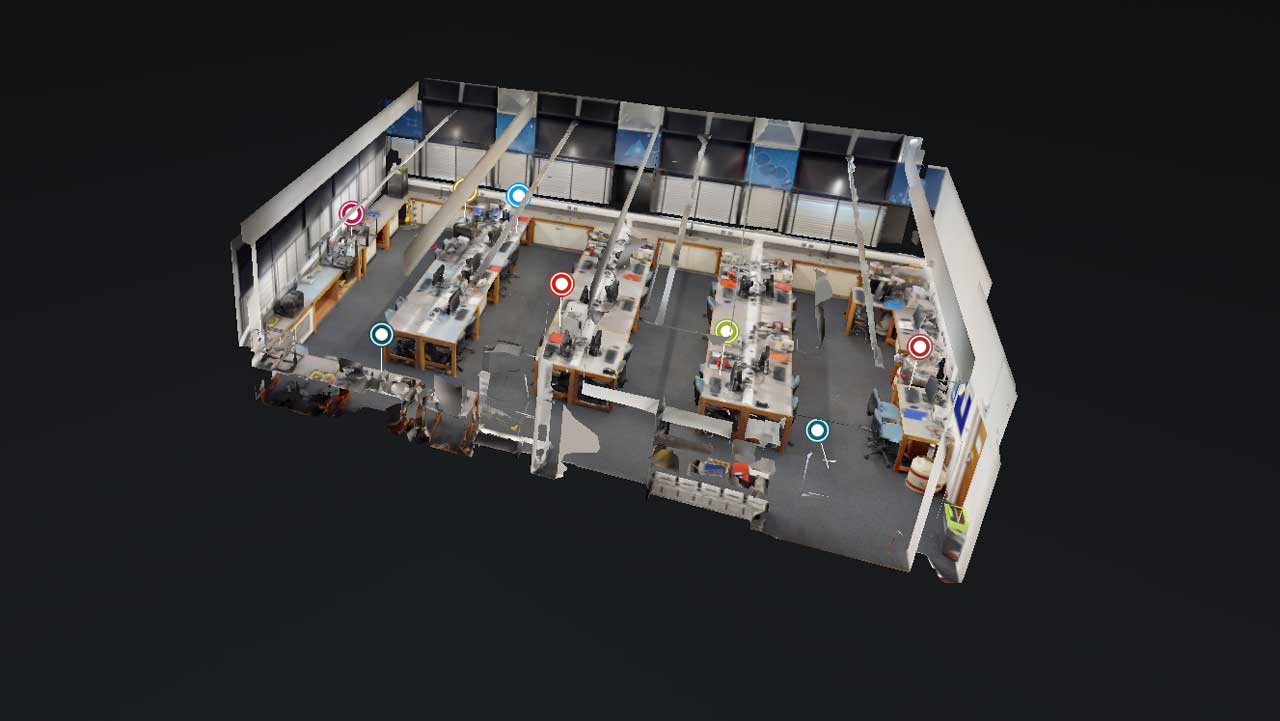
Computational Laboratory occupies one full day a week, from 10:15 to 17:15. Students are expected to complete most of their work within laboratory hours, but have access to the lab outside of scheduled sessions. During lab sessions, a lecturer and a postgraduate demonstrator are in attendance to provide help and advice. A linux server is provided on which to edit, compile and run the Fortran 90 code that students write.

Experiments are set in the form of a script, with accompanying code available on the server where appropriate. Students are expected to keep a thorough record of their work in their laboratory notebook: teaching staff will regularly assess this, as well as checking understanding verbally. Additionally, a few experiments a year are written up as formal reports.

The relatively small number of students who take computational laboratory gives students excellent access to staff, as well as creating a friendly and informal atmosphere.

Later on in the laboratory module, you will complete a series of computer exercises on the use of Maple to model physical systems.

Frontiers of Research exposes students to a range of topics at the Frontiers of Physics Research, aligned with research expertise in the Department, through a series of eight lectures. Each lecture will introduce a specific topic which will serve as the stimulus for further study.

Following the lectures, which will also include sessions on scientific writing and how to read journal articles, each student will be assigned three of the topics to write up - one as an extended essay and two in the form of abstracts. The lectures will be delivered over two days at the beginning of term; the following six weeks will be available to research the topics and write the reports.

Towards the end of the period, students will attend the Departmental Postgraduate Poster evening and write up one of the displayed posters again in abstract form. The topics covered a likely to vary from year to year.

Advanced Experimental Laboratory and Frontiers of Research

Co-ordinator(s): Dr S P Tear, Dr J Pasley, Prof R Wadsworth, Dr R G L Vann
Credit value: 20

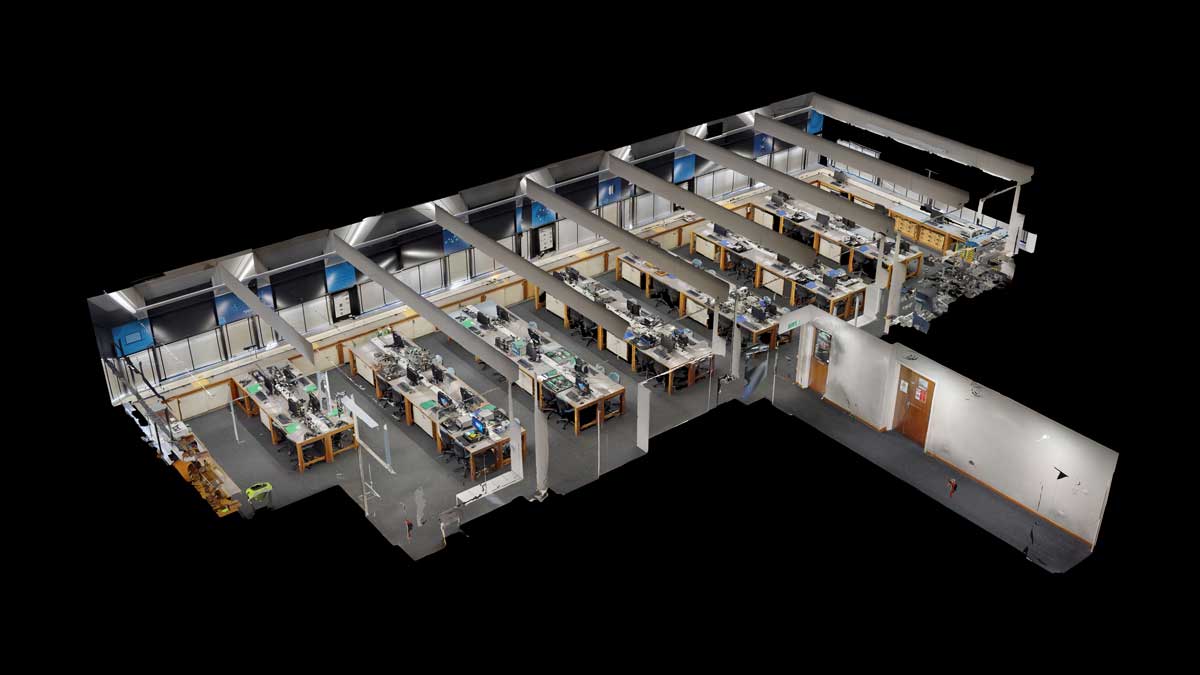
The third year laboratory differs from the earlier years in two main aspects. Firstly, the experiments are longer and more open-ended. Secondly, the laboratory scripts are less prescriptive and you will have to refer to other material (textbooks, research papers, web resources, etc) for background.

The experiments have been chosen to provide practical experience of some of the phenomena about which you will be learning in the third and fourth year lecture modules. The assessment is based on your laboratory note book and a formal report written during the final week. The notebook assessment will be carried out throughout the four week period of each experiment, rather than at the end. This is to encourage you to keep contemporaneous notes, a skill which will be important when you tackle your project in the final year.

Frontiers of Research exposes students to a range of topics at the Frontiers of Physics Research, aligned with research expertise in the Department, through a series of eight lectures. Each lecture will introduce a specific topic which will serve as the stimulus for further study.

Following the lectures, which will also include sessions on scientific writing and how to read journal articles, each student will be assigned three of the topics to write up - one as an extended essay and two in the form of abstracts. The lectures will be delivered over two days at the beginning of term; the following six weeks will be available to research the topics and write the reports.

Towards the end of the period, students will attend the Departmental Postgraduate Poster evening and write up one of the displayed posters again in abstract form. The topics covered a likely to vary from year to year.

BSc Project and Professional Skills

Co-ordinator(s): Dr A M Laird
Credit value: 30

The BSc project is an open-ended investigation which you will conduct normally in pairs. Each project has a specific staff supervisor who will give advice and assistance as needed at regular supervisory meetings. Project work builds on the expertise that you have already acquired in Year 1 and 2. The aim is to develop your ability to design, carry out and report on an extended investigation. The project will provide you will an opportunity for creativity and original thought on your part.

To develop Professional Skills, Students work in small teams to prepare materials and presentations using the skills they've developed. Each team selects a topic from a list of topics that are chosen to be of current or recent interest. Information on such topics should be available in popular science magazines and in general journals, such as Nature and Science, and teams can make use of electronic databases of scientific publications, such as BIDS. The main tasks involve preparing a talk and poster in the conference style, as well as writing documents on their scientific topic for a wide variety of audiences: a letter to a government official, a critical review, a news article and a popular essay.

Students may also give presentations on their BSc projects as part of the selection process for the Goodwin Project Prize.