MSc in Bioarchaeology

Course director: Dr Oliver Craig*

*For the 2011/12 academic year, Prof. Matthew Collins will be acting course director

Overview

In the light of further new appointments within BioArCh (and beyond), and with the launch of the Palaeo centre we are now planning even more improvements to recently updated the structure of the MSc in Bioarchaeology. In addition to offering advanced training in human osteoarchaeology (from both a research and commercial perspective) coupled with an unparalleled access to training in the study of ancient biomolecules, we are planning optional modules in Human Evolutionary Anatomy and Functional and Musculoskeletal Anatomy (possible because of a new dissection facility on campus). This new development will complement our existing strengths in zooarchaeology and environmental archaeology, enabling us to offer full integrated study of biological remains at a range of nested scales from the morphological through to the molecular.

Our intensive core modules train you in gathering archaeological information from human bone morphologically and through pathology, as well as through chemical and molecular analysis, including stable isotopes, DNA, and proteomics. You will also consider the ethics of working with human remains, and develop practical osteological expertise through a choice of skills modules focusing on human and animal remains.

Staff

Staff

Associated Staff

Facilities

The MSc in Bioarchaeology benefits from its twin locations in the Kings Manor and S-Block, our campus-based science facility:

The King's Manor houses specialist laboratories for:

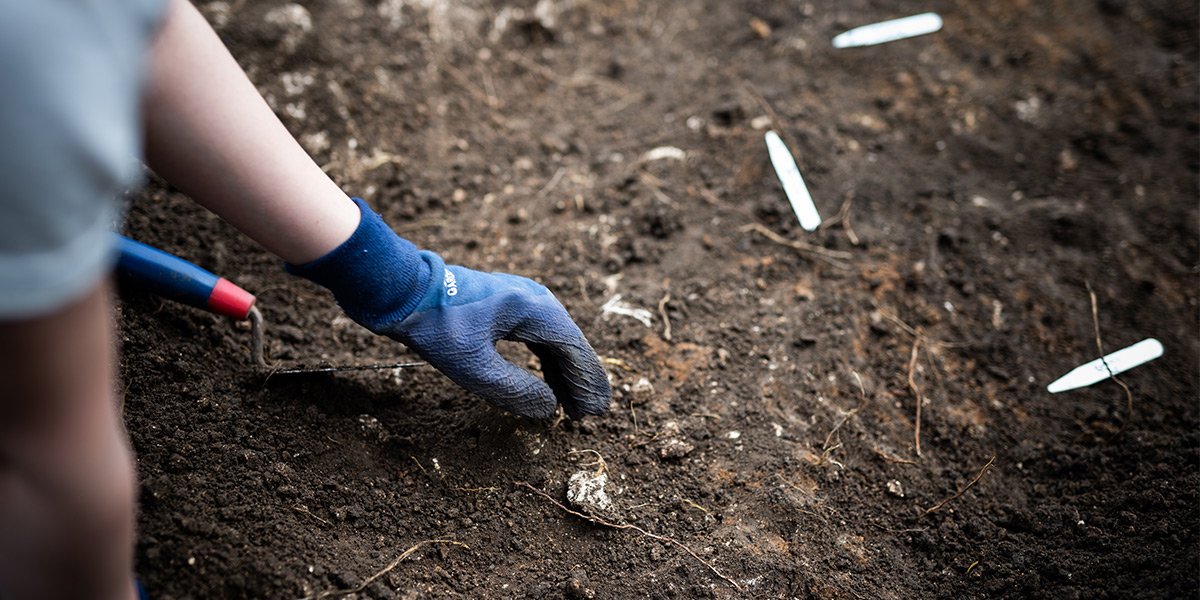
Soils analysis:

  • thin sectioning
  • microscopy
  • wet chemistry

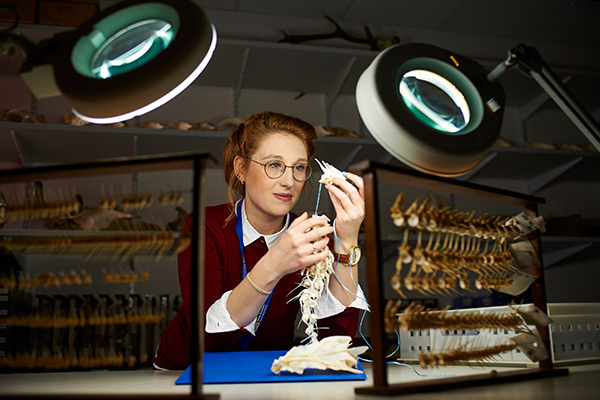
Osteology teaching laboratory:

  • human and animal reference collections
  • digital x-ray facilities

S-Block and our BioArCh laboratories offer:

  • Dedicated laboratory for bone preparation (bone saws, drills etc).
  • Gas Chromatography
  • Optical microscopy
  • 100 m2 of preparative laboratories
  • Scanning and Transmission Electron Microscopy
  • State-of-the-art protein mass spectrometry
  • NERC-recognised amino acid dating facility
  • ZooMS bone identification service
  • state-of-the art Ancient DNA facility (housed in its own building in the Walled Garden).

The following range of facilities is available for all students undertaking an Archaeology Masters programme:

  • Dedicated IT suite with a full range of software including generic and specialist archaeological packages and computing support from two highly experienced experimental officers
  • A comprehensive range of state-of-the-art field survey equipment which postgraduates can normally use for their project work (and can gain experience with via the skills modules we offer)
  • A wide range of lab facilities for archaeological analysis including environmental and artefact processing as well as the bioarchaeological facilities on campus
  • A well stocked library with access to electronic resources, and study areas both in the Kings Manor library and the library on campus
  • The Kings Manor includes a common room and refectory open to all staff and students, and WiFi is available across the Kings Manor

Structure

Structure

Over the autumn and spring terms you will take:
  • two core 20 credit modules
  • two option 20 credit modules
  • four 5 credit skills modules

In the summer you will carry out research for your dissertation and give an Assessed Lecture on your dissertation topic.

Core modules

Recommended option modules

Recommended skills modules

Whilst we endeavour to give everyone their first choice on modules, please note that this cannot always be guaranteed. Please be aware that certain skills modules are required by particular programmes, and so may be more over-subscribed than others.  Please see the Full modules list for scheduling information on option and skills modules, as some run concurrently.

Example of Previous Dissertations

  • Low collagen bone from Herculaneum, an integrated isotopic and proteomic analysis
  • Early Christian diets in a Pictish Monastery
  • Studying wolverine populations using ancient DNA
  • Investigating population replacement at the transition to agriculture through ancient DNA analysis
  • Using Transmission Electron Microscopy to reveal evidence of early cooking
  • A novel method for estimating age at death
  • The application of ZooMS to the identification of archaeological fish remains
  • Iodine as a tracer of marine diet in enamel

Entry

You will need:

  • A good honours degree (upper second or first) or an equivalent qualification from an overseas institution in archaeology, anthropology, biology or related fields
  • Or, in the case of mature students who might not have conventional qualifications, appropriate relevant experience.

Apply now

First, check our How to apply page, which explains what information the Department needs from you.

Careers

Molecular methods are increasingly widely used in archaeology, but the range of osteological and molecular skills means that the course is suitable for a wide range of careers.

By the end of the course you will:

  • be able to identify and record human bone assemblages
  • be able to age, sex and assess pathologies from human bones
  • have knowledge of advanced methods for analysis of bone tissues, including biomolecular methods
  • know when to apply chemical and biomolecular methods to skeletal material
  • have knowledge of the processes of decay and diagenesis of bone tissue
  • be able to critically evaluate published research and datasets
  • be able to orally present knowledge and concepts
  • be able to work effectively within an laboratory environment
  • be able to plan, design and undertake a piece of independent research
  • have participated in research seminar and visiting speakers programmes (archaeology and biology


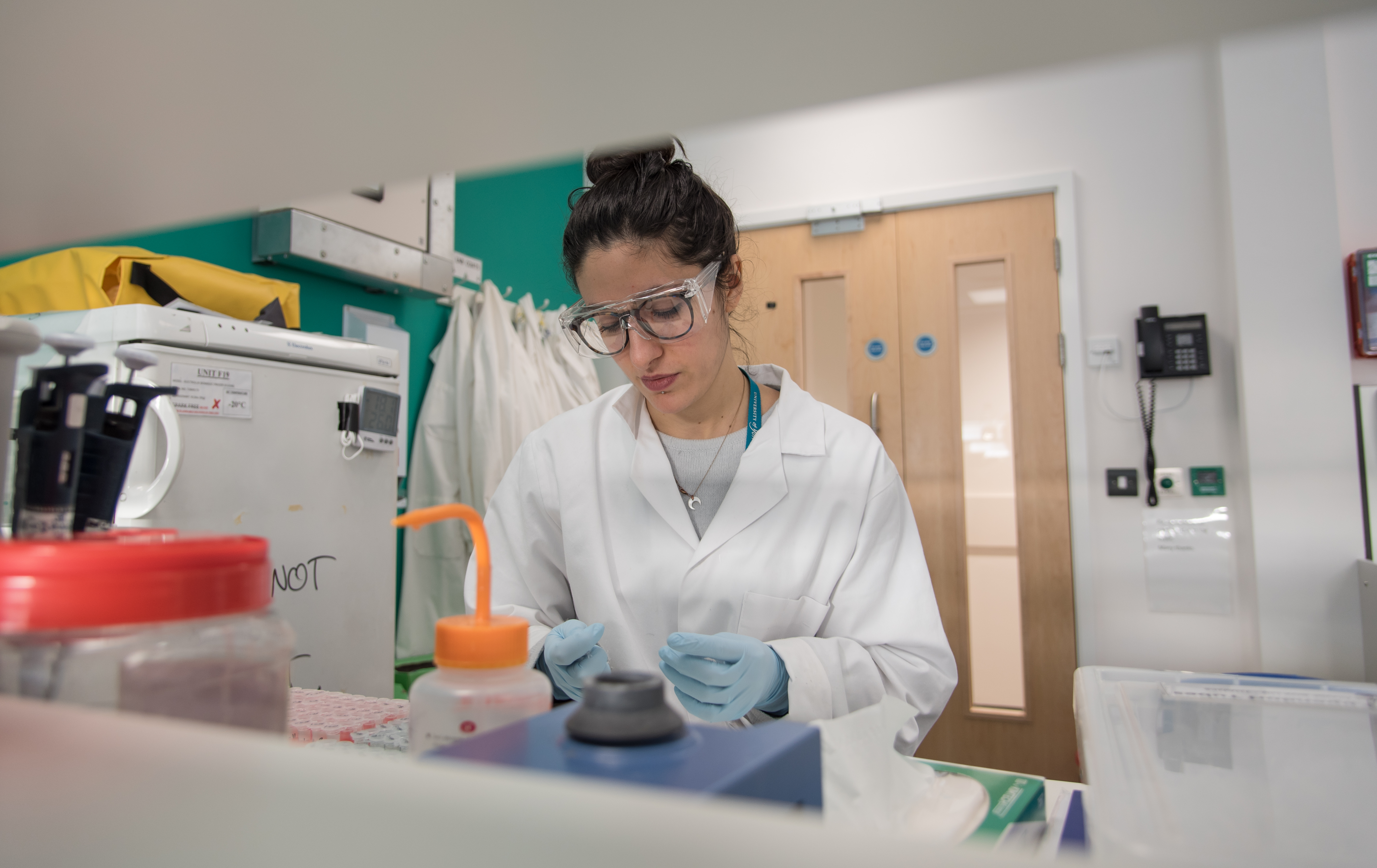
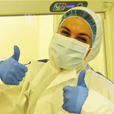
Hannah and Ines working in BioArCh

During my project, I studied burials from Herculaneum and gained experience of stable isotope and amino acid analysis as well as protein mass spectrometry

Rose Monachino