
Is York typical? What does the data tell us in 2025?
Posted on Wednesday 12 November 2025
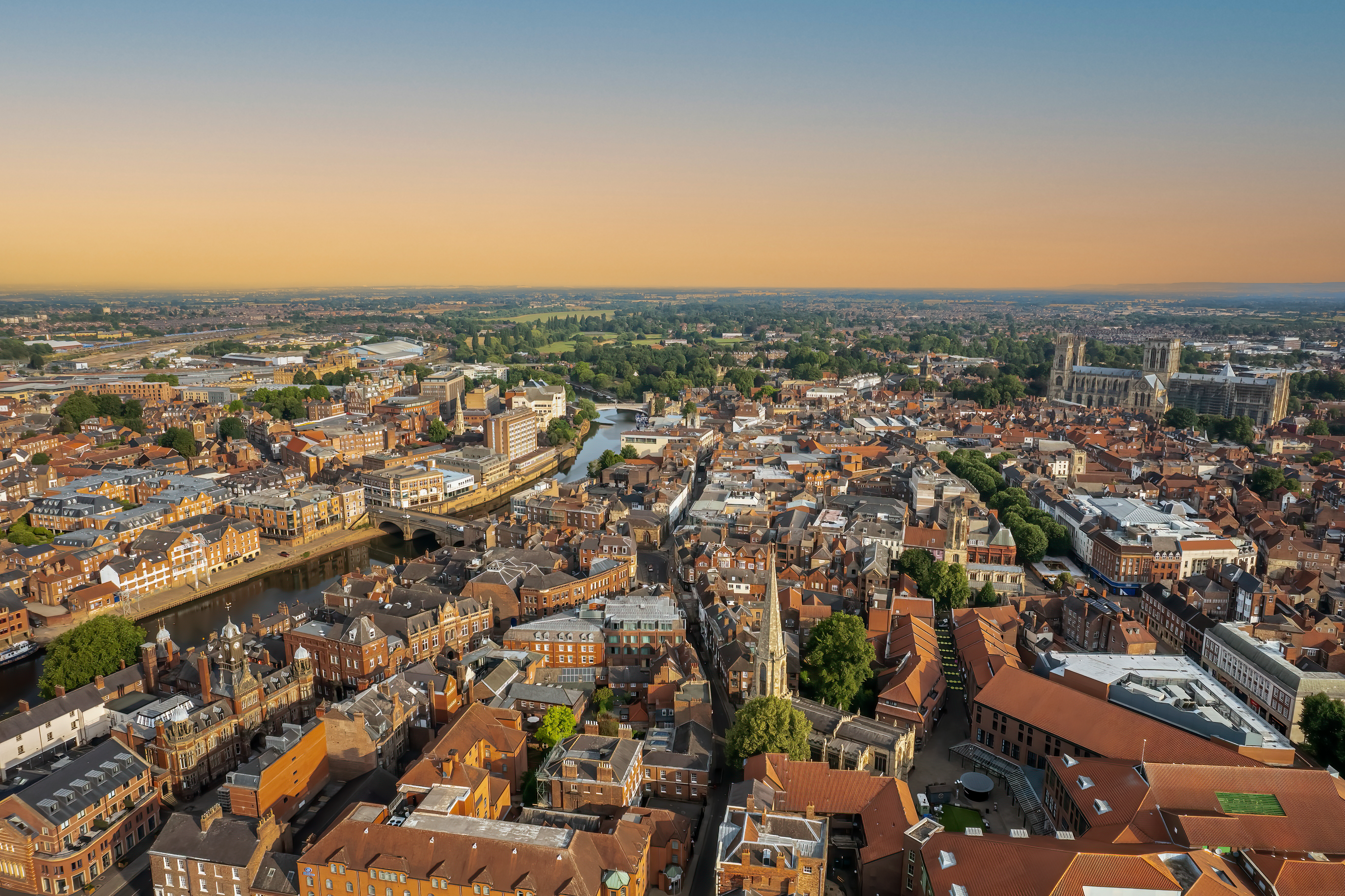
"In Poverty: a Study of Town Life Seebohm Rowntree (1901) wrote ‘Having satisfied myself that the conditions of life obtaining in my native city of York were not exceptional, and that it might be taken as fairly representative of the conditions existing in many if not most of our provincial towns…….’[1] Page vi.
"We have previously visited this question[2] and concluded that York was increasingly not fairly representative nor typical
"We can now conclude that it is far from typical. The chart below shows the decile distribution of the 115 Lower Super Output Areas in York in the national distribution. LSOAs are small, standardized geographical areas in England and Wales, with each LSOA typically containing between 1,000 and 3,000 people and 400 to 1,200 households). On no domain is York typical of the national distribution. Indeed, on three domains it has no LSOA in the bottom tenth of the national distribution and on the overall IMD about half of LSOAs are in the top two deciles. Our conclusion is that comparatively York is now a remarkably affluent city."
York: Distribution of the 115 LSOAs by national decile in the 2025 Index of Deprivation

The Indices of Deprivation measure multiple dimensions of neighbourhood deprivation at a small area level across England.
The IoD25 release updates the English Indices of Deprivation 2019.
The English Indices of Deprivation (IoD25) measure relative levels of deprivation in 33,755 small areas or neighbourhoods, called Lower-layer Super Output Areas (LSOAs), in England.
[1] B. Seebohm Rowntree (2000) Poverty: a study of Town Life, Centennial edition, Policy Press: Bristol.
[2] Bradshaw, J. (2013) Poverty and inequality: Is York typical?, Radical Statistics, 109, 51-58