
York research challenges our understanding of how humans and wildlife live together
Posted on Wednesday 12 November 2025
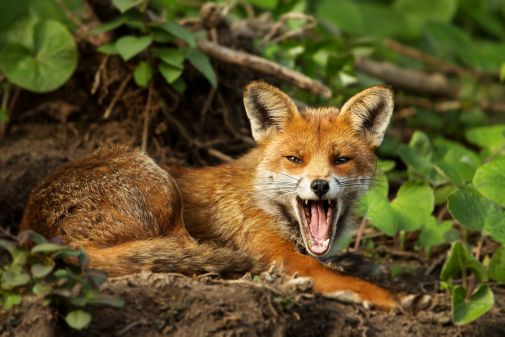
The research points towards a process where both people and wildlife are adapting to each other, proving that habituation is reciprocal. This can have positive and negative outcomes and doesn’t necessarily lead to something we call coexistence.
The study highlights that as wildlife adapts to human presence and resources, people also change their behaviors, beliefs, and practices towards animals. The researchers call this process a "co-becoming" where both species influence each other, forming new types of relations. This is evident in case studies ranging from the Idu Mishmi people and tigers in India, to more local examples of people feeding foxes in their gardens in the UK.
Dynamic relationships
Dr Hanna Pettersson, a Postdoctoral Research Associate at the University of York, with a specialism in Carnivore conservation, policy and governance, explained the research clearly points to a world where both people and wildlife can sometimes coexist in a reciprocal and dynamic relationship shaped by deep-seated cultural, historical, and political-economic contexts.
She said: “Our research found that this process is highly context dependent and sensitive to outside pressure - it is very important that we see and understand the factors that drive different forms of habituation, particularly the mutually positive versions that enable coexistence. After all, how habituation is perceived and managed is not universal. The study shows it is shaped by local culture, with some communities welcoming close proximity to animals for spiritual or safety reasons, while others view it as a threat. For example, hyenas in Harar, Ethiopia, are seen as protectors, while in other contexts, they might be considered a nuisance or danger."
She added: "While much of the existing literature focuses on the negative consequences of habituation - such as human and wildlife conflict - the research demonstrates that the outcomes can be mixed. For people, it can lead to emotional bonds and a sense of purpose, while for animals, it can provide access to resources and increase survival rates. However, it can also lead to new conflicts and ethical dilemmas."
Locally grounded
The research has been published in the journal People and Nature and argues for academics and policymakers to look for more locally grounded, and ethically sound, ways for people and wildlife to adapt and live together.
Ethan Doney, Assistant Professor at Oregon State University, co-author of the study explained the long-term safety of animals, and humans for that matter, depends on how habituation unfolds within a given social and policy context. He said: “Habituation can reduce fear responses and help wildlife and people share space more predictably, but it can also increase vulnerability when humans remain fearful, use lethal control, or provide food attractants. Our paper emphasizes that habituation is reciprocal, meaning that people and animals both adapt movement and behaviour over time to effectively negotiating boundaries with one another.”
“For those worried about conflict or dependency, the key takeaway is that habituation itself is not inherently dangerous, its outcomes depend on local context, the species itself, and the behaviours of people and wildlife. Policies that discourage feeding, manage attractants, and promote giving wildlife space can produce processes of habituation that may be safer for people and animals, rather than creating risky, or conflictual encounters.”
The research explores why it is so important to develop community-supported approaches to managing or guiding human-wildlife interactions.
Reducing conflict
Dr Doney added: “Meaningful engagement with local communities in shaping norms and practices associated with human-wildlife interactions could help clarify what “safe” and/or “respectful” behaviours are. This can also facilitate clear, accessible, and culturally relevant education and messaging on what these guidelines are and how they are understood, and importantly, how people and animals both play an important and active role in these encounters”.
“Efforts like these can help shape policies that make human-wildlife interactions more predictable and low-risk both parties are important. Early public education, food/attractant control, and community engagement have been shown to effectively reduce lethal outcomes, while also avoiding the tendency to default to lethal control when conflict emerges.”
Dr Tom Fry, a co-author of the study, who in recent years has specialised in human-wildlife relations in urban environments, explained: “Our research shows that we've been looking at habituation with a very narrow lens. By understanding it as a mutual process, we can move away from a focus on deterrence, and a one-size-fits-all approach. It is clear that habituation plays out in different economic, political and geographic contexts, and across different species, all of which will change its impacts”
Fostering coexistence
"For example, UK gardens are now core habitat for foxes. At present the advice most generally given is that people should not encourage foxes into their gardens, but this does not account for the both positive and negative outcomes of human-fox habituation. Our research emphasises that management should instead include a process of working with communities to develop locally-grounded initiatives that work for people and foxes. The key here is to manage the human-fox relationship, not just the fox population”
This new understanding could significantly influence policy and conservation practices, fostering more successful coexistence strategies in a world where human and animal habitats increasingly overlap.
Notes to editors:
Reimagining habituation: The case for a reciprocal and contextual understanding has been published in the British Ecological Society's journal People and Nature.