
Bio-Boost: Transforming Wastewater Treatment into a Driver of Health, Sustainability, and Innovation
Posted on Tuesday 16 December 2025
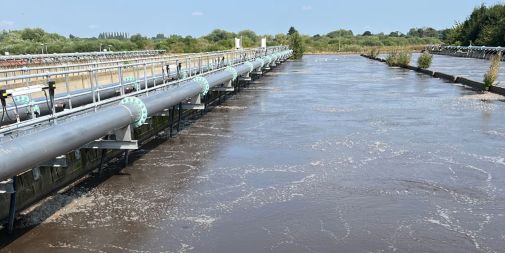
Led by the University of York and Newcastle University in partnership with UK Water Industry Research (UKWIR), the Environment Agency, Oxford Nanopore Technologies, and Waters Corporation, Bio-Boost will deliver 21 doctoral graduates equipped with the skills, vision, and entrepreneurial mindset to drive innovation across the public, private, and third sectors.
Why Wastewater Treatment, Why Now?
Wastewater treatment is the largest global application of biotechnology, directly contributing to 11 of the UN’s 17 Sustainable Development Goals. Yet, despite its critical role in public health, energy security, and environmental protection, WWT has not fully harnessed recent advances in biology, bioengineering, and digital innovation. Climate change, antimicrobial resistance, and increasing societal and industrial water demands pose urgent challenges that require a new generation of skilled scientists.
Aims and Objectives of Bio-Boost
Through the leadership and expertise at the Universities of York and Newcastle, and its industrial and regulatory partners, Bio-Boost will deliver immersive doctoral training across three research cohorts:
- Health Security & Pandemic Preparedness
- Developing innovative (eco)epidemiological approaches and biosensors to monitor human pathogens together with removal strategies to enhance public health
- Climate Resilience & Environmental Protection
- Harnessing microbiological and bioengineering innovations to protect aquatic environments and build resilience against the threats posed by climate change.
- Energy Security & Circular Economy
- Creating renewable bioresources, reducing greenhouse gas emissions, and developing circular solutions for sustainable industrial growth.
Benefits to Industry and Society
Bio-Boost will:
- Train multidisciplinary scientists with leadership and entrepreneurial skills.
- Deliver innovative solutions for pandemic preparedness and health security.
- Enhance WWT performance to meet Defra’s target for a non-toxic environment.
- Build climate-resilient WWT systems.
- Increase bioenergy security to support the UK’s net zero ambitions.
- Develop circular bioeconomy solutions to drive clean industrial growth.
Access to World-Class Facilities
Students will benefit from unparalleled access to Europe’s leading WWT research infrastructure, including the University of York’s Centre of Excellence for Anaerobic Digestion (CEAD), Newcastle University’s BE:WISe pilot facility, and cutting-edge bioscience and analytical chemistry centres supported by Oxford Nanopore Technologies and Waters Corporation.
Economic and Societal Impact
The UK water industry employs over 127,000 people, contributes £15 billion annually to the economy, and will deliver a massive £80 billion infrastructure investment between 2025 and 2030. Bio-Boost will help fill critical skills gaps, strengthen national capability, and deliver economic benefits through job creation, infrastructure optimisation, and adoption of innovative technologies. Societal benefits include improved public health, biodiversity protection, and community engagement through education and awareness.
Cohort one is now open for recruitment
Bio-Boost is recruiting candidates interested in exploring the “Integrated Understanding of Public and Environmental Health” theme that includes:
- The role that wastewater and drinking water treatment systems play in the dynamics and removal of human-derived pathogens
- How changes in population demographics and climate will impact the burden and public health exposure to emerging communicable diseases.
Up to 7 PhD Projects will be available for a September 2026 start. Interested applicants can find out more at Cohort One Applications.
“This outstanding award is a very positive step for the UK’s research and innovation landscape. By providing advanced skills and training in areas such as health, climate, environmental protection, energy security and the circular bioeconomy, the Bio-BOOST program will help develop future experts who can work in partnership with the UK water industry. That alignment between academic training and industry priorities is essential in supporting long-term planning and sustainable services for customers and the environment” said Mike Rose, CEO, UKWIR.
"Bio-Boost represents a step-change in how we think about wastewater treatment – not just as a utility, but as a platform for innovation, resilience, and sustainable growth" said Professor Claire Hughes, Head of Environment and Geography, University of York.
"By training scientists who can bridge biology, engineering, and digital technologies, we are future-proofing the UK water industry and delivering solutions with national and global impact" added Professor Jason Snape, Bio-Boost Lead, University of York.
“Wastewater treatment is no longer just about keeping our rivers clean, it’s about safeguarding public health, building climate resilience, and unlocking new sources of renewable energy. Bio-Boost will ensure the UK leads the way in turning these challenges into opportunities” added Professor Tom Curtis, Bio-Boost Co-Lead, Newcastle University.
Funding Source
UK Research and Innovation (UKRI) is investing in Bio-Boost as part of two flagship doctoral training initiatives funded by BBSRC that are designed to strengthen the UK’s talent pipeline in bioscience, biotechnology, artificial intelligence (AI), data science and engineering biology.
Together, the Industrial Doctoral Landscape Awards (IDLAs) and Doctoral Focal Awards (DFAs) represent more than £40 million of investment, supporting over 320 new PhD studentships across three yearly intakes from 2026.
With more than £24 million invested by the UKRI Biotechnology and Biological Sciences Research Council (BBSRC) and over £15 million in direct and in-kind contributions from the successful partnerships, the IDLAs will train over 170 doctoral students, giving industry a critical role in shaping future skills and helping address long-term workforce needs.
Professor Anne Ferguson-Smith, BBSRC Executive Chair, said: “Through these investments, UKRI is strengthening the UK’s leadership in critical technologies while creating meaningful opportunities for businesses, researchers and regions across the country. The IDLAs and DFAs will equip a new generation of talented researchers with the skills to drive innovation, support high-growth sectors and improve lives.”
Notes to editors:
Interested applicants can find out more at Cohort One Applications.