Overview
The MSc in Zooarchaeology builds on the expertise and experience of staff in the Department, and on the important position that York holds in zooarchaeology research.
We humans are quite exceptional in the many ways that we interact with other species, and any consideration of the human past is incomplete without considering the animals that played an essential role in economic and symbolic activities.
This course is for you:
- if you are a graduate in archaeology and anthropology and you wish to further your study of the archaeology of the relations between people and other animals
- if you are a graduate in a discipline such as biology, geography and geology and you wish to extend your studies into a specialised area of archaeology
Staff
- Terry O'Connor: has worked in zooarchaeology for about 30 years, principally working in the historic period in UK and northern Europe. He continues to undertake practice-led research to enhance our interpretation of ancient bones, especially in understanding the formation of bone assemblages. Recent work has included investigations of Late Upper Palaeolithic assemblages from northern England, and ongoing research into the behavioural co-evolution of people and the animals that live around our settlements.
- Matthew Collins: heads BioArch, the Department's innovative research collaboration with Biology and Chemistry that is taking biomolecular analysis of archaeological materials into new areas. Matthew is internationally renowned for his expertise on ancient proteins, especially collagen, the main structural protein of bone
- Oliver Craig: joined the Department in autumn 2007, and specialises in biomolecular and isotopic methods of investigating ancient diet and other uses of resources
- Geoff Bailey: is a world-renowned prehistorian with a particular research focus on prehistoric economies. His research has taken him around the globe, most recently to the submerged coastlines of the Red Sea.
The majority of the course is delivered by Terry O'Connor, with elements contributed by other staff and, where appropriate to their expertise, by research postgraduates who are engaged in zooarchaeology research.
Facilities
There is a wide range of facilities for students undertaking an Archaeology Masters programme. These include:
- Dedicated IT suite with a full range of software including generic and specialist archaeological packages and computing support from two highly experienced experimental officers
- A comprehensive range of state-of-the-art field survey equipment which postgraduates can normally use for their project work (and can gain experience with via the skills modules we offer)
- A wide range of lab facilities for archaeological analysis including environmental and artefact processing as well as the bioarchaeological facilities on campus
- A well stocked library with access to electronic resources, and study areas both in the Kings Manor library and the library on campus
- The Kings Manor includes a common room and refectory open to all staff and students, and WiFi is available across the Kings Manor
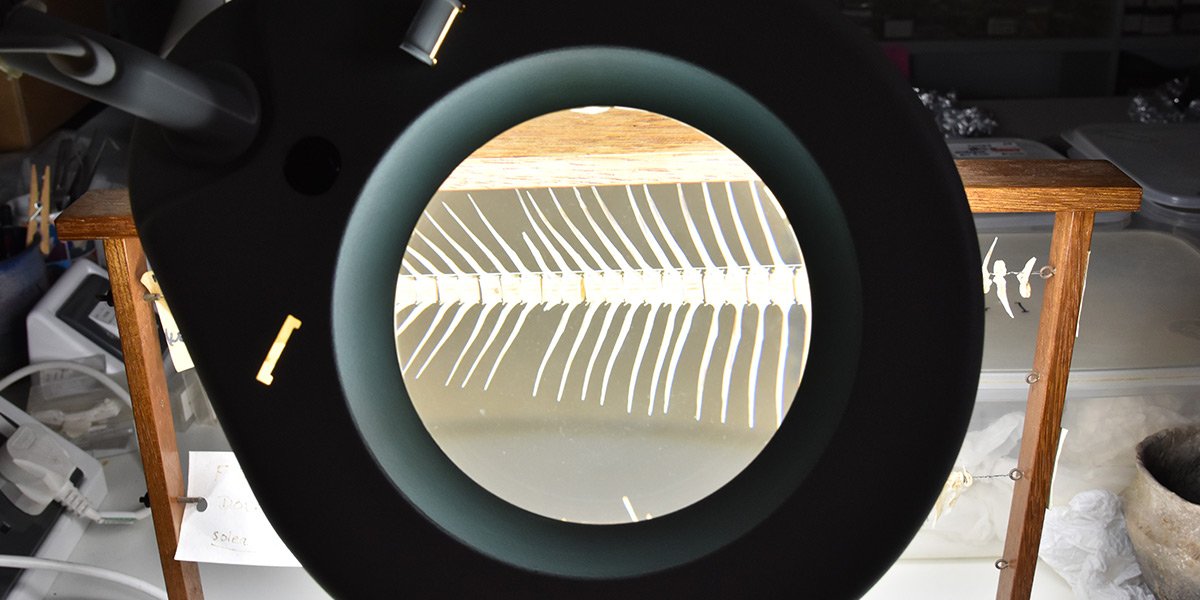
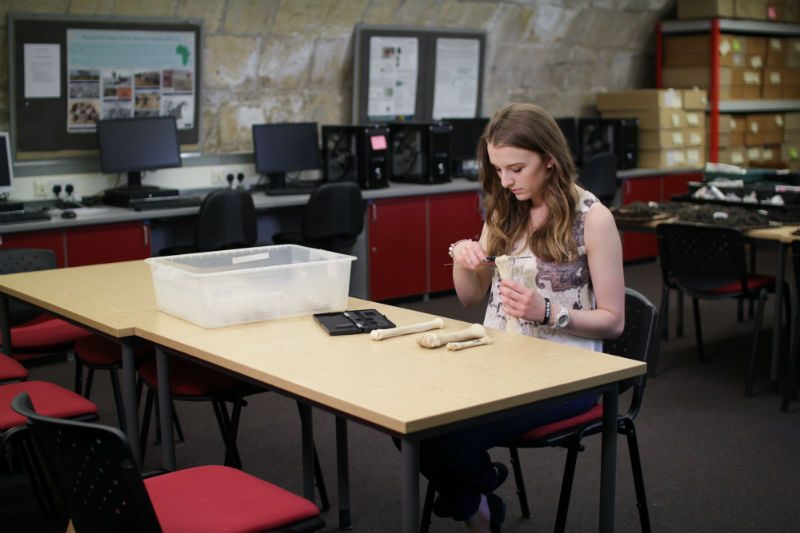
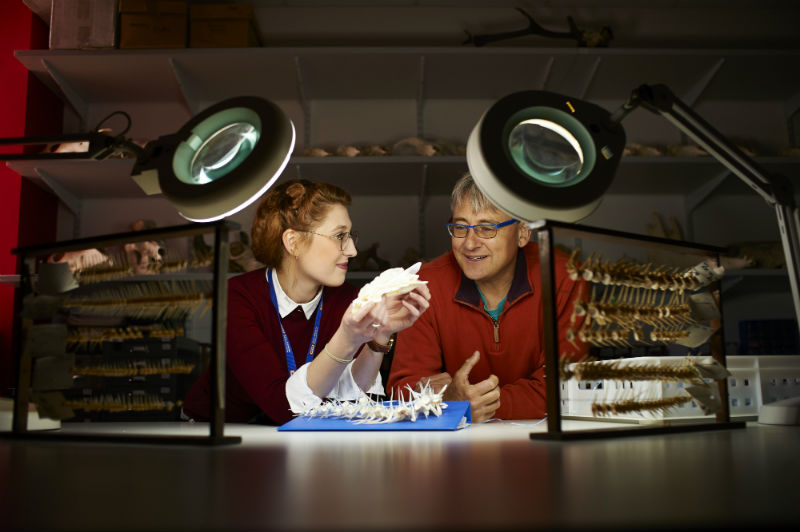
Students who choose Zooarchaeology will have the opportunity to access the animals bone collection which is housed at the Kings Manor and there is bench space available for carrying out dissertation projects.
Structure
Structure
Over the autumn and spring terms you will take:
- two core 20 credit modules
- two option 20 credit modules
- four 5 credit skills modules
In the summer you will carry out research for your dissertation and give an Assessed Lecture on your dissertation topic.
Core modules
Recommended option modules
Recommended skills modules
Whilst we endeavour to give everyone their first choice on modules,
please note that this cannot always be guaranteed. Please be aware that
certain skills modules are required by particular programmes, and so
may be more over-subscribed than others. Please see the Full modules list for scheduling information on option and skills modules, as some run concurrently.
Entry
You will need:
- a good honours degree (upper second or first) or an equivalent qualification from an overseas institution in archaeology, anthropology or a related field
- graduates in a biological subject will also be considered, as will mature students who might not have conventional qualifications but can show appropriate relevant experience
- We interview most applicants unless you live or work overseas
Funding possibilities
As part of our PALAEO Marie Curie early stage training site, we offer a number of funded research placements, which normally last six months. The aim of these placements is to provide a period of research collaboration at York and an opportunity to acquire specific research or analytical skills.
It would also allow you to attend postgraduate training modules offered at York as a part of our Masters programmes. If that is the case, you may wish to consider registering for our MSc programmes in Zooarchaeology or Bioarchaeology, or in Archaeological Research, undertaking the taught component of the course during your placement in York. For further details contact the course director.
Apply now
First, check our How to apply page, which explains what information the Department needs from you.
Careers
When you complete the course, you will have:
- gained a thorough grounding in all aspects of vertebrate zooarchaeology, including general aspects that are applicable to invertebrate zooarchaeology
- have experienced the processes of data collection, analysis, and interpretation, both in principle and in practice
- have developed the confidence to undertake the critical review of published work in zooarchaeology, from all periods and from all parts of the world
- have studied the vertebrate skeleton, its evolutionary origins, and its adaptations
- undertaken the identification and recording of archaeological bone assemblages
- reviewed the field of taphonomy and the practical recognition of the taphonomic 'imprint'
- reviewed and assessed published work from throughout the world, including hunter-gatherer and agrarian sites, and socially complex societies
- studied and undertaken the numerical analysis of zooarchaeological data
- completed a dissertation project of individual research