MA in Cultural Heritage Management

Course director: Dr John Schofield

Overview

Delivered by experienced heritage professionals and leading researchers, the MA in Cultural Heritage Management provides appropriate and vital training for professional roles across the heritage sector within and outside the UK. By combining academic studies with practical applications and placement opportunities, this flexible MA programme provides an informed and up-to-date overview of heritage management theory and practice. The cultural heritage sector has expanded rapidly in recent years creating a diversity of opportunities in museums, local authorities, consultancies and agencies. The number of York’s CHM alumni now working in the heritage sector is testament to the course’s success in combining theory with practice, and to its emphasis on vocational training.

Being taught within the Department of Archaeology does not mean this course is only for students with an Archaeology degree, or that the course emphasises only Archaeological heritage. Rather, this a more generalised programme which explores the multi-disciplinary nature of heritage studies. Students to recently complete the course include those with backgrounds in: History, History of Art, Politics and English as well as Archaeology. The MA will also suit students from Anthropology, Geography and Business Studies who wish to pursue a career in the increasingly diverse and lucrative heritage sector.

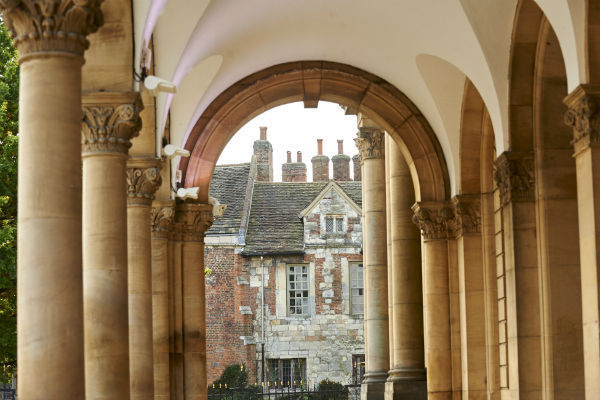
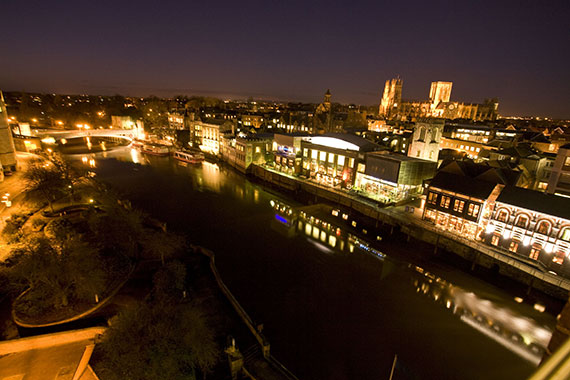
York provides the ideal environment for heritage studies. Heritage is writ large in the landscape around the King's Manor, and in York's hinterland. There is much here to see and to think about - heritage to engage with outside of the classroom. And the number of heritage organisations based in and around York means opportunities for placements and work experience. Simply, 'York' and 'heritage' go together, and we are very pleased to offer this exciting and diverse programme within such an appropriate setting.    

The steady increase in planning led investigations illustrates the growing significance of cultural heritage to society.

Staff

Teaching on the MA is augmented by lectures and seminars from external heritage professionals and practitioners. Staff with an interest in heritage and heritage related issues, and who are available to supervise heritage related dissertations, include:

Facilities

There is a wide range of facilities for students undertaking an Archaeology Masters programme. These include:

  • Dedicated IT suite with a full range of software including generic and specialist archaeological packages and computing support from two highly experienced experimental officers
  • A comprehensive range of state-of-the-art field survey equipment which postgraduates can normally use for their project work (and can gain experience with via the skills modules we offer)
  • A wide range of lab facilities for archaeological analysis including environmental and artefact processing as well as the bioarchaeological facilities on campus
  • A well stocked library with access to electronic resources, and study areas both in the Kings Manor library and the library on campus
  • The Kings Manor includes a common room and refectory open to all staff and students, and WiFi is available across the Kings Manor

Structure

Structure

Over the autumn and spring terms you will take:

  • two core 20 credit modules
  • two option 20 credit modules
  • four 5 credit skills modules
  • one 20 credit optional placement module

In the summer you will carry out research for your dissertation and give an Assessed Lecture on your dissertation topic.

Core modules

Recommended option modules

Recommended skills modules

Whilst we endeavour to give everyone their first choice on modules, please note that this cannot always be guaranteed. Please be aware that certain skills modules are required by particular programmes, and so may be more over-subscribed than others.  Please see the Full modules list for scheduling information on option and skills modules, as some run concurrently.

Work experience placement

Entry

You will need:

  • A good honours degree (upper second or first) in a relevant subject, or an equivalent qualification from an overseas institution. For this programme 'relevant subject' is broadly defined. Archaeology is obviously included, as are subjects such as: History, History of Art, English, Geography, Anthropology, Politics, and Environmental Sciences. If applicants are unclear whether the subject of their first degree is appropriate they can contact the Course Director for more information.  
  • Mature students or those with less conventional qualifications but with relevant professional experience in this field will be considered
  • For foreign language speakers, Level 6.5 IELTS/100 TOEFL is required.
  • An interview may be required.

Apply now

First, check our How to apply page, which explains what information the Department needs from you.

Careers

When you complete the course, you will have:
  • enhanced your skills and knowledge to the point where your chances of employment as professional heritage managers have been improved
  • developed both intellectually and personally as a result of the having dealt directly with professional heritage managers
  • developed the ability to both work within a group through seminar and placement experiences, and independently through research for a dissertation
  • a critical understanding of the policies and practices underpinning the heritage management process
  • a critical and theoretically developed understanding of the nature of heritage and the various uses it is put to in society
 

Valletta (Malta) - Regeneration at the heart of a World Heritage Site


I found the MA in CHM to be a transformative experience.  The blending of work placements with theoretical explorations of the politics and ethics of heritage made me rethink the ways we understand the past in the present.

Emma Waterton