Explore sustainable solutions for environmental problems
Year of entry: 2024 (September)
Join us online or in person to find out more about postgraduate study at York.
Upcoming eventsDevelop the skills needed by today's environmental managers, policymakers, consultants and scientists to tackle environmental issues at local, regional and global levels.
Our Masters in Environmental Economics and Environmental Management prepares you for a wide range of careers across the public and private sectors. Equally, it provides a good basis for further study at PhD level.
You’ll gain knowledge of environmental and ecological economics and the interactions between economic, social and ecological systems. At the end of the course, you'll be equipped to incorporate environmental feedback into economic decision making in a way that satisfies both ecological managers and economists.
This course is suitable for students from a wide range of backgrounds, including economics, human geography, business, sociology, politics, environmental science and more. You'll be taught by a range of interdisciplinary staff with varied environmental research interests.
Our staff collaborate with a broad range of private and public organisations including UNEP, Defra, Forestry Commission, Natural England, Overseas Development Institute and Willis Global Insurance Broker
You’ll get to choose whether to specialise more in an economic or natural science direction, and can choose a dissertation project in either area (also with a placement option). Whichever pathway you choose, you’ll develop as an effective interdisciplinary thinker, able to bridge diverse disciplines to help tackle the climate and ecological emergencies: the defining issues of our times.
You will also study two option modules. In previous years, options have covered topics such as:
Our modules may change to reflect the latest academic thinking and expertise of our staff.
You will complete an 8,000-word dissertation as part of this MSc. This dissertation can either be York based, or as a placement with an external partner. For the former, staff in the Department will suggest a range of possible subjects and titles, but you can also devise your own title. For the latter, the dissertation topic will be of relevance to the external partner. For both types of dissertation, you will have a departmental supervisor who will provide regular guidance and will be able to comment on drafts of your dissertation. If you are undertaking a placement for your dissertation, you will receive additional guidance from a project supervisor.
Previous dissertations include:
Students have taken placements with organisations including:
The dissertation will allow you to demonstrate your skill at independent research, and apply insights from the taught modules to solve issues in environmental economics and environmental management.
Every course at York is built on a distinctive set of learning outcomes. These will give you a clear understanding of what you will be able to accomplish at the end of the course and help you explain what you can offer employers. Our academics identify the knowledge, skills, and experiences you'll need upon graduation and then design the course to get you there.
| Study mode | UK (home) | International and EU |
|---|---|---|
| Full-time (1 year) | £10,590 | £23,900 |
Students on a Student Visa are not currently permitted to study part-time at York.
UK (home) or international fees? The level of fee that you will be asked to pay depends on whether you're classed as a UK (home) or international student. Check your fee status.
Find out more information about tuition fees and how to pay them.
Discover your funding options to help with tuition fees and living costs.
We'll confirm more funding opportunities for students joining us in 2024/25 throughout the year.
If you've successfully completed an undergraduate degree at York you could be eligible for a 10% Masters fee discount.
You can use our living costs guide to help plan your budget. It covers additional costs that are not included in your tuition fee such as expenses for accommodation and study materials.
You’ll work with world‐leading academics who’ll challenge you to think independently and excel in all that you do. Our approach to teaching will provide you with the knowledge, opportunities, and support you need to grow and succeed in a global workplace.
This Masters combines formal lectures, practicals, seminars and field trips.
Our teaching and research span the natural social and economic sciences in an integrated way. Postgraduate teaching is informed by our research which includes work in areas as diverse as coral reefs, tropical rain forests, atmospheric science, pollution, biodiversity conservation and wildlife management, and the culture and values that drive environmental behaviour, politics and economics. As part of our teaching process we have also embedded a range of employability principles, as well as real world solutions and real-world oriented approaches, to help prepare our students for a range of careers after finishing their degree.
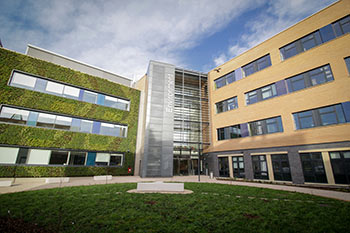
Our state-of-the-art building contains purpose-built labs, lecture theatre and seminar rooms.
You will be based in the Department of Environment and Geography on Campus West.
Most of your contact hours will be in the Department, with some additional teaching on Campus West.
Our beautiful green campus offers a student-friendly setting in which to live and study, within easy reach of the action in the city centre. It's easy to get around campus - everything is within walking or pedalling distance, or you can always use the fast and frequent bus service.
Types of assessment in this course include:
Formative assessment as you study modules will allow you to receive feedback on your progress and understanding.

You'll develop the skills and knowledge you will need to follow an environmental career in both the public and private sectors. The Masters in Environmental Economics and Environmental Management also provides an ideal basis to progress to further study at PhD.
You'll develop a range of transferable skills during the course, including:
| Typical offer | |
|---|---|
| Undergraduate degree | 2:2 or equivalent. We will also consider your application if you have relevant work experience. Ideally you will have studied both some ecology and some economics as part of your degree but applications from students from either discipline are welcome. If you did not have a significant quantitative component to your degree you may also be considered with a requirement to attend a Summer School in Microeconomics and Quantitative Methods. |
| International pre-masters programme | Pre-masters from our International Pathway College |
| Other international qualifications | Equivalent qualifications from your country |
If English isn't your first language you may need to provide evidence of your English language ability. We accept the following qualifications:
| Minimum requirement | |
|---|---|
| IELTS (Academic and Indicator) | 6.5, minimum 6.0 in each component |
| Cambridge CEFR | B2 First: 176, with 169 in each component |
| Oxford ELLT | 7, minimum of 6 in each component |
| Duolingo | 120, minimum 105 in all other components |
| LanguageCert SELT | B2 with 33/50 in each component |
| LanguageCert Academic | 70 with a minimum of 65 in each component |
| KITE | 459-494, with 426-458 in all other components |
| Skills for English | B2: Merit overall, with Pass with Merit in each component |
| PTE Academic | 61, minimum 55 in each component |
| TOEFL | 87, minimum 21 in each component |
| Trinity ISE III | Merit in all components |
For more information see our postgraduate English language requirements.
You may be eligible for one of our pre-sessional English language courses. These courses will provide you with the level of English needed to meet the conditions of your offer.
The length of course you need to take depends on your current English language test scores and how much you need to improve to reach our English language requirements.
After you've accepted your offer to study at York, we'll confirm which pre-sessional course you should apply to via You@York.
Get in touch if you have any questions


We offer a range of campus accommodation to suit you and your budget, from economy to premium.

Explore campus and city life and hear what our current students have to say about living here.
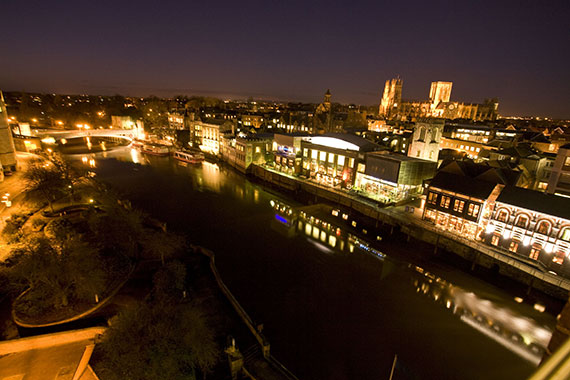
Lively, full of culture and beautiful, York is regularly voted one of the best places to live and visit in the UK.

Find out more about York. Chat to staff and students and take the tour, on campus or online.