Wolf protection downgrade highlights need for adaptive conservation frameworks, say experts
Posted on Thursday 18 September 2025
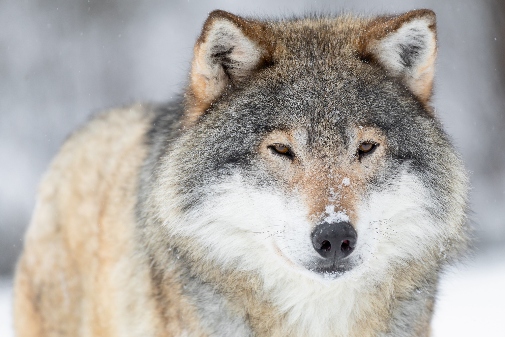
The reclassification reflects a remarkable recovery of the wolf population, having increased by 58% in a decade, with populations of brown bears, lynx and wolverines also on the rise.
The protected category affords member states greater flexibility in managing expanding wolf populations, but although protections remain in place, the move has raised fears among conservation groups of widespread culling.
At the same time, farming and hunting communities and landowner associations see it as necessary to regulate the population and enable management that is adapted to local conditions.
Remarkable comeback
Researchers at the University of York and Stockholm Resilience Centre point out that the shift has highlighted a rigidity in current wildlife conservation frameworks in the EU - no species has ever been downlisted before, despite a remarkable wildlife comeback over recent decades.
Experts argue that conservation policies tend to be “stuck in a crisis mindset” designed for a time when the species were on the brink of extinction.
The shift for wolves could lead the way for other species to make the same transition as they recover, but the researchers stress that what happens next will depend on how different the states choose to interpret and implement this change, and to what extent wolf management is coordinated between countries.
Coexistence
Dr Hanna Pettersson, from the University of York's Leverhulme Centre for Anthropocene Biodiversity, said: “Our research suggests that given the ongoing recovery of Europe’s large carnivores, decision-makers need to shift their focus to planning for future scenarios of these species in human-dominated landscapes. Moreover, there is a need to collaboratively define what successful coexistence would look like in different places, from an ecological and social perspective”
It is argued that wolves are beneficial to ecosystems as they regulate herbivore populations, preventing overgrazing, and promoting new vegetation that creates healthier habitats for other animals and pollinators. However, a growing number of studies have illustrated that these effects are highly context dependent, particularly in landscapes shaped by people and their livestock, and that the impact that wolves can have on these ecosystems has been ‘overplayed’.
As wolf numbers have increased across Europe, there are growing concerns about threats to livestock, pets and rural lifestyles such as hunting and pastoralism.
New vision
Erica Von Essen, from the Stockholm Resilience Centre, said: “Downgrading protection must not mean reversing coexistence efforts. However, to deal with the recovery of wolves and other carnivores, we need new stories and visions of them in our landscapes, ones which do not hinge on them cleaning up our ecological mess for us, and which are not solely authored by conservationists.”
The study highlights four key aspects that researchers recommend policymakers need to consider in future planning:
- Clear and transparent population targets - establish standardised and transparent criteria for determining whether a species is doing well - known as a ‘favourable conservation status’ - across member states, while acknowledging and considering socio-ecological targets for the landscape in question.
- Adopt adaptive management tools - this includes collaborative monitoring and planning with locals, as well as zoning strategies that promote wolf populations in areas that have good conditions for coexistence, while potentially limiting them in areas where conflicts are or would be severe.
- Redistribute costs fairly - strengthen EU-level funding and incentives for member states to maintain carnivore populations, and clearer guidance on how to redistribute these funds so the burden of wolf conservation is not carried disproportionately by rural communities or poorer countries.
- Invest in monitoring and dialogue - improve cross-border monitoring systems and ensure that farmers, herders, hunters, and local communities are meaningfully involved in policy decisions.
Balance
Researchers argue that coexistence policies must be grounded in scientific evidence, adaptive management, and transparent dialogue – ensuring that both ecological and socio-economic realities are considered.
Dr Pettersson said: “Going forward, success means moving beyond species survival to fostering coexistence that balances ecological recovery with social legitimacy.
“This debate should not be about whether wolves ought to be hunted or not; it should be about how we manage them fairly, responsibly, with the trust of the people most affected, and with the broader social-ecological system in mind.”
The research is published in the journal Conservation Letters.