Hunter-gatherer social ties spread pottery-making far and wide
Posted on Thursday 22 December 2022
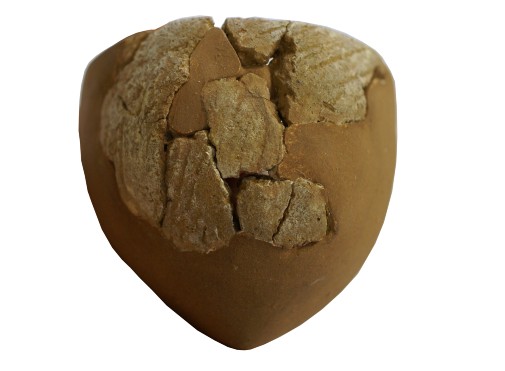
The team, which includes researchers from the University of York and the British Museum, analysed the remains of 1,226 pottery vessels from 156 hunter-gatherer sites across nine countries in Northern and Eastern Europe. They combined radiocarbon dating, together with data on the production and decoration of ceramic vessels, and analysis of the remains of food found inside the pots.
Their findings, published in the journal Nature Human Behaviour, suggest that pottery-making spread rapidly westwards from 5,900 BCE onwards and took only 300–400 years to advance over 3,000 km, equivalent to 250 km in a single generation.
Cultural transmission
Professor Oliver Craig, from the University of York’s Department of Archaeology, said: “Our analysis of the ways pots were designed and decorated as well as new radiocarbon dates suggests that knowledge of pottery spread through a process of cultural transmission.
“By this we mean that the activity spread by the exchange of ideas between groups of hunter-gatherers living nearby, rather than through migration of people or an expanding population as we see for other key changes in human history such as the introduction of agriculture.”
“That methods of pottery-making spread so far and so fast through the passing on of ideas is quite surprising. Specific knowledge may have been shared through marriages or at centres of aggregation, specific points in the landscape where groups of hunter-gatherers came together perhaps at certain times of the year.”
Cooking
By studying traces of organic materials left in the pots, the team demonstrated that the pottery was used for cooking, so the ideas of pottery-making may have been spread through shared culinary traditions.
Carl Heron, from the British Museum, said: “We found evidence that the vessels were used for cooking a wide range of animals, fish and plants, and this variety suggests that the drivers for making the pottery were not in response to a particular need, such as detoxifying plants or processing fish, as has previously been suggested.
“We also found patterns suggesting that pottery use was transmitted along with knowledge of their manufacture and decoration. These can be seen as culinary traditions that were rapidly transmitted with the artefacts themselves.”
Rapid spread
The world’s earliest pottery containers come from East Asia and may have spread rapidly westwards through Siberia, before being taken up by hunter-gatherer societies across Northern Europe, long before the arrival of farming.
This research is funded by the European Research Council (ERC) under the European Union's Horizon 2020 research and innovation programme.