York scientists analyse COVID-19 protein in a bid to crack genetic safeguard
Posted on Monday 20 April 2020
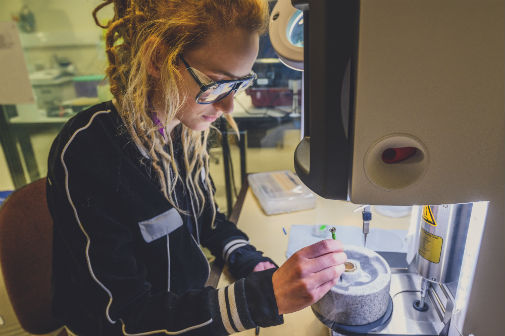
The researchers, from the York Structural Biology Laboratory (YSBL), have purified the virus’s nucleocapsid protein and begun characterising it. This is the most abundant viral protein, which safeguards its genetic material and is known as RNA.
The team are working in collaboration with the cryo-electron microscopy laboratory at the University of Leeds in an effort to determine an accurate three-dimensional structure of the protein, to inform mechanistic understanding and drug development.
Antibody tests
As an important spin-off, the scientists have provided the protein, and the system they use to make it, to other labs, at Sheffield, Oxford, and London, to assist in development of antibody tests for COVID-19.
The nucleocapsid protein produces a strong antibody response in infected people, making it an important component in testing procedures.
The association between the viral genome and the nucleocapsid protein represents an essential stage in the virus life cycle, which could be targeted by antiviral drugs.
The research team led by Professor Fred Antson, a Wellcome Trust Senior Fellow, specialises in the use of cryo-Electron Microscopy and X-ray crystallography to image viral proteins and whole virus particles to understand how they assemble. As the scale of the threat posed by the newly emerging coronavirus became apparent, the team quickly focused their research on the SARS-CoV-2.
3D image
PhD student Dorothy Hawkins, who is involved with the study, explained that producing a 3D image of this protein was crucial in understanding the virus.
“Because it is such a new virus we don’t have any specific information about any of its proteins.
“We are trying to get the 3D structure of both the genetic material and this protein which protects it.
“If we can get a detailed 3D structure this should be really informative for designing drugs which could stop the association between them.”
Dorothy added: “The scientific community has really gathered around. Hopefully the more we understand, the more we can aim to disrupt the virus.
“Everyone in different labs is really up for collaboration, all competition has been dropped. I think progress has been really fast because everyone has been sharing things as soon as they could. It is a really exciting project.”
The team, working with supervision from Fred Antson (Professor, Department of Chemistry), are Oliver Bayfield (Postdoctoral researcher), Dorothy Hawkins (3rd year PhD) and De-Sheng Ker (2nd year PhD).