Prepare for a career as a professional sound designer
Year of entry: 2024 (September)
Join us online or in person to find out more about postgraduate study at York.
Upcoming eventsStudy, explore and practise contemporary film and television postproduction with a focus on technical aspects of sound production and design. Enhance your understanding of digital sound design creation and audio for film, television and interactive media.
Our course emphasises a high level of craft skill and creativity, combined with critical thought and collaboration. You'll gain scientific and technical training with hands-on experience of sound design, programme creation and artistic decision-making.
We'll teach you through a mix of workshops, lectures, screenings and masterclasses led by leading academics and industry professionals. You'll use industry-standard facilities in a vibrant and supportive environment. You'll realise your own creative and technical projects and develop essential professional skills to pursue a career in industry.
On this MA you will have the opportunity to focus your individual research project on creative production-orientated work. Alternatively, if you'd prefer to focus your individual research project on the technologies behind production and postproduction systems you can apply for the MSc Film and Television Production with Sound.
Our graduates have pursued careers in film and television, as well as furthered their academic studies.

This course is industry recognised by ScreenSkills, the industry-led skills body for the UK's screen-based industries, and carries the ScreenSkills Select quality-mark which indicates courses best suited to prepare students for a career in the screen industries. The accreditation means that our students learn professional skills on courses approved and supported by the industry; and it gives access to various schemes, eg internships and traineeships with the BBC, ITV and other broadcasters, as well as independent production companies in British film and television.
Bringing together world-leading researchers, dynamic teachers and industry professionals in a vibrant community.
Experience industry-standard training and creative practice, and use the latest professional kit to advance your skills for your future career.
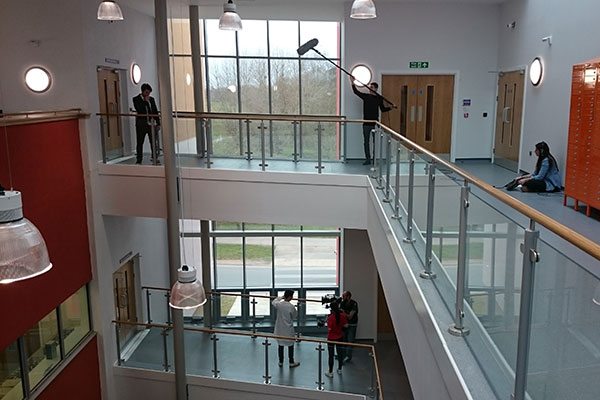
On this course you'll learn a variety of sound production techniques, including field and studio recordings, sound synthesis and processing, editing, mixing and using surround sound. Your understanding of professional production values and aesthetics will be enhanced through technical analysis and critical evaluation. We combine creative and technical work with the contextual analysis of theories and history as well as debates about technique, style and meaning.
Our focus on group work means that you'll also work on creative and technical collaborative projects with others studying related courses. You'll be set industry-related tasks which will hone your problem-solving skills in an applied setting, and allow you to complete work to professional standards.
We'll ensure that you have a realistic picture of the film and television industries, as well as covering the business aspects of the industry such as the development, financing and distribution of projects. You'll benefit from our regular sessions from visiting industry personnel. Past guests have come from Warner Bros/De Lane Lea, Pinewood Studios Sound, Prime Focus, Molinare and other top companies.
This course will also prepare you for further research in postproduction systems.
You'll study taught modules in the first part of the year. You'll then go on to take an individual project.
You'll look at digital production and postproduction processes for the creation of commercial film and television programmes, and examine the latest technical and aesthetic workflows for picture and sound. You'll put theory into practice by applying the concepts and techniques covered in lectures with labs on picture and sound techniques.
You'll study the fundamental theory and practical skills involved in the creation of sound design. You'll explore the technical design and implementation of sound synthesis and sound processing systems, and look at their creative application. You'll have hands-on experience with software packages such as ProTools, Media Composer, Adobe creative suite and Davinci.
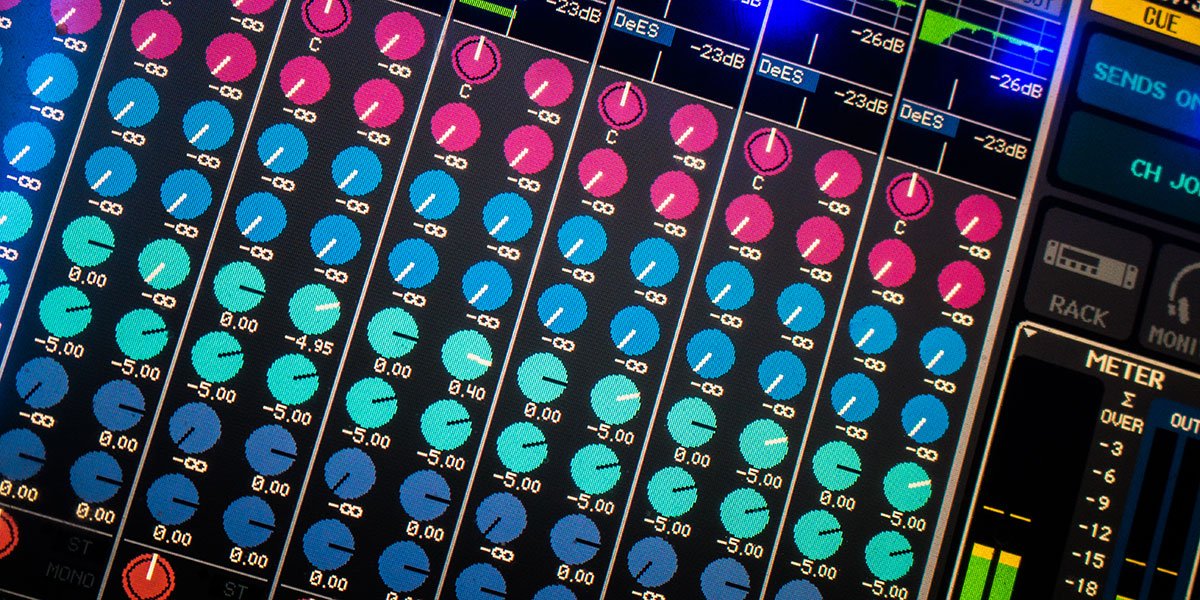
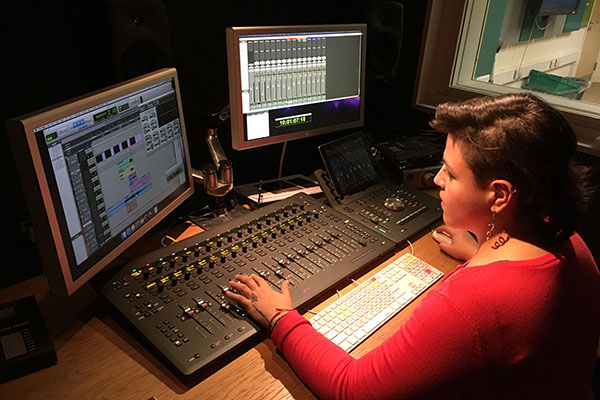
We'll introduce you to production and postproduction methods in the field of spatial audio, including multi-channel recording techniques and mixing using different surround sound and immersive sound systems. You'll explore common methods and formats employed in the industry (entertainment, broadcast, games industry) as well as be encouraged to push the boundaries of present conventions. You'll be able to work with our AVID S6 consoles, which are found in top audio postproduction facilities worldwide.
You will also study one option module each semester.
The options available to you will be confirmed later in the year. For further information please get in touch.
Our modules may change to reflect the latest academic thinking and expertise of our staff.
You'll design and develop a creatively-focused extended research project. If you'd like to undertake a more technically-focused project then you should consider applying for the MSc in Film and Television Production with Sound instead.
You may choose from two different types of individual project:
1) A production project that involves creating a short film or pilot television episode – either fiction or nonfiction – along with a written 7,000-8,000 word production report describing your approach to making the project in your role as a sound designer. You can work either individually or collaboratively with other students on this type of project.
2) An individual research project focusing on a specific area related directly to your chosen specialism. This could take the form of a traditional written dissertation of 8,000 words or a hybrid involving the creation of some sort of artefact such as video, audio or written elements based on your research, along with a 7,000 word written dissertation describing the project.
In all cases, the precise nature of the project undertaken, including the involvement of any group members or other collaborators, will be agreed with your academic supervisor prior to the start of the project.
Every course at York is built on a distinctive set of learning outcomes. These will give you a clear understanding of what you will be able to accomplish at the end of the course and help you explain what you can offer employers. Our academics identify the knowledge, skills, and experiences you'll need upon graduation and then design the course to get you there.
| Study mode | UK (home) | International and EU |
|---|---|---|
| Full-time (1 year) | £12,480 | £29,400 |
Students on a Student Visa are not currently permitted to study part-time at York.
UK (home) or international fees? The level of fee that you will be asked to pay depends on whether you're classed as a UK (home) or international student. Check your fee status.
Find out more information about tuition fees and how to pay them.
Discover your funding options to help with tuition fees and living costs.
We'll confirm more funding opportunities for students joining us in 2024/25 throughout the year.
If you've successfully completed an undergraduate degree at York you could be eligible for a 10% Masters fee discount.
You can use our living costs guide to help plan your budget. It covers additional costs that are not included in your tuition fee such as expenses for accommodation and study materials.
You'll have the chance to work collaboratively with other students from all our film and TV Masters courses. Group project work will develop your skills to prepare you for an industry where you will often work with others to achieve your creative vision.
You’ll work with world‐leading academics who’ll challenge you to think independently and excel in all that you do. Our approach to teaching will provide you with the knowledge, opportunities, and support you need to grow and succeed in a global workplace.
The course involves a range of different teaching styles. Most modules will include lectures to give you a fundamental understanding of the subject and then lead on to practical work. The practical work will primarily involve lab sessions where you can become familiar with industry techniques and equipment. You will also take part in student-directed field recording exercises.
You'll also have the opportunity to attend events such as talks, productions and festivals.
You'll be assigned a member of our teaching staff who will act as your personal supervisor for the duration of the course. They are there to give advice on academic matters as well as other areas of University life.
You'll have the opportunity to gain hands-on experience with our industry-standard facilities.
The University is also home to the York student section of the Audio Engineering Society, which organises regular talks, technical tours and seminars.
You will be based in the School of Arts & Creative Technologies on Campus East.
Most of your contact hours will be in Theatre, Film, Television & Interactive Media building, with some additional teaching elsewhere on Campus East.
Our beautiful green campus offers a student-friendly setting in which to live and study, within easy reach of the action in the city centre. It's easy to get around campus - everything is within walking or pedalling distance, or you can always use the fast and frequent bus service.
You'll be assessed throughout your course. Some modules have an early assessment that contributes a small amount to your final mark, offering an opportunity to check your progress.
Types of assessment vary depending on the module and include the following:
The film and television industry is highly competitive and there is a constant demand for sound designers with a solid knowledge of current software and postproduction techniques. There's also demand for sound designers who possess a firm grasp of story and understand how technology can enhance the audio-visual experience.
There's also an increasing demand for researchers, in both industry and academia, who have a firm understanding of postproduction tools and how they can be applied to create the next generation of postproduction technologies.
Our graduates are working with companies such as:
Feature film credits for our graduates include Mission Impossible:Dead Reckoning park one (Paramount Pictures), Black Mirror (Netflix), The Little Mermaid (Walt Disney Pictures), Dr Who (BBC) Gravity (Warner Bros), Prometheus (20th Century Fox), Rush (Universal Pictures) and Paddington 2 (StudioCanal).
Some of our graduates have furthered their studies by pursuing a PhD in Sound Design.
| Typical offer | |
|---|---|
| Undergraduate degree | You should have some experience of audio media production either gained through an undergraduate degree (2:1 or equivalent) or through professional practice. We will also consider your application if you have a 2:2 and significant relevant professional experience |
| Other international qualifications | Equivalent qualifications from your country |
You will need to submit a sample of your creative work with your application. Please see our guidance on submitting creative work.
If English isn't your first language you may need to provide evidence of your English language ability. We accept the following qualifications:
| Minimum requirement | |
|---|---|
| IELTS (Academic and Indicator) | 6.5, minimum 6.0 in each component |
| Cambridge CEFR | B2 First: 176, with 169 in each component |
| Oxford ELLT | 7, minimum of 6 in each component |
| Duolingo | 120, minimum 105 in all other components |
| LanguageCert SELT | B2 with 33/50 in each component |
| LanguageCert Academic | 70 with a minimum of 65 in each component |
| KITE | 459-494, with 426-458 in all other components |
| Skills for English | B2: Merit overall, with Pass with Merit in each component |
| PTE Academic | 61, minimum 55 in each component |
| TOEFL | 87, minimum of 21 in each component |
| Trinity ISE III | Merit in all requirements |
For more information see our postgraduate English language requirements.
You may be eligible for one of our pre-sessional English language courses. These courses will provide you with the level of English needed to meet the conditions of your offer.
The length of course you need to take depends on your current English language test scores and how much you need to improve to reach our English language requirements.
After you've accepted your offer to study at York, we'll confirm which pre-sessional course you should apply to via You@York.
Get in touch if you have any questions


We offer a range of campus accommodation to suit you and your budget, from economy to premium.

Explore campus and city life and hear what our current students have to say about living here.

Lively, full of culture and beautiful, York is regularly voted one of the best places to live and visit in the UK.
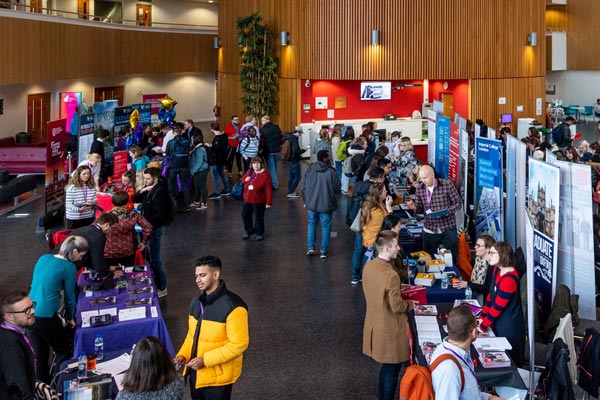
Find out more about York. Chat to staff and students and take the tour, on campus or online.